Last week, as Lee peddled off to work, I popped over to London for a few days. I know I rabbit on about how long the journey takes, but this one was made even longer by Eurostar cancelling their services the day before I was scheduled to return to France. (Not a strike this time – it was due to repairs required on the track). So I was able to get a train to Portsmouth, then ferry across to Caen, followed by 90 minute car trip back to Cherbourg. 15 hours door to door. London to Cherbourg = 146 miles.
All this travelling has taught me about the benefits of travelling light. Instead of my trusty suitcase I took a much smaller bag and it made such a difference when it came to lifting it on to overhead racks, dragging it up and down stairs and escalators and squeezing in to crowded trains.
One thing that was noticeable was all the news in the various media outlets was so depressing. Of course Brexit was always the headline story and that is never happy news, then this would be followed by violent attacks and murders, famous and very rich men outed for long term sexual harrassment, house fires with four children dying (followed by their parents being arrested on suspicion of manslaughter by gross negligence). Then there was a feature piece about young children being taught meditation because of escalating levels of anxiety and stress among young people. I wonder why. This was all in the space of a few days. The light hearted “fluff” piece to finish off the news was a story about some restaurants starting to serve squirrel on their menus. No thanks.
On a lighter note, I visited Ottolenghi! This probably means nothing to many of you. Yotam Ottolenghi is a famous chef, restaurant owner and writer. (Google will tell you much more). I was only there for a coffee and cake this time but it was so hard to decide what to have. Here is a picture of the goodies in the window.
I went with the hazelnut, ricotta and chocolate cake. A very wise choice.
And while on the topic of food, here is something that grabbed my attention from another French blog written by Australians.
Increasingly, as the population in rural France ages and declines, village bakeries are struggling. Yet French law demands that everyone have access to fresh bread. When a bakery closes, often when the baker retires and no one takes the business over, small villages are often left with no supplier of bread. The solution for many small local authorities is to arrange a partnership with a bakery in a nearby village and to install a baguette vending machine. The neighbouring bakery replenishes the stock a couple of times a day and the bread costs maybe 5 cents more than if you bought it in the shop.
What better way to celebrate Australia Day than a long weekend in Paris. We caught the train on Friday afternoon and this time we stayed in the Marais area, on the opposite side to our usual stomping ground (Lee’s work in Paris is always at the Australian Embassy, right near the Eiffel Tower). Even though they only a few kilometres away from each other, there is a marked difference.
The Marais was busy with people everywhere but we did not see many tourists around (not even a queue outside Notre Dame – unheard of!). There are lots of little laneways and beautiful passageways and many of the streets are closed off to traffic. There is a real quirkiness and sense of fun about the place. People are friendly and English was spoken in most places.
We discovered the Passage du Grand Cerf – reminding us a bit of some of those Melbourne arcades. It was full of curious little shops including those selling very original jewellery, opticians, a fantastic patchwork and knitting supplies shop and all sorts of other shops with knick-knacks.
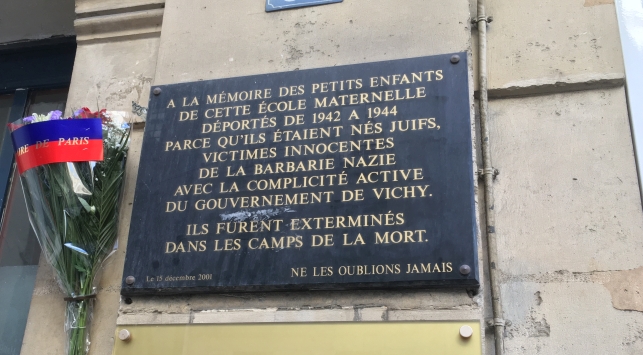
You can’t walk through the Marais area without constant reminders of the Jewish community and their losses during WW2. Above many houses and schools are signs recognising those who lived there and were taken by the Nazis. We also stumbled on the Memorial de la Shoah – including a long wall containing thousands of names of French citizens who provided help to the Jews during the war.
Another find was the place you see in the photo below. Leroy Merlin is similar to Bunnings and is the go to place for all your hardware needs. In the middle of the Marais area (where everyone lives in tiny apartments) they have set up a place where you can go and buy timber, nails, etc and use their equipment to make or fix whatever. It costs €15 for an hour, plus an extra €15 if you want one of their staff to help you. This was the first of its type we were told. They didn’t look that busy but they starting to get more business, including many female customers. What a great idea!
After we left, we discovered a sign outside telling us about the sad history of this location. In 1982 this was a restaurant called Chez Jo Goldenberg and was attacked by terrorists. Two people stormed the crowded restaurant and threw a grenade into the dining room then rushed in firing machine guns. Six people died and 22 injured. It was the heaviest toll suffered by Jews in France since WW2.
And no weekend in France is complete without a protest march by the Yellow Vests or Gilets Jaune. According to the news, most arrests this time were at the Bastille – just up the road from where we were staying. We didn’t hear any of the commotion, but we did see several hundred people marching along the street in that general direction. Marching is a bit of an overstatement, it was more like a large group of people of all ages who were out for a friendly chat as they strolled along. It was all very calm, probably typical of 98% of the protestors that march throughout the country each week.
And then it was time to return to Cherbourg. Train was easy, on time and much less to worry about parking in Paris. Definitely do it again but when the weather warms up.
Not a huge amount to write about this week. It’s our first week back after our big trip and things are getting back to normal (well, our normal anyway).
The weather has been very mild compared to this time last year when we were seeing snow. It’s still not exactly warm and you can tell by watching the seagulls sitting on the water. They must realise that the water temperature is warmer than the air temperature and will just sit there like ducks until the fishing boats grab their attention.
Not the greatest photo, but you can see the seagulls on the water.
And while we on seagulls, here is something we have not seen in Australia. We have sometimes watched seagulls doing a bit of a dance on the grass and assumed it was some sort of mating ritual. Not so. Apparently they are trying to convince the worms and underground critters that it is the pitter patter of raindrops. Whey they come up to get some air and escape their homes being water logged then voilà – lunch for the seagulls!
And look what visited us! Usually when there is a ferry in town we will see a few council buses or horses pulling carriages to bring the passengers into town. Not this time. Shiny new coaches were on the job for these cashed up tourists.
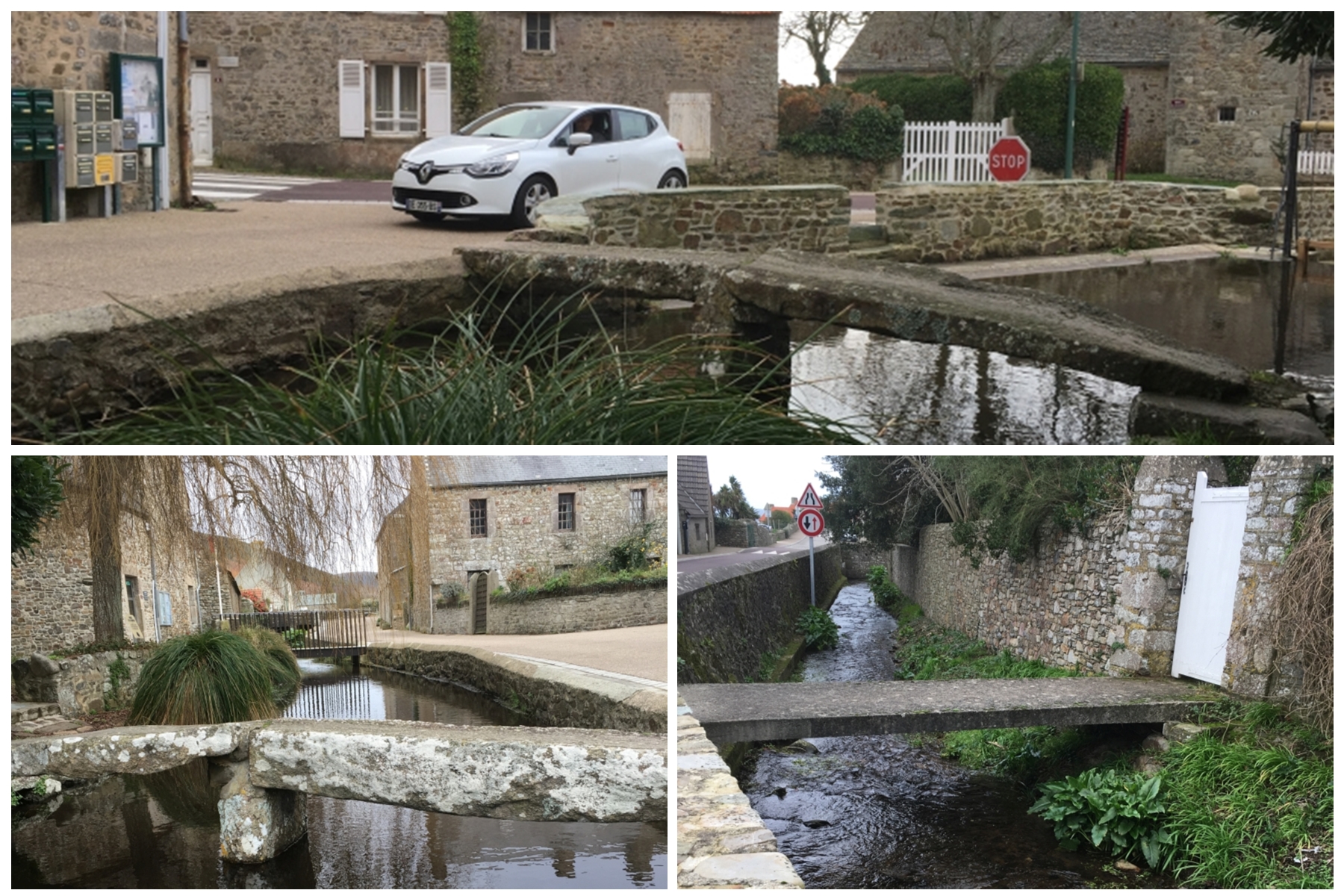
Last Sunday we went to Vauville, a really pretty little village about 20 kms away. Often we have seen villages that are turning into crumbling ruins, but this one was really well maintained and there were many new houses on the outskirts. This probably has something to do with the village being located quite close to the nuclear power station, so employment in the area would be very high. Even on a cold and overcast day, there were Kodak moments around every corner, so we are looking forward to going back when the weather is warmer.
There was a little stream running through the centre of the village with lots of little stone bridges crossing from one side to the other.
Just near the village was the beach. It was also VERY windy, perfect day for wind surfers over the Channel. Wet suits were a must.
When we were in Holland we discovered Dutch apple cakes or Appeltaart. These are served in coffee shops and restaurants and we were told that these cakes are only available at certain times of the year because the particular apples they use are only available in winter. We are having a go at re-creating them in France. Masterchef quality they are not, but taste ok.
Appeltaart with our little Dutch teapot from Delft.
We hope everyone had a happy and safe Christmas and New Year. We’ve been on a road trip, so there’s lots to write about.
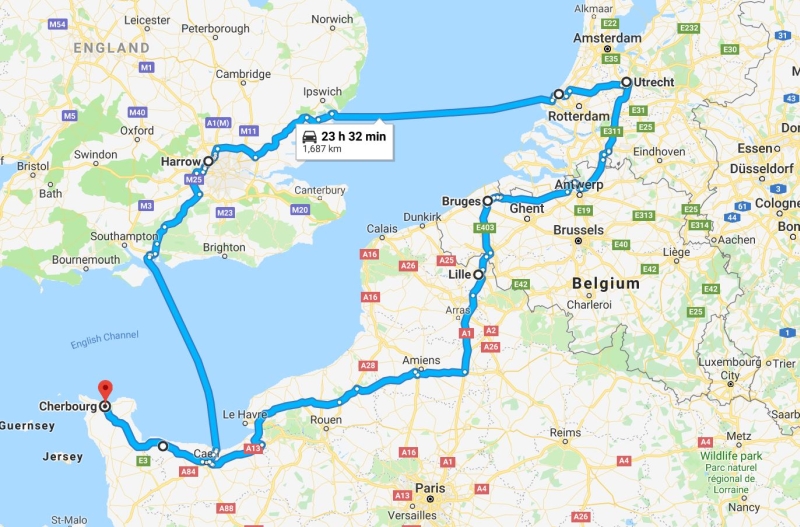
Clio didn’t actually drive over the water, so total driving was about 1,300 kms.
We spent a few days in London for Christmas. We drove to the ferry near Caen, sailed to Portsmouth, drove to London – 12 hours door to door. The weather was very English, (except for Christmas Eve where the sun decided to make an appearance). Nobody does a Christmas lunch like the English and we went to a traditional pub and ate too much. As you do on Christmas Day.
Next day we headed off to Harwich and, because it happened to be on the way, we stopped at Colchester. So glad we did as it’s a pretty town, helped by all the Christmas lights and the fact that they were at their best in the darkness, albeit being 4:30 pm.
From Harwich, we caught the overnight ferry to Hook of Holland and then drove on to The Hague. First impressions were – it’s flat, very flat, so many hot houses everywhere, quite easy to navigate around and Dutch people speak excellent English.
Good-bye Stenna Ferry, hello Dutch sunrise.
The Hague is the second largest city in Holland but you wouldn’t think so based on lack of traffic and congestion (it’s all about the bikes – more on that later). There’s plenty to see in The Hague and would love to return in warmer weather to check out some of the parks and gardens. One of the highlights for us this trip was The Peace Palace, home to the U.N.’s International Court of Justice and the International Criminal Court. This was built after the 1899 Hague Convention to house a court to end war. Ironically, it was officially opened in 1913, just prior to the commencement of WW1.
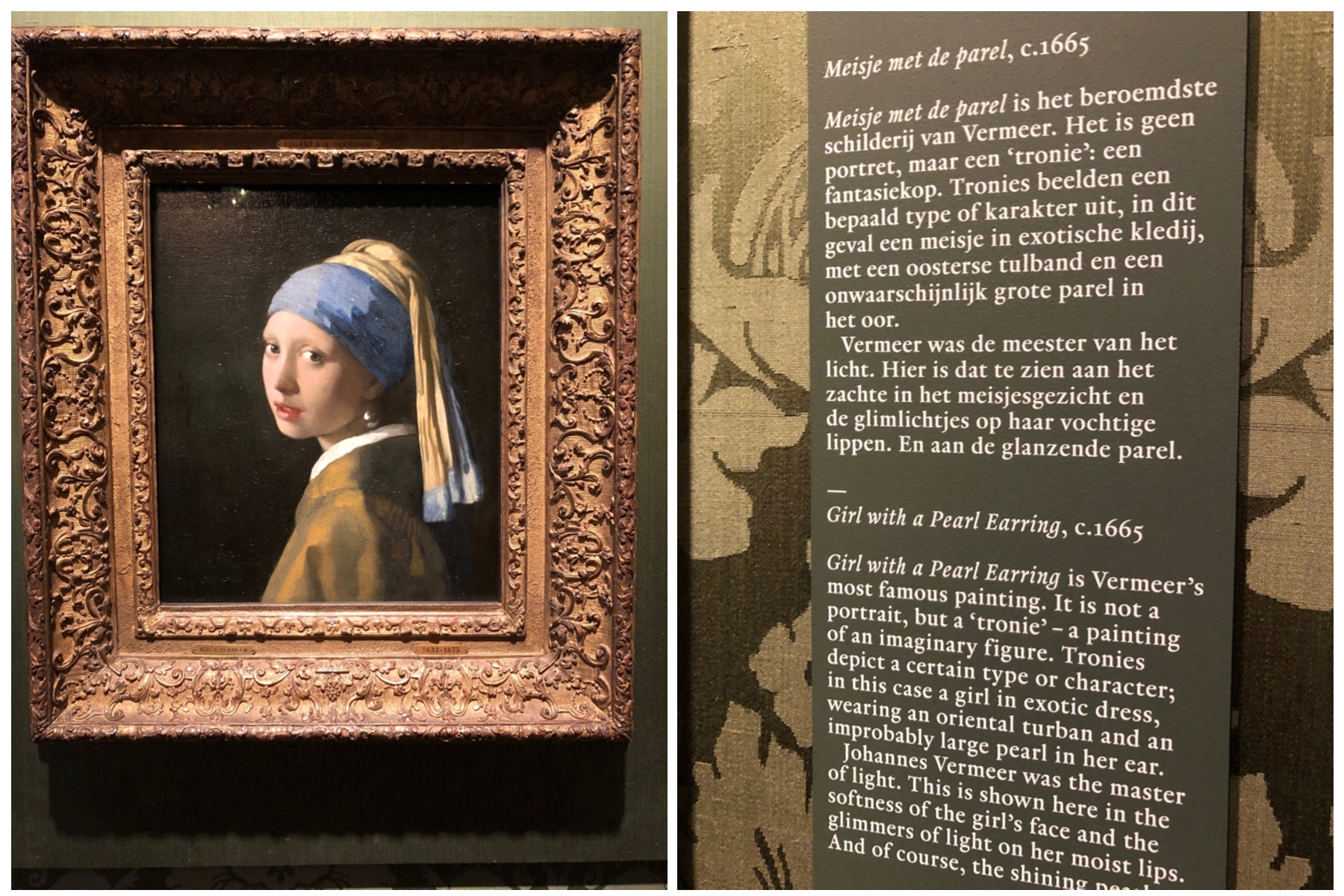
The other highlight was the Mauritshuis Gallery. This smallish gallery has the work of some pretty famous artists on display including Rembrandt and Vermeer.
The painting that we knew best at the Gallery was Girl with a Pearl Earring. Here’s an observation about that…..when we visited the Louvre, we were constantly directed to where we could see the Mona Lisa. The impression is that you haven’t been to the Louvre unless you have seen her – even if it’s from 50 metres away, behind security glass and over the heads of the hundreds of other people standing in front of you. The Girl with a Pearl Earring is, arguably, just as famous and yet, in the Dutch way of doing things, you could stand a couple of metres from the painting, take photos of yourself with her, and share the experience with a dozen or so other people. And for a fraction of the cost. Easy.
Not far from The Hague is Delft, famous for the pottery. Back in the day, there were many Delftware potteries dotted all over Holland, but today there is only one remaining and it’s more of a tourist attraction than anything else. We could see the pieces being hand painted and could walk through the workshop. The hand made and hand painted pieces are exorbitantly expensive, and most of what you see in souvenir shops are mass produced. You can imagine our surprise when we found there was a shop on the way to the exit. Will enjoy using my cute little teapot.
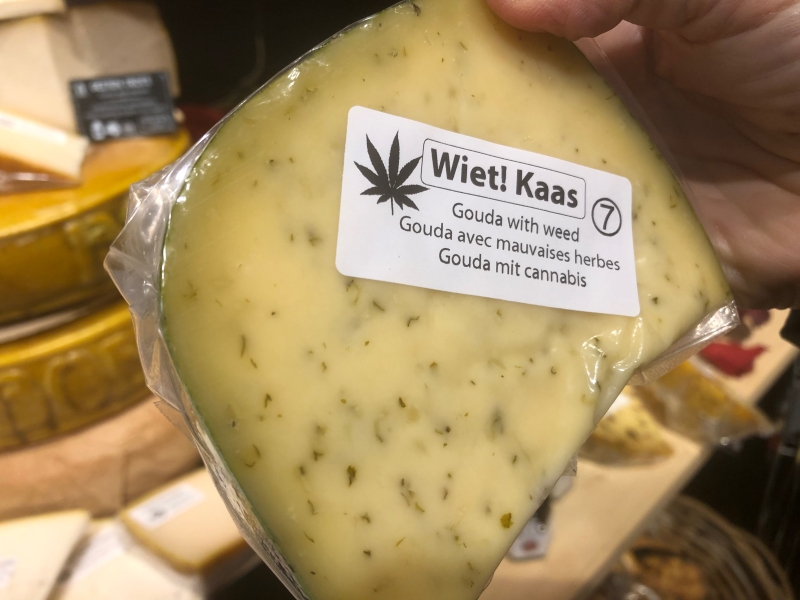
Next stop was Gouda (pronounced how-dah – with the ‘h’ sounding like you are trying to cough up a fur ball). During the summer months there is a cheese market on Saturdays but not during a very cold day in December, so we stopped in at the Tourist Info centre and met a very interesting lady who explained to us about the production of the different types of Gouda. So, of course, we bought a couple of samples and managed to lose them somewhere before we got them home. A good excuse for going back there.
Fun fact – you can buy many, many different flavours of Gouda, including one containing marijuana.
We then spent a couple of days in Utrecht. This was suggested by our French teacher who grew up in Holland and went to university in Utrecht. It has been described as a smaller scale of Amsterdam with many canals winding through the city.
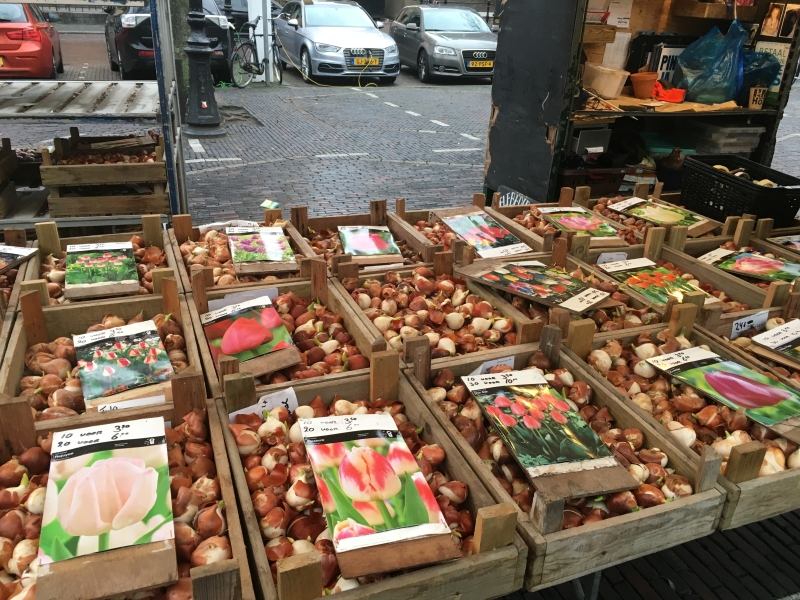
We visited the flower market which was quite small, but there were flower stalls dotted around town selling mainly tulips. Would love to see this is peak tulip time. It was just a lovely city to wander around and take it all in.
Tulip bulbs for sale – 3 Euro (about $5) for 10.
We also visited the Rietveld Schröderhuis, an amazing house in the suburbs that was finished in 1924. It was decades before its time in terms of design, versatility and using open spaces. It is quite small and you must pre-purchase tickets so they can limit numbers of visitors. Everything in the house was custom made, from the different sized windows with matching shutters, furniture (see pic for models on display), even the radiator pipes were designed to be horizontal rather than vertical as the designer thought that looked better. Every downstairs room had running water (unheard of in 1924) and an external door. Hard to describe but very well worth a visit.
And then there were the bikes. They were everywhere and that seems to be the main form of transport. The towns and cities are really designed for bikes, with plenty of cycle lanes, parking spots for bikes and car free areas. The bikes themselves are nothing special, just basic models that are left out in all sorts of weather. Most cyclists we saw were not specifically riding for exercise or leisure, it was just their way of getting around. And it makes a huge difference to the traffic congestion. I kept taking photos of almost empty roads, hard to believe that these were in some of the biggest cities in Holland during peak times. Admittedly, it was between Christmas and New Year when many people may have been on holiday, but still….
One of the many bike parking stations that we saw. Most people just leans their bikes up next to buildings, fences, poles, other bikes, whatever.
Then it was time to head back towards France and we stopped overnight at Bruges (or Brugge/Brugges/whatever) in Belgium. Perfect example of a place that has become a victim of its own popularity. It was very pretty, but crowds were insane.
Last stop before we headed home was Lille, in France but just near the French border. Speaking of borders, what a non event. Way back in time, border crossings in Europe meant passport checks, currency exchange and (sometimes) visas. Now it’s like driving from one Australian state to another – a sign saying welcome to ….. and you’re in.
Anyway, Lille was lovely. Town square was still lit up with Christmas decorations still up and gearing up for NYE. We stayed at a beautiful hotel (thanks Lee) and said goodbye to 2018 and an amazing year of travels.
Last Friday was the 1st anniversary of us arriving in Cherbourg. In some ways it has gone so quickly, but then other times it seems like a lot longer. We have squeezed a lot into that 12 months. We are getting better at knowing the French way of doing things (can’t often work out the logic though). Our understanding of the language has improved. Marginally. And our plans for traveling next year will take us a bit further afield – so watch this space.
The Yellow Vests are still protesting, so it’s been every weekend for five weeks now. From the feedback we get, it seems like the media at home is making it sound a lot worse than it is. There certainly has been a few deaths (not intentional), some injuries and property damage, but these are very localised. The larger cities, especially Paris, have seen more action than sleepy old Cherbourg and we have had very little impact here.
The weather has been quite uninspiring with a lot of cold, grey and windy days. No snow yet but there have been a couple of days when it looked possible. But one event we couldn’t stay away from in Cherbourg was the Salon Vins & Gastronomie. There was much wine tasting as well as cheeses, fois gras (non merci), chocolates and other morsels. The best bit was that the wine was from boutique wineries and the wine makers were there to provide the tastings. There was a mix of whites, red, champagnes, port and ciders and they were all good. Unfortunately Normandy is not a wine region (mainly apples and cider) and so most of these small wineries are in the south of France. They are happy for visitors to go and see where their wines are made, but mostly it is by appointment. In Australia and NZ we are used to wineries with cellars doors that are staffed and open every weekend, but this is very uncommon here.
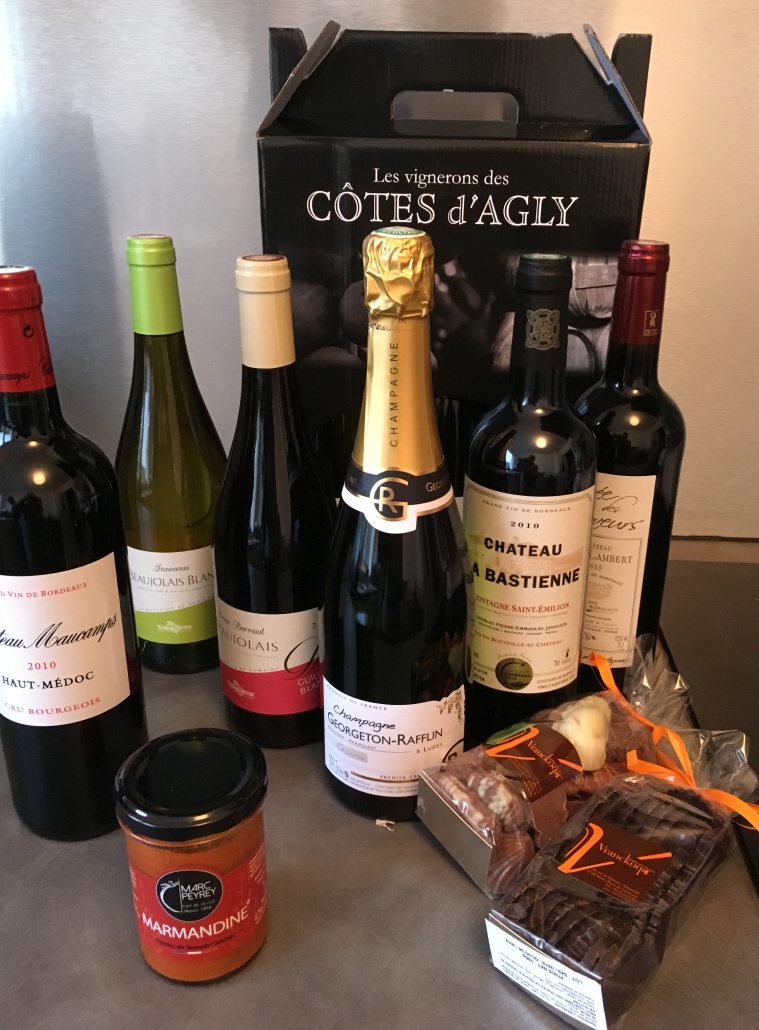
So do we buy anything? Of course we did.
If it wasn’t for the fact that we had to walk home with this then we would have bought more. One Australian went to town, and then returned the next day and loaded up his car.
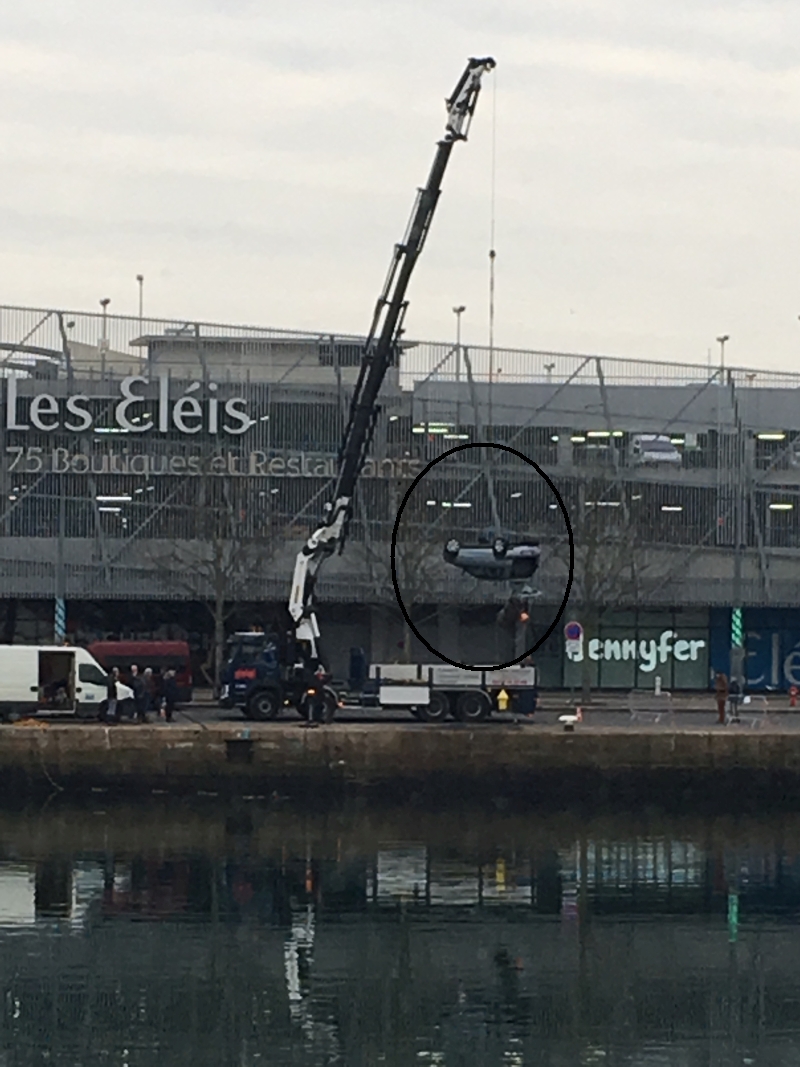
Something we notice since we have been here is the lack of barricades and railings next to water or cliffs. They seem to have this strange concept of people taking responsibility for themselves. The harbour is very deep and with all the cars, cyclists and pedestrians whizzing past every day we have wondered if they has ever been a need to fish something out of the water. Wonder no more –
Cost of diver in full wet suit, crane driver. Media there taking photos, right outside the busiest supermarket in town. And car written off. Some days you should have stayed at home.
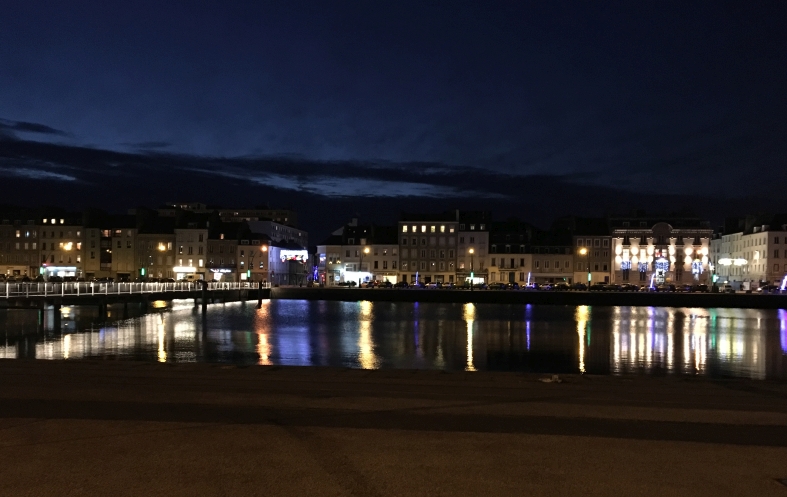
This is becoming a habit, but to finish, here is a pic of sunset with the lights reflecting on the water when the gale force winds had calmed down for a bit.
Hope everyone has a great Christmas. Think of us while we will shed a tear while listening to Tim Minchen singing White Wine in the Sun.
Since last post we have ducked over to England for a quick visit. We are always surprised about how close it is, and how long it takes to get there. This time we caught the ferry from Cherbourg to Poole, arrived there after 9pm, stayed overnight, then drove to London the next day. Return trip was train into London (Lee drove back earlier), caught the Eurostar from St Pancras to Gare du Nord, then 4 hour drive back to Cherbourg.
We started a list of who does it better – French or English. So far the list looks like this:
Architecture – definitely the French. Most buildings have had some thought go into the aesthetics, the English generally seem to go for function but ugliness is not an issue, especially in the larger cities.
Coffee – neither is great, but the French win this one as well. English coffee is so weak you might as well just have warmed milk.
Food – England wins this one, based on the diversity of food available, both at restaurants as well as supermarkets. French food (from our experience so far) is very traditional and if you don’t like meat, eggs, cheese or butter, then too bad. Much easier to be a non meat eater in England.
Government of the day – both are in a bit of a pickle. The English whinge a lot, the French protest a lot. In both cases, the bar is pretty low for different reasons.
Tasteful Christmas decorations – French (see below). England tries, but they have stiff competition.
The Eurostar was very fast and efficient as usual. And not cheap. £191 for a one way ticket, but that’s on a Friday which is the most expensive time to travel. Middle of the day on Wednesday is only £67. But they never seem to have trouble filling these trains.
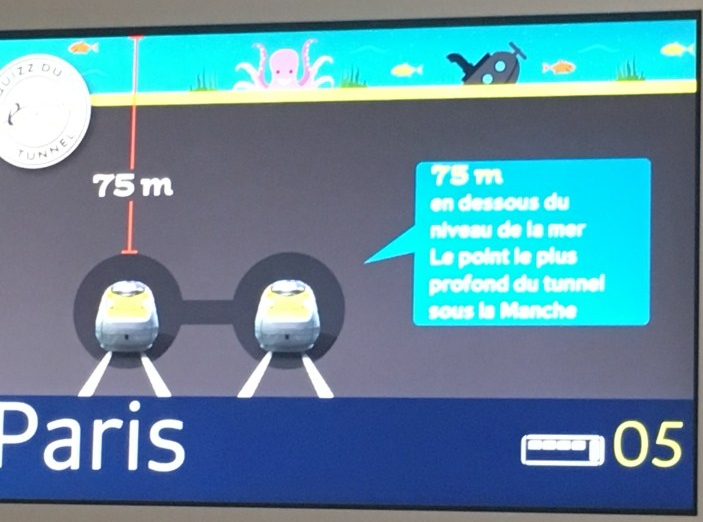
This is displayed on the screen in each carriage (05 refers to Carriage no 5). According to this, the train was travelling 75 metres below sea level. I don’t think the octopus is to scale.
And this screen tells us that the tunnel is a 50.45 kms in length. Again, I don’t think those houses are to scale. It also tells us that the train is going in the direction of Paris – bit late to know that when you are already in the tunnel.
We stayed overnight in Paris and next morning we strolled around in the rain. Always something to see that is a little different.
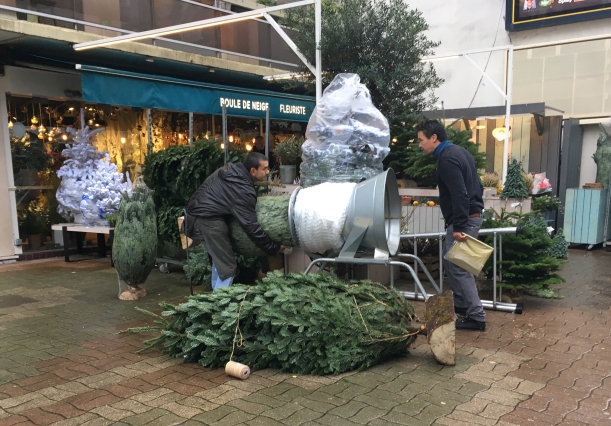
There were Christmas decorations everywhere and the wet, dull, gloomy weather really made them stand out. Apparently most people buy a real Christmas tree every year, none of that fake stuff. Then after Christmas there is a rubbish collection to pick up all the trees. We went past a florist shop and they were busy getting the trees ready for sale. It was amazing, they had a machine sort of a like a sausage machine – trees go in one end, and come out all trussed up at the other end. They also have stands made of cut up logs to hold the trees upright.
Can’t help wondering if this guy has been there for the birth of any of his children.
Another thing that was new to us was the delivery of dry cleaning. A motor bike went past with what looked like a small pizza oven at the back. He stopped and pulled out a small rack full of shirts from the dry cleaner and delivered some of them in to a nearby apartment block.
Clean shirts on wheels
Et voila, the back opens up and the rack of shirts pops out.
What we didn’t realise till we got back last Saturday was the amount of protesting in Paris that day. We didn’t see any of it, but they expect it will be worse next weekend with the truck drivers now starting to weigh in on things. What started off with the ‘yellow vests’ protesting about the hike in fuel taxes has now become a huge anti-government protest. Ambulance officers are striking, students are protesting, garbage collectors are striking…….the list goes on. The main complaint is the rising cost of living in France, apparently the average wage in France is about €30,000 – tough going when prices keep going up.
On the way back from Paris we were stopped at one of the toll gates and the protesters were holding us back till they decided to let cars through. They had managed to raise the boom gate so nobody was charged toll and they were letting through anybody that had children in the car. We were only held up for about 10 minutes and then when we finally got through they were cheering, clapping and smiling like we had just completed a fun run. (Not that we have ever completed a fun run, but you get the idea). It was a bit of a party atmosphere but apparently it’s not like that in other places. If you are not able to participate in the protests then you can show your support by displaying your yellow vest on top of your dashboard, and we are seeing plenty of them.
Our other big project this week was to set up our own Christmas tree. Took ages.
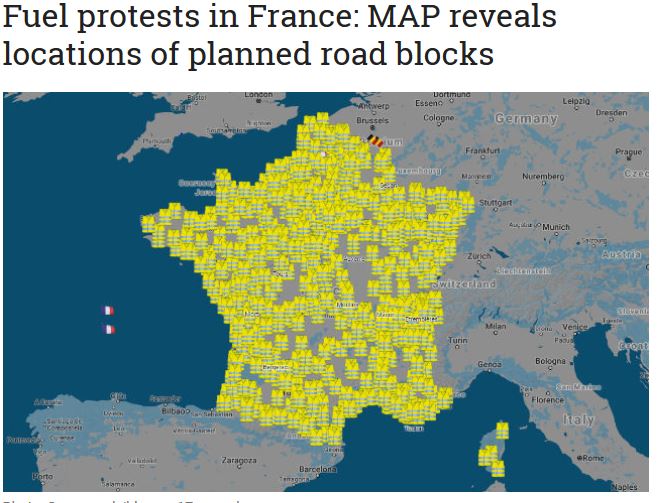
The French people are not happy. They are protesting about the high fuel taxes. So starting last Saturday, thousands of French citizens calling themselves the ‘Gilets Jaunes‘ (yellow vests) decided to block the roads throughout the whole country and bring traffic to a standstill. (The yellow vests are high-visibility vests that motorists have to carry in their cars, supposedly to put on in cases of emergency.)
This map shows where the blockages were
So pretty much everywhere. The impact was enormous. Friends who were planning to travel to Paris to catch flights had to drive down the day before and stay overnight. The Saturday markets were almost empty, along with many shops around Cherbourg. Even the major supermarkets were closing at midday because there were no customers. The economic loss would have been staggering. Not to mention the deaths of two people and 100’s more injured as a result of the protests.
We understood that this was to be a one day event – nope. The road blocks have continued in a random fashion so nobody is really sure what is accessible. Lee had to drive to Paris on Monday and spent much of the drive sitting in the car waiting to be allowed through. There are many toll booths on the way and the protesters were only allowing 3 or so cars through every 15 minutes. Occasionally it was possible to take a much longer route to avoid this but most of the time this was not an option.
There is no real end in sight and the government has said it plans to go ahead with another fuel tax increase in January.
So the question everybody is asking – who is being hurt by all this? Retailers are missing out on business, people are not able to get to work so lose their wages for the day etc.
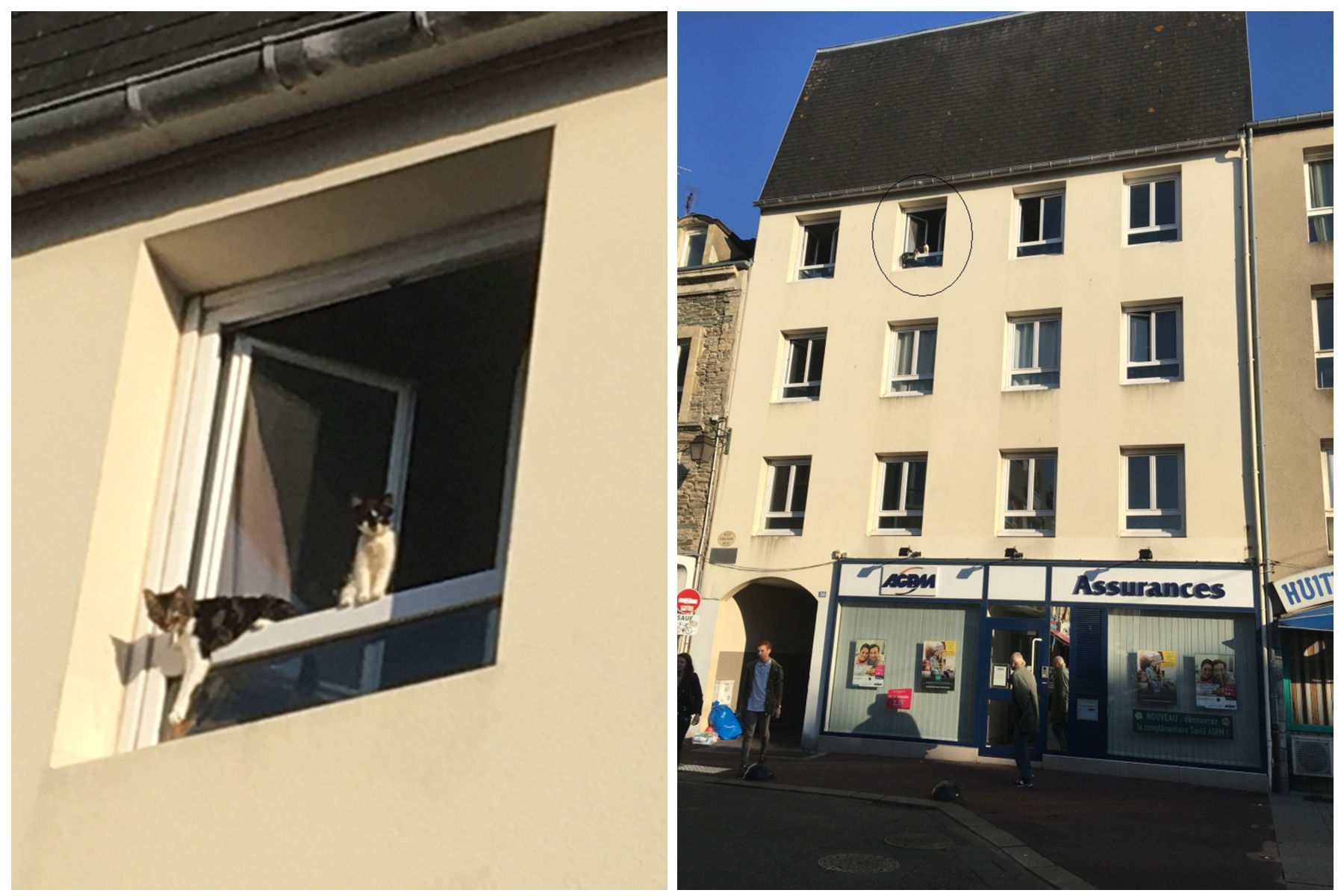
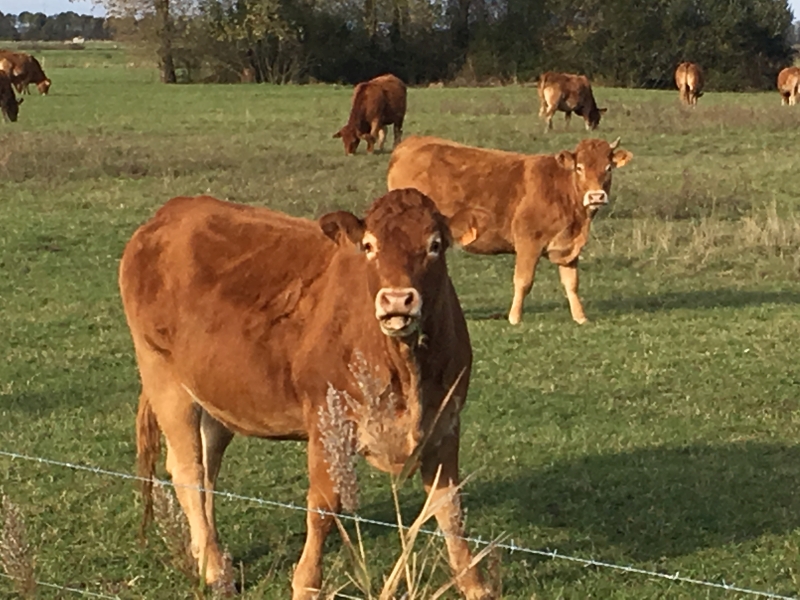
Anyway, enough about that. Here is some light relief. Random photos of animals that we have seen in our travels.
A couple of cats soaking up the sun, seeing if they can use up one of their nine lives
The cows in France are really pretty. No idea what breed they are, sometimes they are brown but usually black and white. They certainly are well fed compared with those that are trying to survive the Australian drought.
This little guy (about the size of a guinea pig) was sitting in the middle of a field near Utah Beach. He was so still I thought he was dead but by the time we came back he had walked off. We were lucky to see him because hedgehogs are on the decline and highly protected in France and they say they could be wiped out by 2050.
No animals in this one, although if you look closely you could probably spot plenty of seagulls. Storm brewing over the Channel and despite the sunshine was really cold.
We will never forget Remembrance Day in 2018. It was the 100th anniversary of the signing of the Armistice to end WW1 and we were fortunate to be able to get tickets to the service at Villers-Bretonneux.
This area is about 4 hours drive from Cherbourg so we took off last Saturday and stayed nearby at Amiens. The town was fought over both during First and Second World Wars and suffered so much damage that there isn’t much left that looks like a typical old French town. The place was full of tourists because of the Remembrance Day service, and the rain stopped for a while so we could stroll around.
We overlooked this abandoned building from our hotel room.
Close up shots
The River Somme cuts right through the town and there is a network of canals that feed off the river. It sort of looks like a cross between an English town and parts of Holland.
Old meets new. Wonder if the new will still be standing in a few hundred years.
And then there was Remembrance Day. There were many services around the world, especially in Paris where many world leaders attended, but at Villers-Bretonneux we had Minister for Veterans’ Affairs (Darren Chester) and MC was Major General Mark Kelly (Repatriation Commissioner for DVA).
The first couple of hours was filled up with power point presentations of stories of soldiers who lost their lives, singing and musical performances by the RAAF Band and Voices of Biralee and readings. Just as the service started the rain also started and stopped when the service stopped. In the words of Justin Trudeau “as we sit here in the rain and thinking how uncomfortable we must be as our suits gets wet, and our hair gets wet, and our shoes get wet, I think it’s all the more fitting to remember on that day in Dieppe, the rain wasn’t rain. It was bullets.”
We didn’t take many photos but we hope to get back there sometime without the crowds and have proper look at the Memorial and the John Monash Centre.
This shows what the landscape is like surrounding the Memorial. This would have been covered in trenches and mud. No trees or places to hide. Even today, farmers will often find remains or bullets and shrapnel as they work their fields.
You know the days are getting shorter and the sun is moving south when your shadow at midday looks like this.
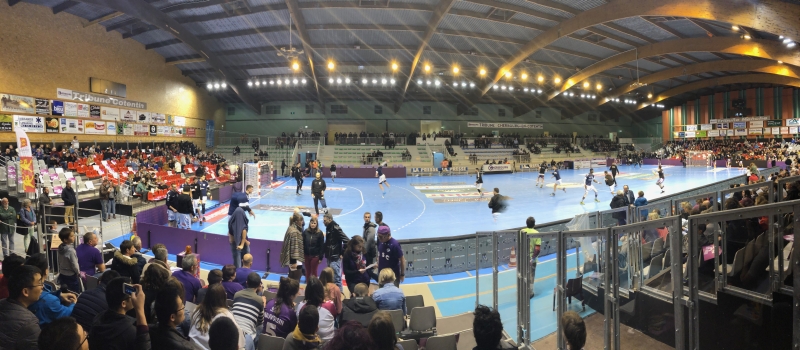
I know many (well one or two) have asked what sport is popular in Cherbourg. Rugby? Soccer? Tennis? Nope – handball. It’s a big deal here, with the local team playing in the National League. They are coming 9th in the competition and last Friday we went to see them lose against Nancy (who are coming 5th). The game looks like a cross between basketball and water polo played on land. The scores were pretty close so everybody was a bit excited (i.e. LOUD). Every seat was given a complimentary piece of cardboard that we worked out was to be folded up (concertina wise) to slap against whatever you can find. The serious fans bought their own banging equipment and weren’t afraid to use it.
Similar to what we saw during the World Cup, everybody was happy, well behaved and lots of families were there. What was noticeable was the lack of marketing, merchandising, eating/drinking outlets and any other opportunity to try and take your money. We don’t know how the club funds itself but obviously not from the €8 tickets (and that was the good seats).
And then, for a complete change of pace, we went for a drive to Utah Beach on Sunday. I wrote about my visit to Omaha Beach back in April but Utah Beach was one of the other D Day beaches. This was considered a pretty successful invasion – under 600 men killed, wounded or unaccounted for, compared with over 4000 at Omaha. This was mainly due to the geography and luck.
On the left near the flag is the location of what was a German gun battery which was bombed by the Allies a couple of weeks before D Day. If this was still in use during the invasion on the beach then the result would have been very different
Just near the beach is the village of Sainte Marie du Mont, that had the distinction of the being the first Normandy village liberated on 6 June 1944. We still find it hard to get our heads around the relatively recent and horrible history of these pretty little villages that have been peacefully and quietly going about their business for centuries before WW2.
Reflection because this was on display behind a shop window, but guessing it was taken on D Day just after liberating the village.
Same spot as above. I asked Lee if he wanted to get in the photo: “no”, but we didn’t realise that he was in the reflection in the first pic. #gotcha
Sign says: “An American paratrooper hid in the recess behind this pump. Broad-shouldered but lean, he was clearly older than his comrades, his face lined with wrinkles, his eyes pale and expressionless. His legs bent like a horseman’s. (who writes this stuff??) He held his rifle in the crook of his elbow, like a hunter. Lying in wait behind this pump, he fired at the panic-sticken German soldiers. He is said to have killed ten of them, two of which were at least 60 yards away on the road.
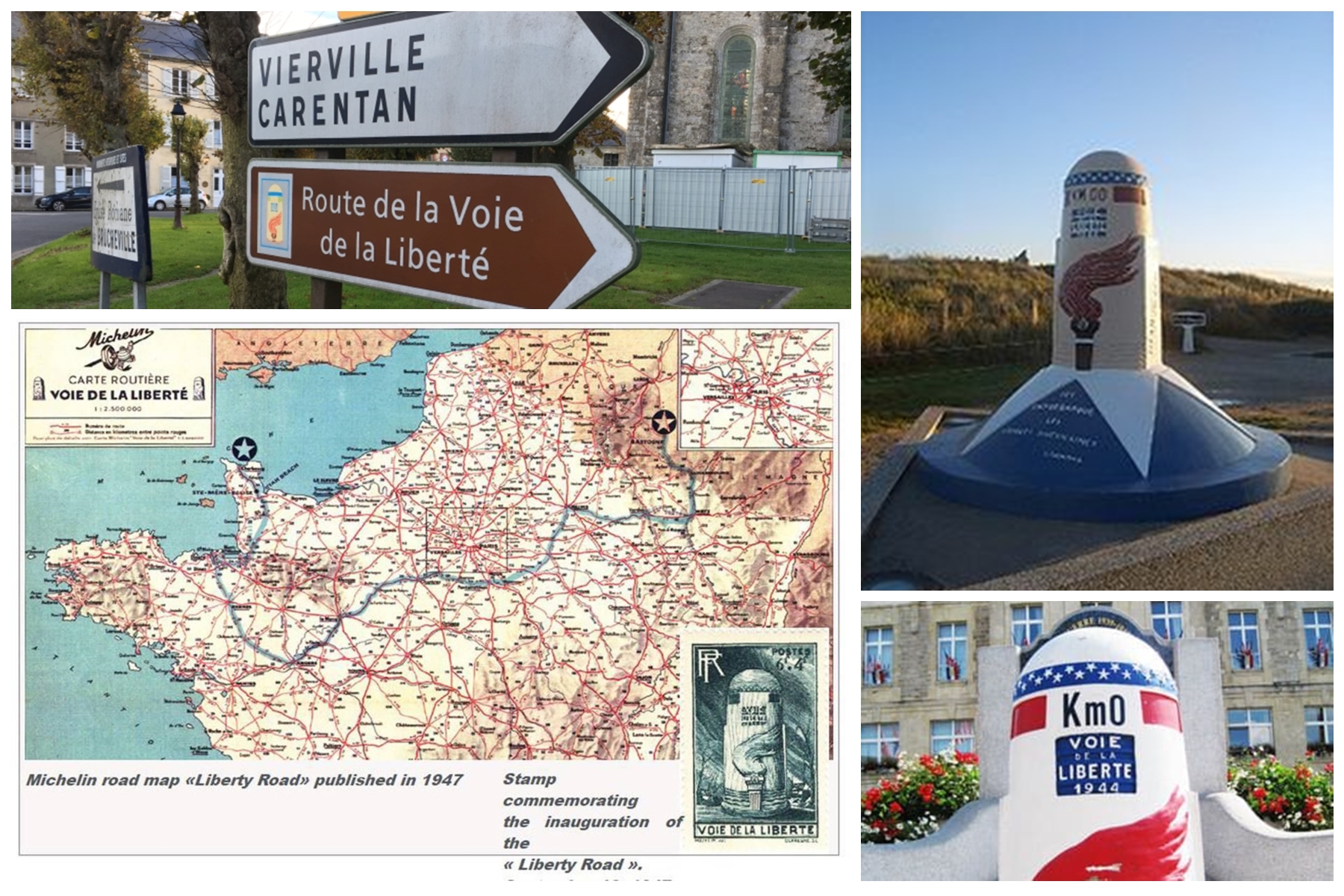
It’s hard to go anywhere without driving past one of these markers. They are placed about every kilometre along Liberty Road (La voie de la Liberté), a route from Utah Beach to Belgium (1146 kms) to commemorate the route followed by the Americans.
Each one has its location marked (the one in the photo above is on the D913 route).
Most times when we go outside we walk past a statue of Armand de Bricqueville, a Count from a family of Norman nobility and a colonel in the Napoleonic army. He died in 1844 and the locals raised the funds to erect a monument in Cherbourg. The photos below show how time and seagulls have taken their toll.
It’s a bit hard to see, but etched into the granite pedestal are the names of the four battles where he fought. Originally there were two relief panels of bronze on the sides, depicting other aspects of his life, but in 1944 the German army took them off and had them melted down.
Anyway, we decided to tip our hat to Armand by going for a drive to Bricquebec to see where he came from. It was only afterwards that we realised he came from Bricqueville, not Bricquebec. Oh well, it was a nice day for a drive anyway through some lovely country lanes and probably the last nice weather we will see for months.
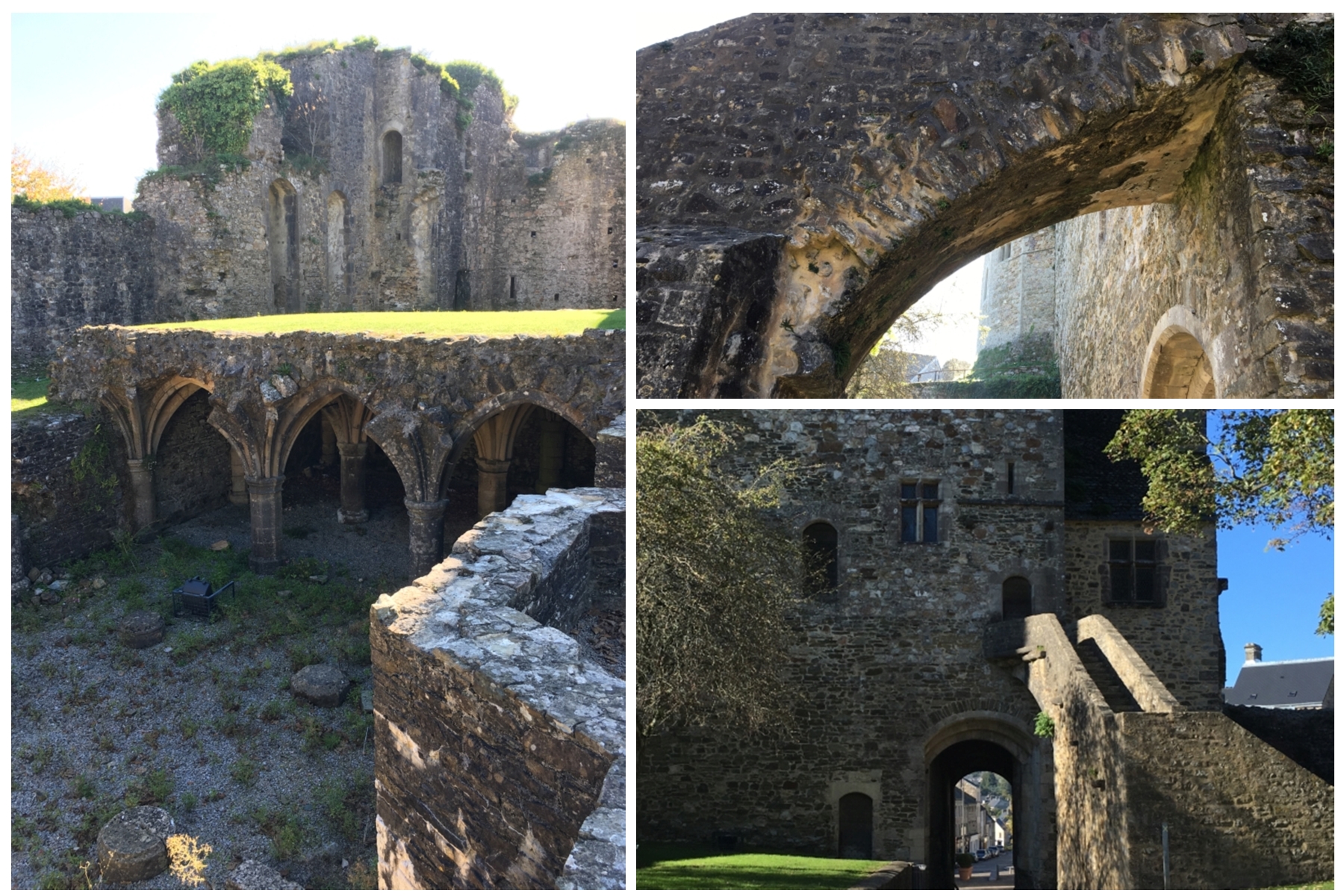
In the centre of town is the Bricquebec castle, started in the 12th century and then added to as further reinforcements were required with stone walls, towers and fortified entrances. It has been protected as a Monument historique since 1840 and, although parts of it are in ruins, it’s remarkably in tact. One part has been converted to an up-market hotel and restaurant and they obviously have gardeners looking after the grounds.
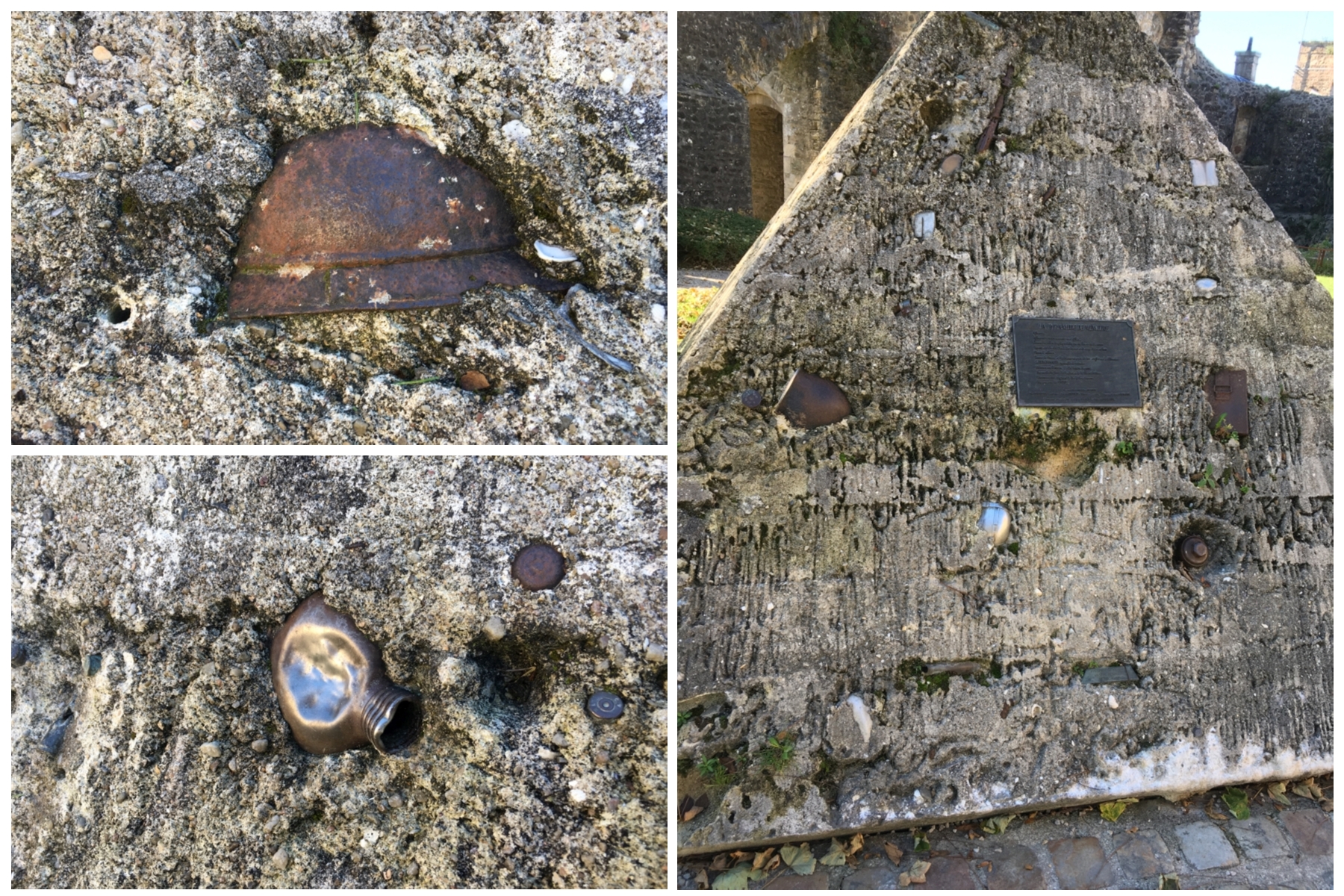
In the middle of the courtyard was a pyramid – Pyramide de Mémoire. This was unveiled by the local mayor in 1999 and is built of sand from Utah Beach.
Embedded in the pyramid are 2000 objects that were collected from the beach following the D Day landings. The idea is that, over time, the sand will erode from the pyramid and the further objects will uncovered for future generations to see.
This Thursday is a public holiday in France. Like nearly every other public holiday, it is a significant religious day – this time it’s All Saints Day. Even though they have lumped all the saints together on one day, they still like to have feast days for many, many other saints throughout the year. Just look at October.
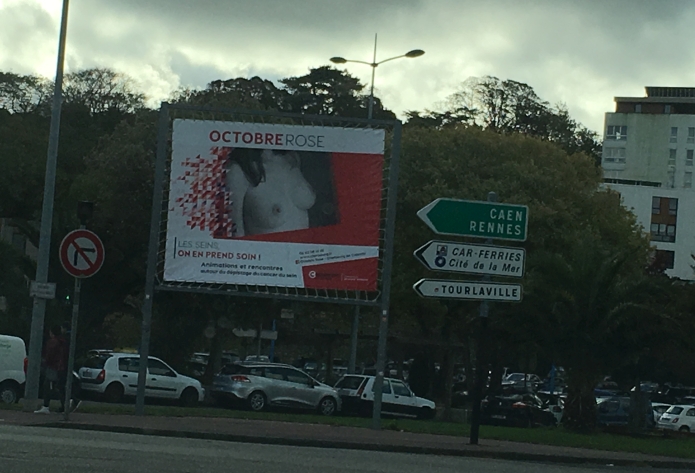
But one of the contradictions in France is that, even though it is a very conservative and religious country, they do things that would probably not be accepted in Australia.
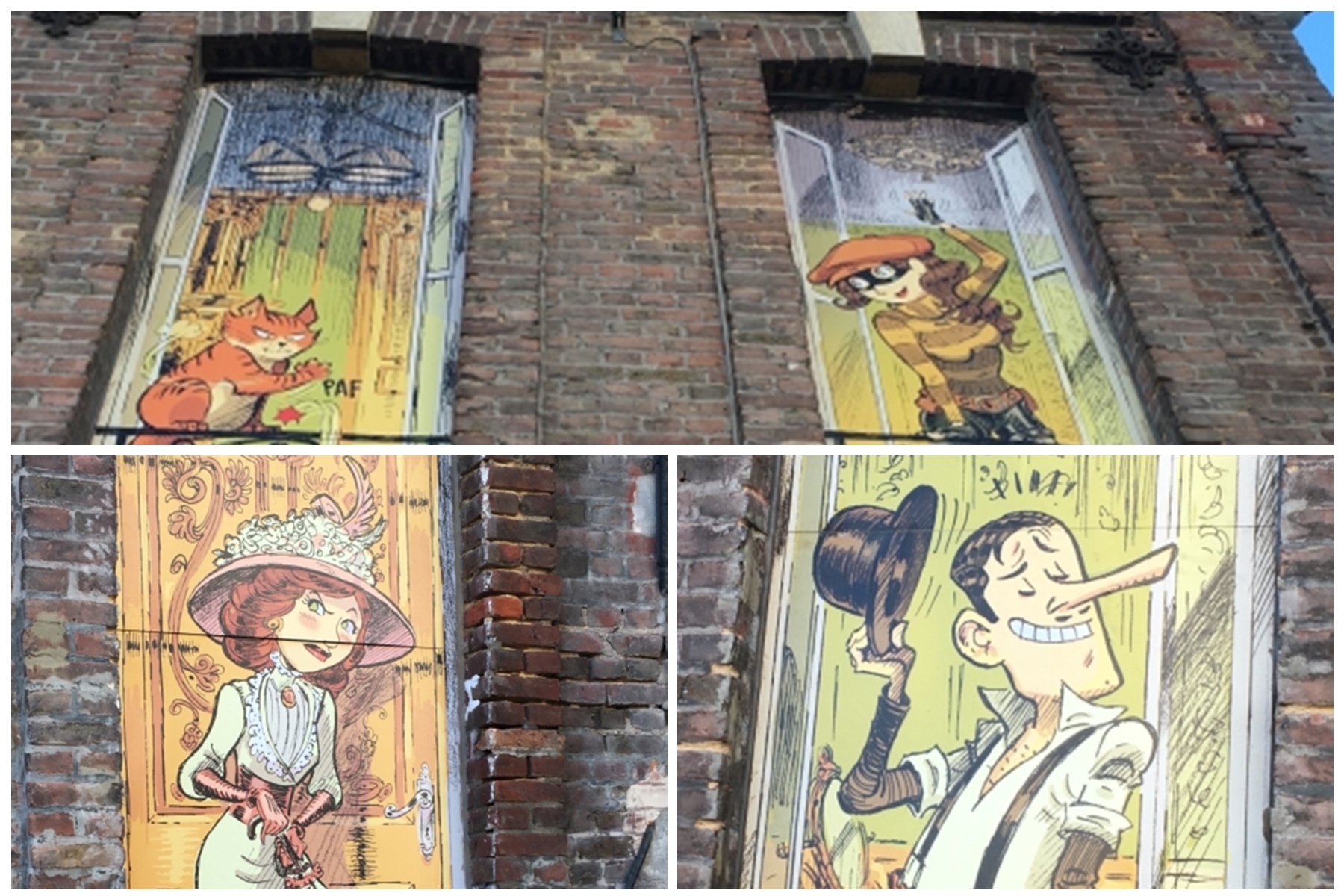
For instance, internationally October is Breast Cancer Awareness month. The marketing usually features the face of some middle aged (or older) woman smiling at the camera. Could be an advertisement for just about anything. Not here. The billboard at one of the busiest intersections in town, outside the train station does it differently.



























 thefrenchfeed