And that’s a wrap

Bonjour and welcome to our 70th and final French Feed post!

The time has come to return to Australia. Flights are booked, removalists organised, Clio has a new owner and at this stage we planned to be in a flurry of last visits to favourite haunts and farewells to our friends here. But in the words of Powderfinger’s Bernard Fanning – ‘these days turned out nothing like I had planned’.

In case you missed it, France is in lockdown. Although it was short notice this time, it was not unexpected. The COVID numbers are out of control and there is a very high risk that the health system will not cope, especially with the European winter about to hit. So our final days here are spent at home.

We have been thinking about the things we will and won’t miss. I am sure this list will be different if you ask us in 12 months time, but here is our list of the top 5 in no particular order:

THINGS WE WILL MISS:

Wine, cheese, butter….this was an obvious choice. You don’t need to live here for three years to get a real love of what the French consider are these basic food groups. Prices are low and it’s great to be able to buy these items from small producers (even in supermarkets), rather than the same predictable mass produced offerings we find in the Australian market.

Seasons. Our Australian habit of expecting all produce to be available 12 months of the year doesn’t apply in France. If a particular fruit or vegetable is in season, then the markets are suddenly fully stocked with top quality supplies. Then they are gone as quickly as they arrived.

But it’s not just about produce. There are the music festivals on the night of the summer solstice, the May Day celebration of spring where bunches of Lilly of the Valley flowers are given to loved ones to symbolize love and good luck, the celebration of the Epiphany on the first Sunday in January to remember the arrival of the Three Kings to the baby Jesus 12 days after Christmas and to mark this date, galette des rois are eaten – a type of almond flavoured pastry, decorated with a crown.

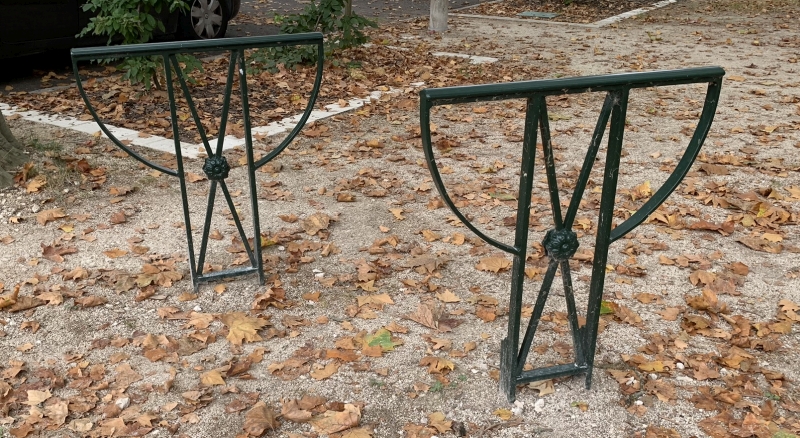
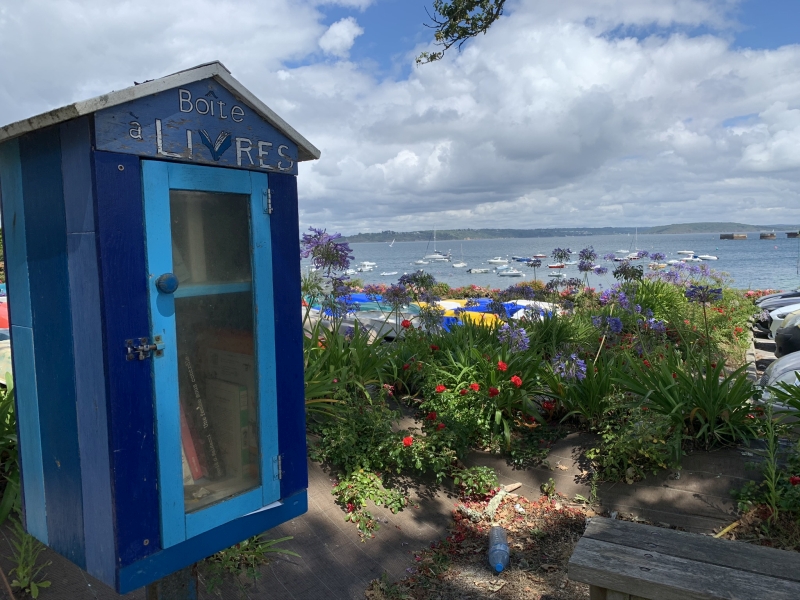
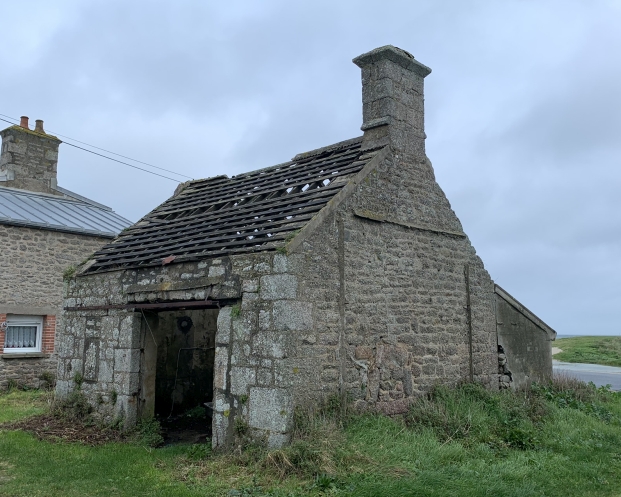
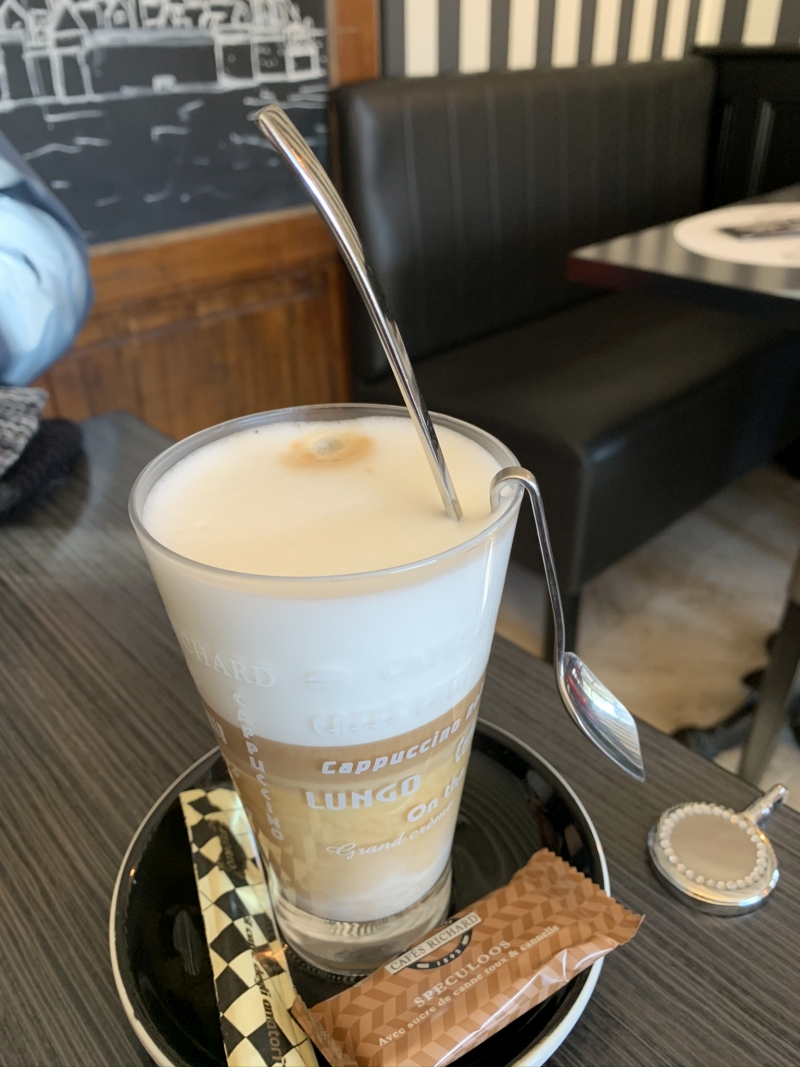
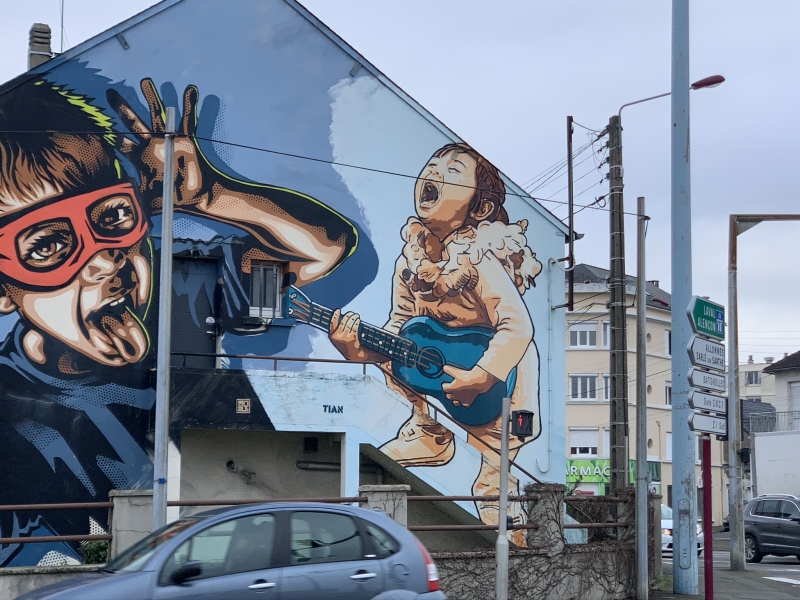
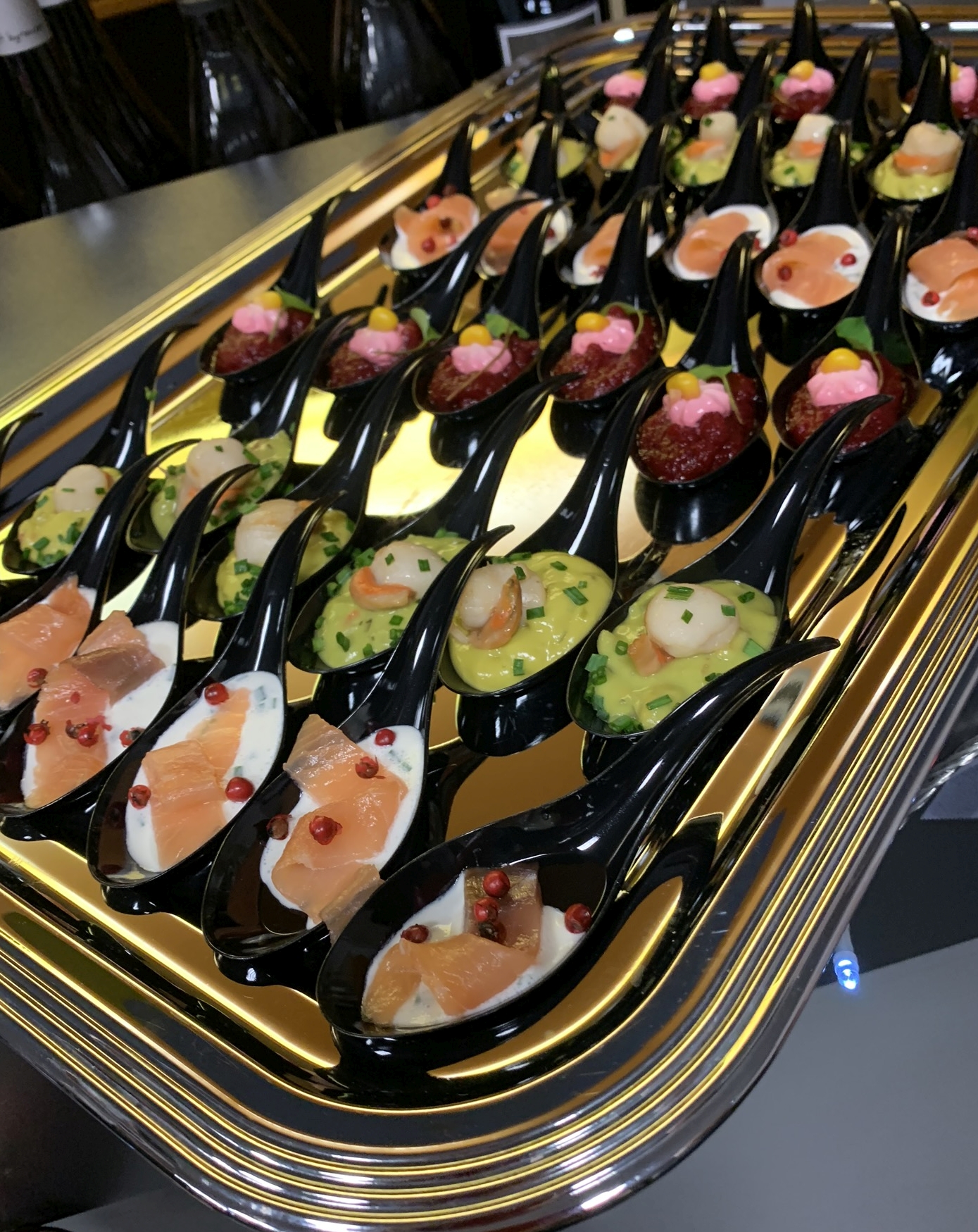
Aesthetics. There is no question that France is a very pretty country. Each region has its own characteristics and we were constantly noticing how things are made to look nice just for the sake of it, even in the most out of the way places. This doesn’t just apply to architecture though. Shop windows and food display cabinets, median strips, forgotten little laneways – beauty in so many places. Here’s just a few examples: clockwise from top left – nibbles served on a tray at work Christmas party last year, street library, old water pump at back of car park, bike racks, potted plants on steps of church.
Our view. Lost count of the number of photos we have taken of our view of the harbour, or the afternoon sunsets over the rooftops from our back windows. We have seen spectacular sunrises and sunsets, massive storm fronts, huge tidal changes, ferries coming and going, tall ships entering the harbour, protest marches and Christmas festivals on the streets below us, baby gulls in their nests squawking for food from mum or dad. There is always something to look at.

Even as I write this I am looking out at a roof being repaired. The guy doing the work has been on the job for several days in wind and rain. Never once seen him wearing a harness or hard hat and he is working on a 45 degree pitched roof which is three stories above ground level. Here is a video of him before he breaks his neck.

History. So much history – two world wars, Napoleonic Wars, French revolution and way back to the times of William the Conqueror. Our interest and knowledge is so much greater than when we arrived. France has its fair share of museums, but so much of the country IS a museum. Houses and public buildings that (on the outside at least) look pretty much the same as they have for centuries and yet people live in them and go about their 21st century lives. Beautiful buildings are used, not just looked at, but the idea of plastering them with large colourful signage would be unthinkable. The French know how to keep it classy.

THINGS WE WON’T MISS

Bureaucracy. Dealing with red tape in France has had our heads shaking and eyes rolling.

An entire blog post could be written about the problems in getting a drivers licence here. Our experience with this was not as bad as some, but still took many months. There are so many examples of other things that, to us, are not logical. School children must have medical certificates before they can participate in any physical activity, and yet joining a gym or entering a fun run does not require even the name of your doctor or next of kin. Payment with either cash or cheques are ok, but often credit cards are not accepted, even for large amounts (haven’t written a cheque in Australia for years).

When applying for our permanent residency card we had to fill out many forms and take them along to our face to face appointment with the local prefecture. Then we sat while the official manually entered all the data into her computer. It took hours. As we waited, we noticed the tiny office was lined with shelves full of binders with labels such as “building permits/Cherbourg /1982 April – June” or some such thing in French. It was like a trip back to the 1970s.

Rain. It rains a lot in Cherbourg. Not every day, but most days. When it doesn’t rain then we don’t miss it. Never will.

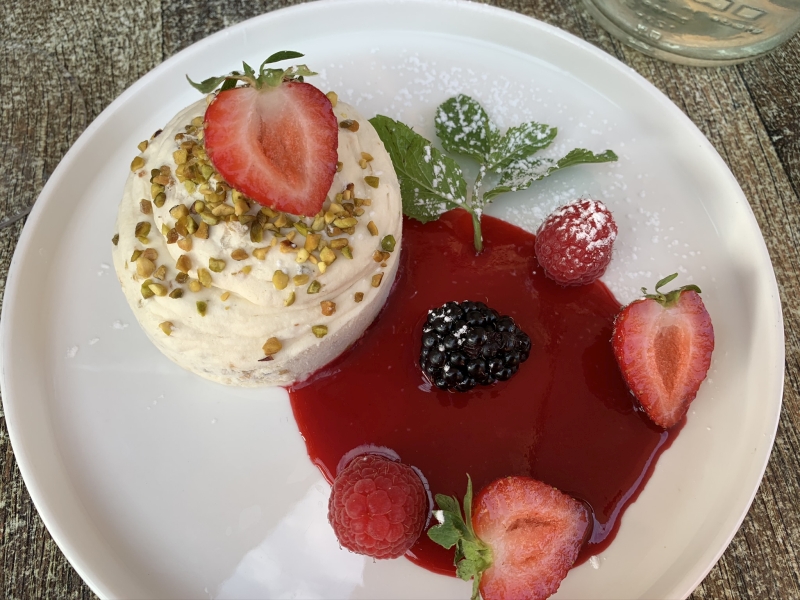
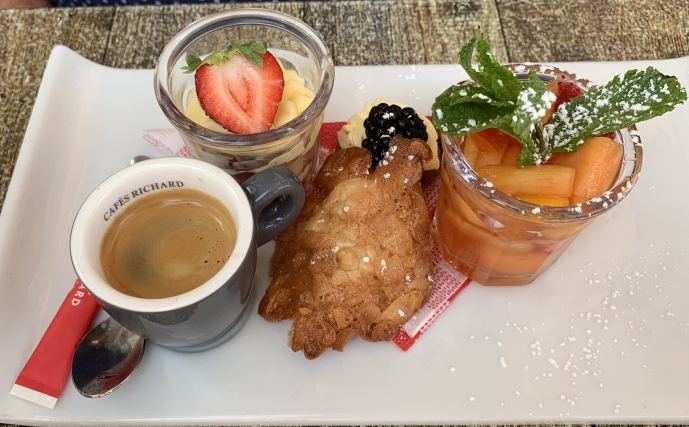
Food. This is a bit contentious. There is no argument that, technically the French food is good and always beautifully presented. Lee quite likes the food – some sort of protein with a nice sauce and a baby carrot or two. And dessert is always good. Many restaurants will offer a ‘formula’ menu which means ordering two or three courses from a small selection for a much cheaper price. Here is an example of what to expect and this was probably less than €20

BUT, if you are a vegetarian or vegan then you better get used to eating at home. There are options if you can find ethnic restaurants or happy to eat vege burgers (frozen patties) or cheesy pasta, but apart from that, the choices are very, very limited. We have plenty of diversity when it comes to food in Australia but so do many other countries (looking at you England).

Tradition plays such a big part in the food and this is reflected in their everyday eating – a lunchtime baguette will be made with ham and cheese, or ham cheese and tomato. Very few variations on that, no matter where you are in France. Same goes for the ever popular galettes and crepes. Eating out for breakfast is not a thing in France. The only exceptions are restaurants attached to, or adjacent to a hotel and breakfast is always a croissant, yesterday’s baguette that has been toasted, juice and coffee. Sounds really picky, but won’t miss this.

Dog poo. There are rules about picking up after your dog, bags are provided in dispensers around parks etc, and yet you really need to watch where you are walking.

It says “the poop is in the bag”

And last but not least: we won’t miss being so far away from our families and friends. We won’t have to think about what time it is at home, if this would be a good time to call, not being there for family celebrations and watching little people growing up.

But writing The French Feed has been fun and made us much more conscious of what we experiencing in this whole adventure. Thank you for all your positive comments and enjoying this journey with us.

L & M.

Road trip #4 – the final instalment

Hi again

This is our last blog post about our road trip. After we left Provence we started the journey north in the direction of Cherbourg. We stopped for a couple of days at Vichy, which has two big claims to fame.

Most recently, it became the seat for the French Government in 1940 because Paris was part of the German military occupation zone. Vichy was in the “Free Zone” and chosen because there was a direct train line from Paris, there was a telephone system already in place, and also there were many hotels and substantial buildings that were converted to government offices. The reason why there were so many suitable buildings was because of the other reason….

As far back as 52 BC, there was a Roman settlement at Vichy after hot mineral springs were found and thought to have supposed medicinal value. Word spread, and by the end of 16th century, the mineral baths had obtained the reputation for having quasi-miraculous curing powers and attracted patients from the noble and wealthy classes.

The rich and famous liked the finer things in life, and the money started pouring in to build first class hotels, along with newly laid-out boulevards, parks, a casino and an opera house. At its peak just before WW1, there were nearly 100,000 people visiting Vichy each year. There are some beautiful buildings and public spaces, particularly in the Art Deco style.

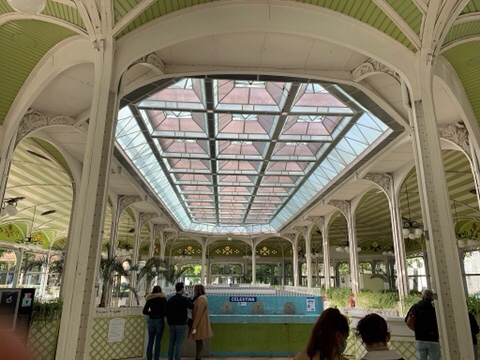
This is inside one of the public spaces where you can tap into the mineral springs. It’s free if you bring your own cup and we both agreed it tastes just like Alka Seltzer.
Entrance to a restaurant. If you zoom in you can see the tiling around the doorway. Amazing!
Check out the brick work and metal work around this doorway. Wonder if they still teach that at TAFE.
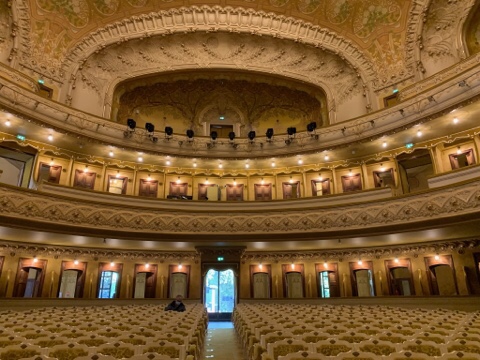
Inside the Opera House. Opened in 1903 and very much still in constant use . If you enjoyed the light show from the last blog post then you will like the next bit. Through summer there a light show each evening that is projected on to the front of the Opera House.

https://youtu.be/HWjBAv1JdZk

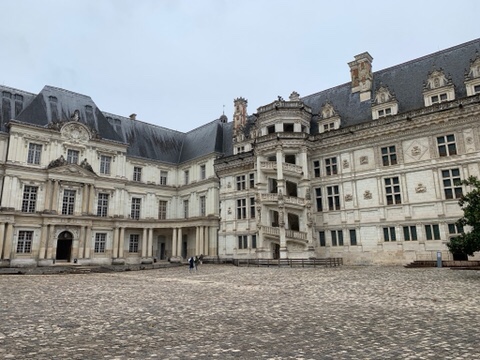
And last but not least, we then headed off to Blois in the Loire Valley. Here are some of the highlights….

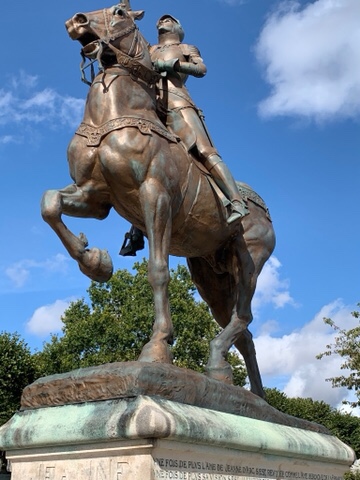
This is Joan of Arc, who stopped by Blois in 1429 and visited the castle in order to be blessed before she defeated the English at Orleans.

You can’t go to Blois without visiting the Chateau Royal. It has a very long and colourful history (don’t they all?) and here is a selection of some of the amazing detail inside and out

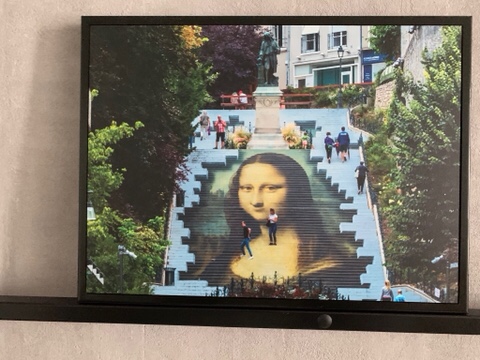
One of the more recent touristy additions to Blois is the Escalier Denis Papin. This is a staircase of 120 steps, named after Denis Papin, an inventor from Blois who designed the steam engine. The staircase links the upper town with the lower town and, since 2013, the risers have been “dressed” in giant artwork responding to what’s happening in town. The Mona Lisa was a previous display and the other photos below is what is looks like now.

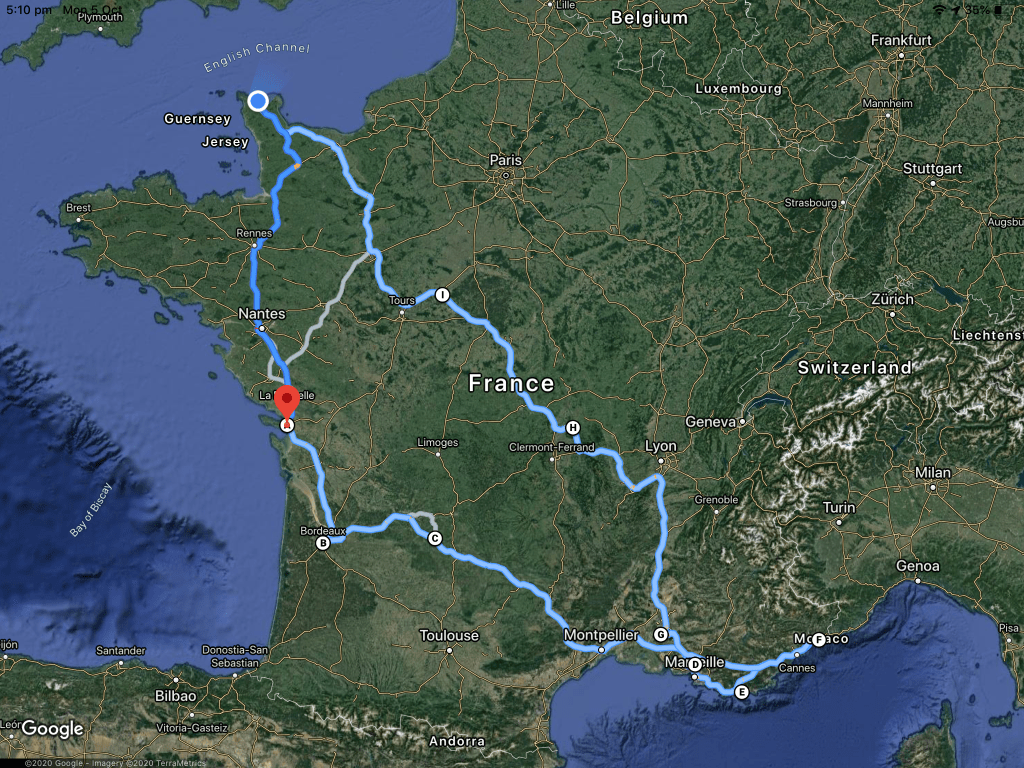
So now we are back in Cherbourg. Here’s a map of our trip. Over 4000 kms, 9 hotels, countless face masks and many fantastic memories.

Till next time

L & M.

Road trip #3

Welcome back to our travels around France.

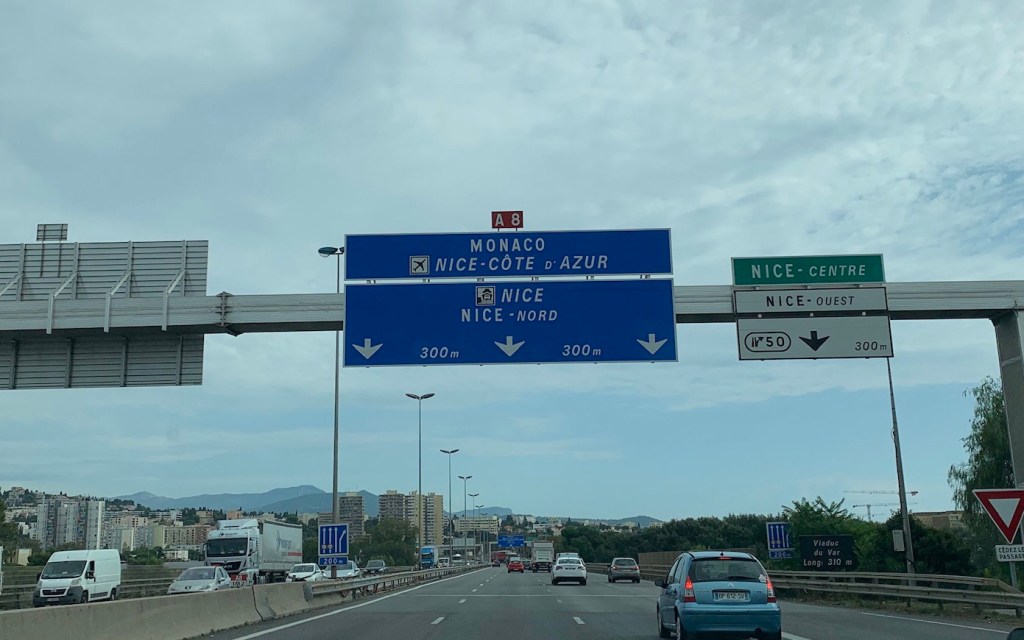
After we left Hyères, we headed east along the Côte d’Azur along with a squillion huge trucks and semi trailers. It’s obviously a very busy stretch of road, probably the main route between Italy and Spain. Most trucks seem to travel in convoy and have to stick to the same lanes so that was a relief for little Clio when we saw them struggling up the many steep hills and through tunnels on the highway. We were staggered by the number of houses along the way that were built into impossibly steep rocky slopes. Land is at such a premium and a view of the Mediterranean is worth a lot.

Not a sign we see every day

Of course we couldn’t go to that part of the world without a visit to Monaco. We didn’t stay long but ogled at the expensive cars and yachts in the harbour.

Some serious money here. The yacht circled is the Lionhart, according to Wikipedia is owned by British retail entrepreneur, Sir Philip Green, take 12 guests in 6 cabins, crew of 30, and is valued at a cheeky US$150 million.

There were police and security everywhere. We were decidedly under-dressed in our ‘just back from a beach holiday’ attire. Even shop assistants in the high end shops were dressed like they were heading off to their own wedding after work.

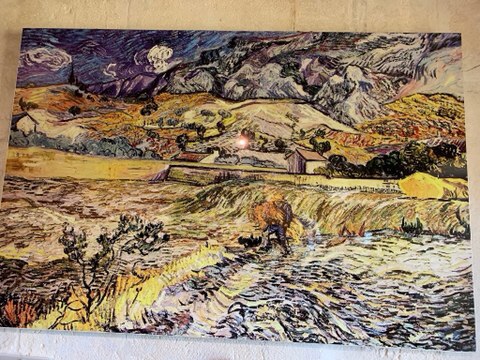
After buying an overpriced souvenir near the casino, we then headed off to Provence. Our base here was Saint Remy de Provence, the place where Vincent Van Gogh spent a year in an asylum and cut his ear off. It was also where he produced many of his better known paintings, including Starry Starry Night and The Sunflowers and The Irises.

The room where Vincent stayed at the asylum. He spent many hours looking through the window and painting what he saw (see next pic).

The Provence area is full of the prettiest little villages and many were built centuries ago at the very top of steep hills (for protection from invasion). We are always amazed how these places are not museums to just be looked at. They are the homes of 21st century families and have been maintained to keep their character and beauty. Apart from the tv antennas and occasional sighting of a internet connection box on the outside walls, they look pretty much the same as they did when they were built.

One of these villages is Les Baux de Provence, with cobble stone lane ways and the ruins of the chateau-fortress. But one of the main reasons we visited here was to see the Carrièrs Lumières. It’s a combination of digital displays of artwork by famous painters (in this instance it was the work of Gaudi and Dali) put to music (Pink Floyd) in a very cavernous space. Bit hard to imagine but here is a taste.

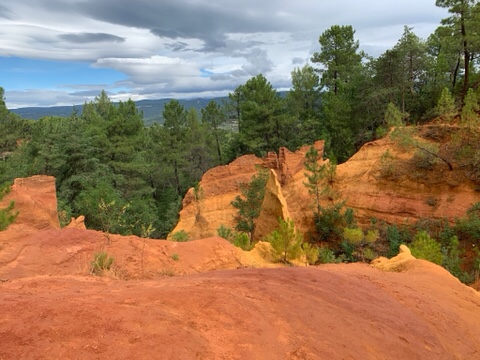
Next day we travelled a bit further away to Roussillon and visited Le Sentier des Ocres (or the red ochre trail). Basically, it is a disused ochre pigment quarry and is now quite a tourist attraction. You can take a walk around the rocks and try and resist the urge to take hundreds of photos because it is just stunning!

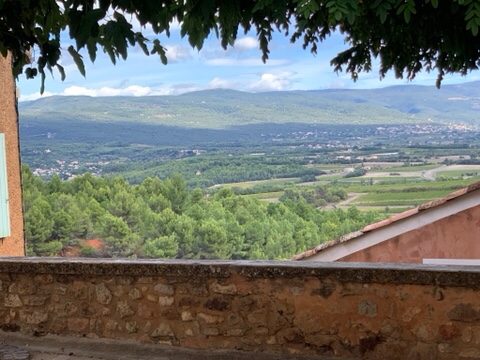
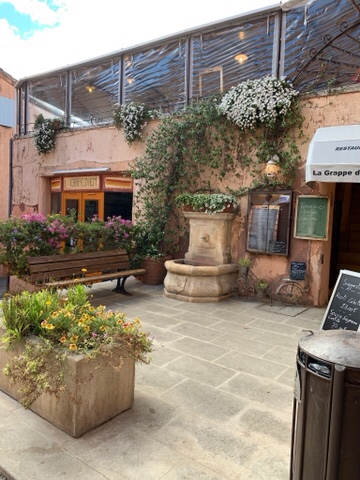
The trail is right near the village of Rouissillon and the houses are all built with the red/orange/pink colour of the ochre. This is one of those places where a photo is everywhere you look. It was hard to pick favourites but we tried….

And just in case there wasn’t enough to fall in love with the place, even the most mundane things have been given a make over…

Garage doors
Rubbish bins
Door to the electrical sub station
Even just a blank space in a wall so it doesn’t look out of place

We are on the home stretch and only a couple more days before we are back in Cherbourg so stayed tuned for the final instalment of the road trip of a lifetime.

Jusqu’à la prochaine tois (until next time).

L & M

Road trip #2

Bonjour

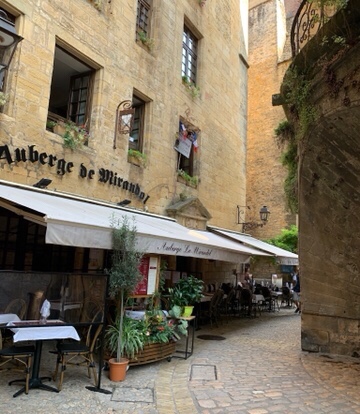
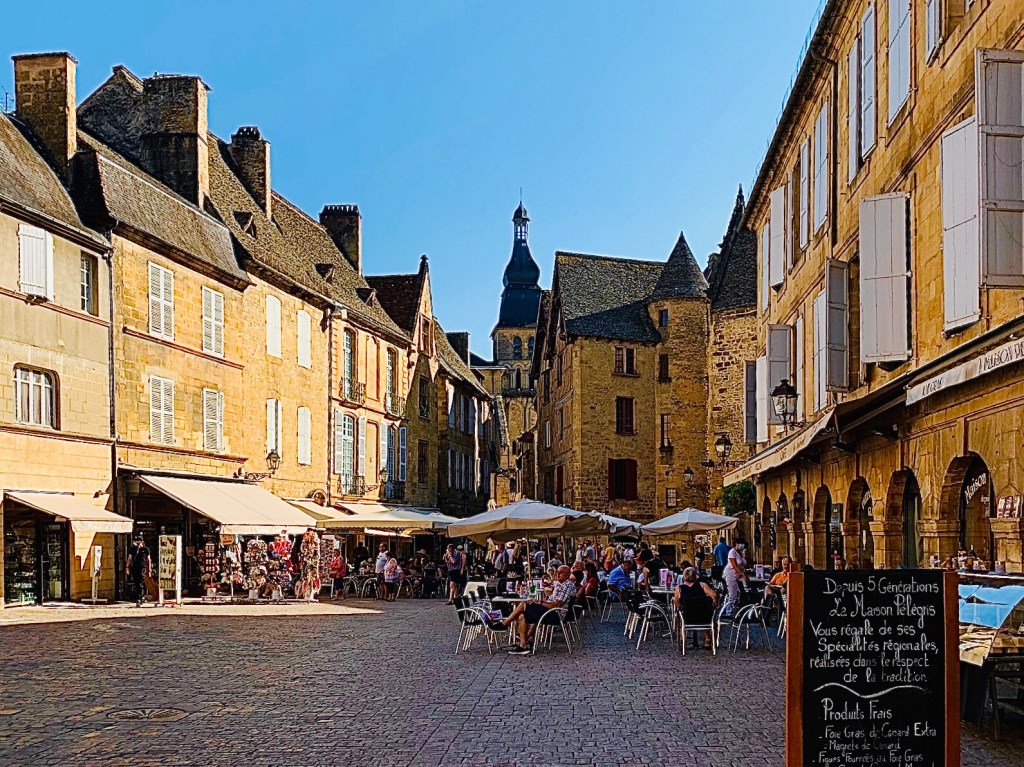
Last blog post, we mentioned we were off to Sarlat, a place we knew very little about. It is a medieval town in the Dordogne region and extremely pretty in a picture postcard way. Despite our ordinary photography skills on our phones and the glare from the 36 degree days, we managed a few which show how lovely it is.

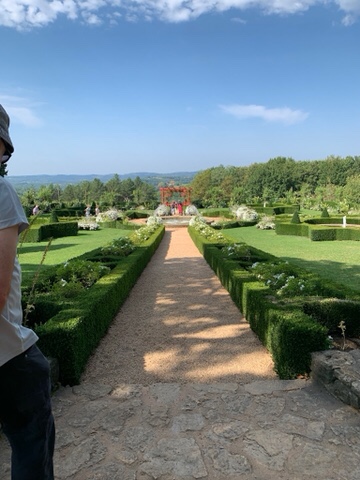
We also took a bit of a drive to the outskirts to visit the gardens of Eyrignac. In 10 hectares there are 300 sculpted plants that are hand clipped by six full time gardeners. The same family has owned the property for 500 years and in normal years they host plenty of weddings and parties.

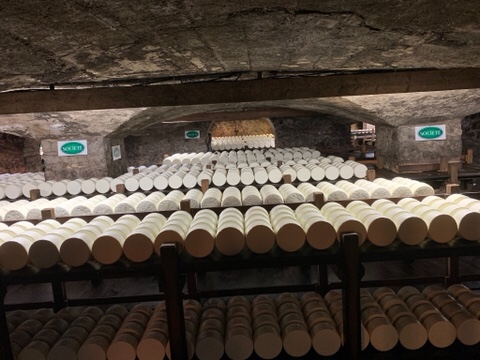
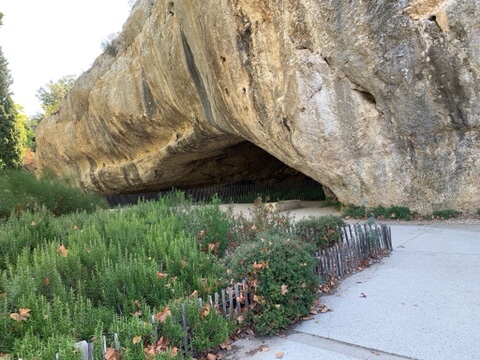
Next stop was Roquefort. Cheese that smells like dirty socks is a bit divisive, but we like it, so could not pass by without a tour of the Roquefort cheese caves. The tour was entirely in French, but we gathered that it is made from milk from a very particular type of sheep which is sprinkled with powdered mould and left to do its magic in the caves which are at a constant temperature of 10 degrees.

Wheels of cheese getting mouldy. There was no smell but at 10 degrees, it felt like being in a fridge so probably to be expected.

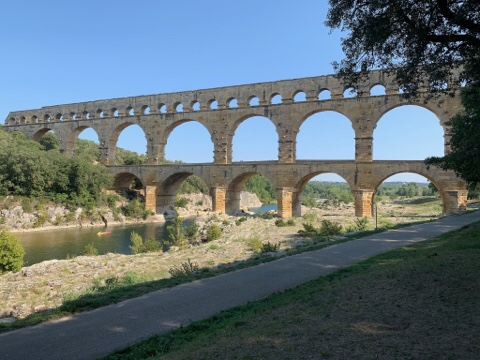
We continued east and stopped at the Pont du Gard, a bridge built in the first century to bring running water to nearby town of Nimes for 500 years. It is the world’s tallest Roman bridge and took only 5 years to build.

The top level is the aqueduct canal where the water used to travel for 50kms by gravity alone. The water was used in Nimes to supply the fountains and thermal baths. The lower level was added much later in 1747 and the only level the public can walk on now.

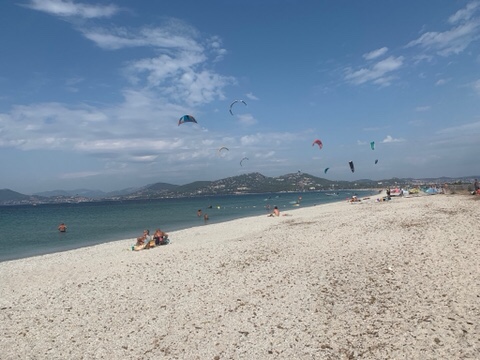
And now we are bunkered down in Hyéres, overlooking the Mediterranean. It’s hot, sunny and even has brief but intense thunder storms. Just like Brisbane. We are right near a marina with literally thousands of boats that look like they never go anywhere, and many are for sale. The beaches are lovely (some anyway) and on Sunday the water was busy with many kite surfers, but apart from that most people just use the water to get wet. Not a lot of swimming and lots of standing around or chatting.

And some random stuff to finish off…….

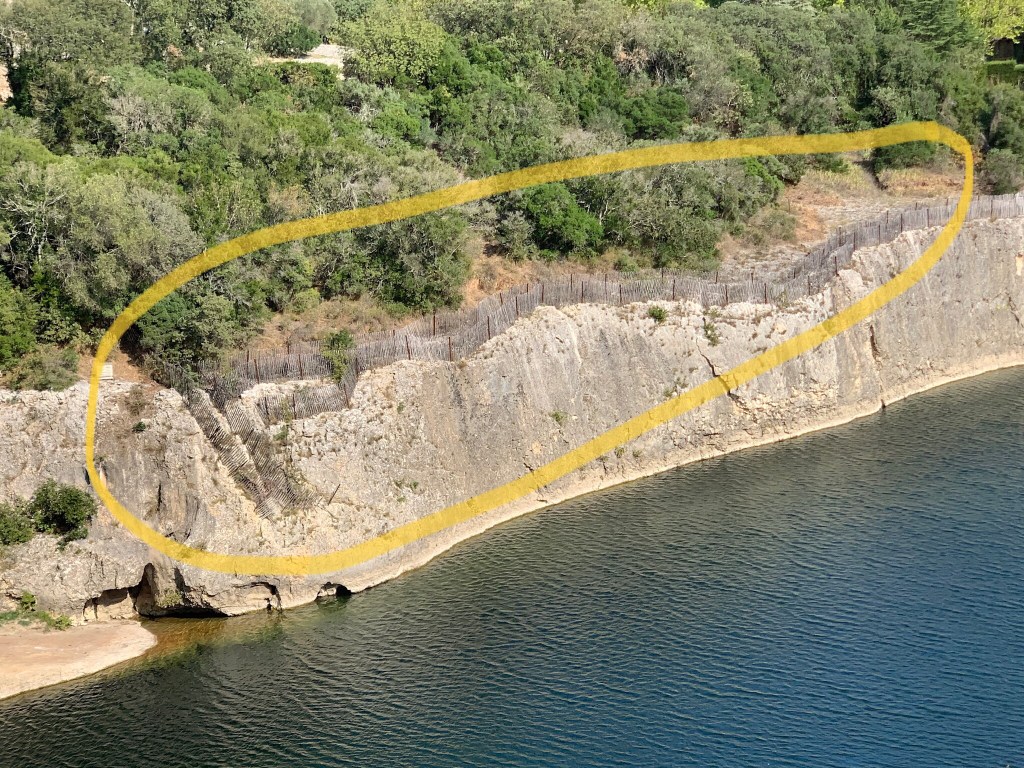
A lot of effort went in to building this fence
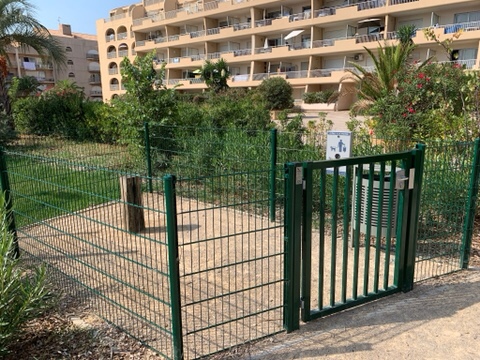
The world’s smallest off leash dog area. It is about the size of a family bathroom. Our apartment overlooks this and not surprisingly we have never seen it used. In France, dogs are too busy visiting restaurants and having a social life to bother with such things.

Stay tuned for Road Trip #3

L & M.
Road trip #1

Bonjour

Word of warning, if you are stuck at home and the idea of having a holiday and/or going on a road trip will make you turn green then you may want to stop reading now.

As our days in France are decreasing and our original travel plans have flown out the window, we have taken the plunge and doing some road tripping to southern parts of France. This will not all fit in to one blog post so stay tuned for more. And I’m trying to write this on my iPad which is a first so here goes 🤞

First stop was La Rochelle on the west coast overlooking the Bay of Biscay. It’s a very pretty place and like everywhere else, would probably be packed full of overseas tourists in a normal year.

After we planned to stop there we were very happy to discover that the Tour de France happened to be peddling through town during our stay, in fact the route was about 100 metres from our hotel.

The day before the race we drove out to Île de Ré where the race (well that leg of it) was due to finish. The French are fantastic at organising events. The planning must have been going on for months and the original race was scheduled for July on a totally different route, so to pull this off and have it all go so smoothly is a huge credit to them. The day before you can see temporary barricades and signage all ready to go. Roundabouts had been removed so the cyclists could ride straight through intersections, and roads had been resurfaced. We watched most of the race on tv then went out to watch it live outside the hotel. They whizzed by at about 40-50 kms per hour so it was a bit of a blur but below is our view of things.

Then as soon as they were through town, the army of workers stepped in and removed everything to do with the race and headed off to prepare for the next leg.

After La Rochelle we headed to Bordeaux. And we all know what that involves. The region takes their reputation of wine production very seriously and we have learnt a lot about how they maintain the standards. Many of the vineyards have been bought by international investors for eye watering amounts and their success is just as much about business and marketing as it is about quality wine production.

Here’s a few fun facts that we discovered:

🍷irrigation is forbidden, any watering apart from natural rainfall means the wine maker will lose their AOC (Appellation d’Origine Contrôlée) wine quality rating.

🍷it really helps to know about the elements each year. 2015 and 2016 had perfect weather for the grapes so wines were very high quality. 2017 had a very severe winter and some vineyards had zero production because frosts destroyed the grapes. This year sees great crops but no market (damn you Covid!) so there is much surplus.

🍷because of the lack of market with lock downs, cancelled weddings and no restaurant trade, many grapes were left to rot on the vines or surplus is turned into alcohol for use in hand santizers.

🍷the concept of organic wine is not popular in France. Small wineries have to get cooperation from their neighbours to agree not to use pesticides etc, then it takes years to get to the point of being granted official organic status. Even then, many organic wines are not labelled as such because of the suspicion by French wine drinkers. One organic winery said they get coach loads of foreign tourists who seek out organic wines, but not the locals.

We booked on a wine tour that took in Saint Emilion, very famous for its prestigious red wine, but also a small and well preserved medieval town. These days it is all about tourism and the permanent population of the town is 200 people. At the other end of the scale, the number of visitors to the town each year is 1.5 million! It is incredibly hilly and much nicer to walk around with less tourists.

Overlooking the rooftops in Saint Emilion – always vineyards in the distance
I said it was hilly. The poor people used to live downhill and if they wanted to visit “uptown” they had to pass through one of these passages and pay a tax to get through.
The window from the oldest house in Saint Emilion
The medieval version of a laundromat. The shallow water that fills this pool originates from a natural spring and is where the locals would come to bathe wash clothes.
Ready for harvest. These grapes are really sweet but the skins are very tough.
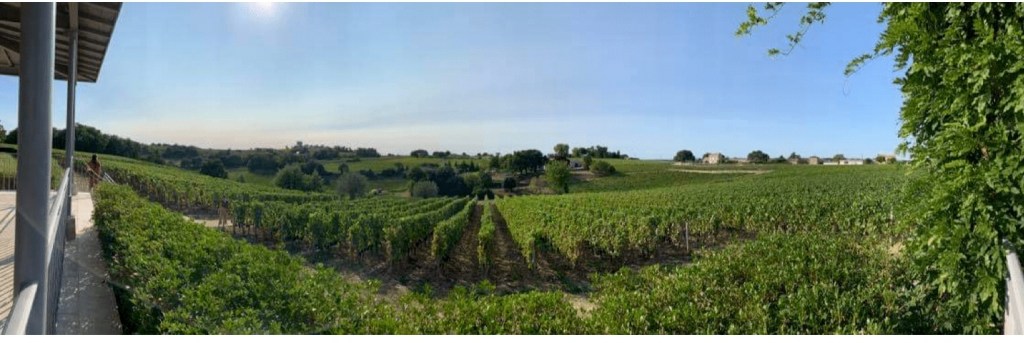
Not a bad view. There is actually quite a lot going on here. There are many small pockets of wine grape varieties being grown, depending on which side of the hill, the soil type and the amount of sun amongst other things. All this is factored in when harvesting and blending the wines.

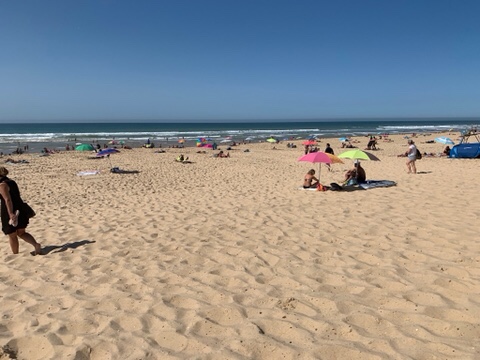
It wasn’t all just about wine. We also visited what would have to be the longest and straightedges beach in France. The map shows the coastline and the straight bit is about 250 kilometres. had to go and check it out. Very ordinary beach and waves were a mess. (Humble brag from Australians but our beaches are very hard to beat)

That’s part 1. Next stop Sarlat. No we had never heard of it before either but will report in next time.

Au revoir

L & M

Vallée de la Loire Part 2

Bonjour

As promised, here is the rest of our Loire Valley experience.

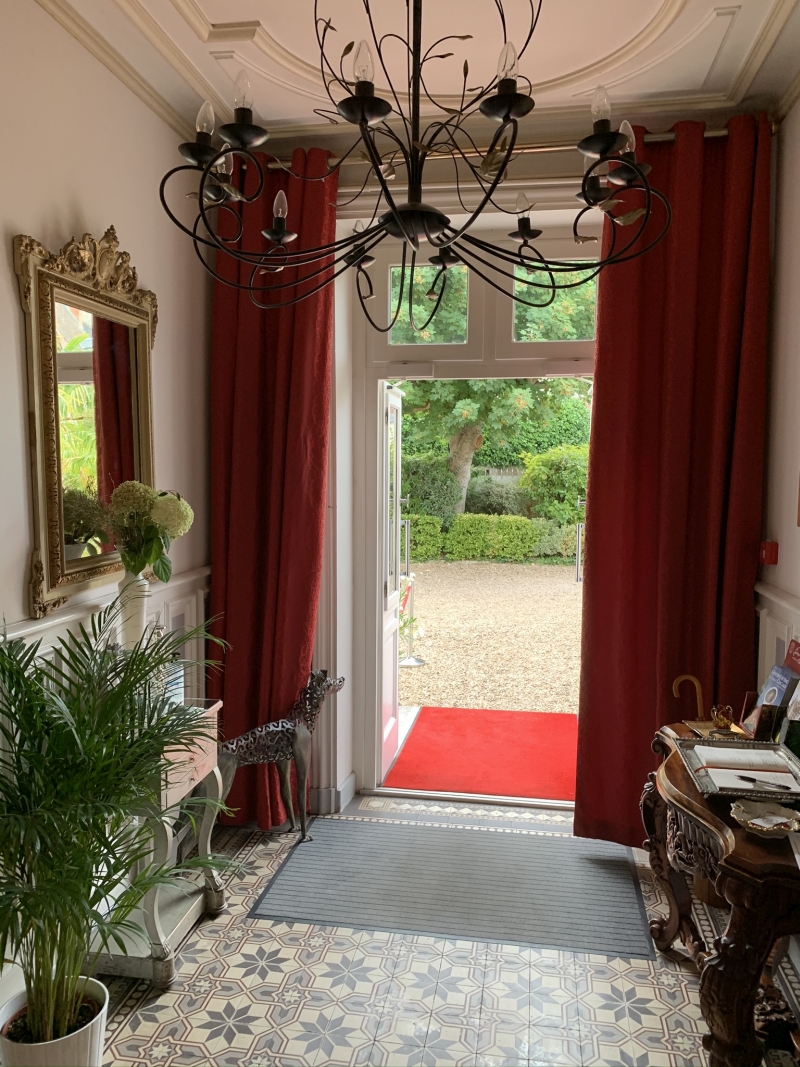
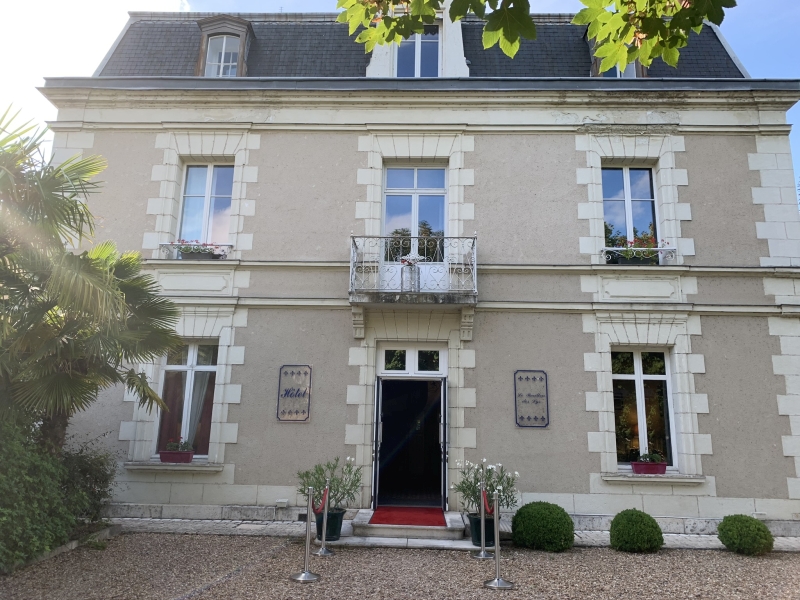
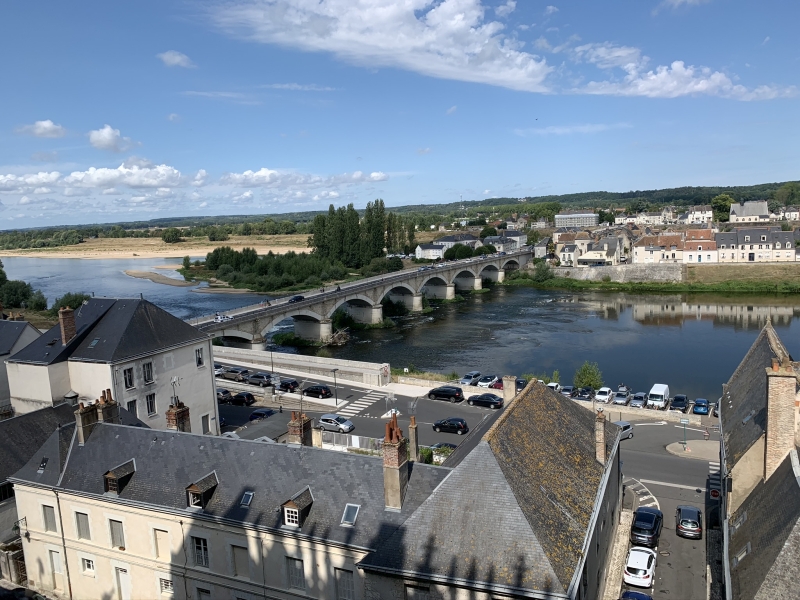
We stayed in Amboise and had fantastic accommodation right in the heart of town. We are guessing that it was originally a house for someone with a bit of wealth and we stayed in probably what was the caretaker’s cottage in the grounds. The photos below show the front door of the hotel, from inside and outside and the entry to our cottage. And the photo taken looking down on the town shows our cottage (circled).

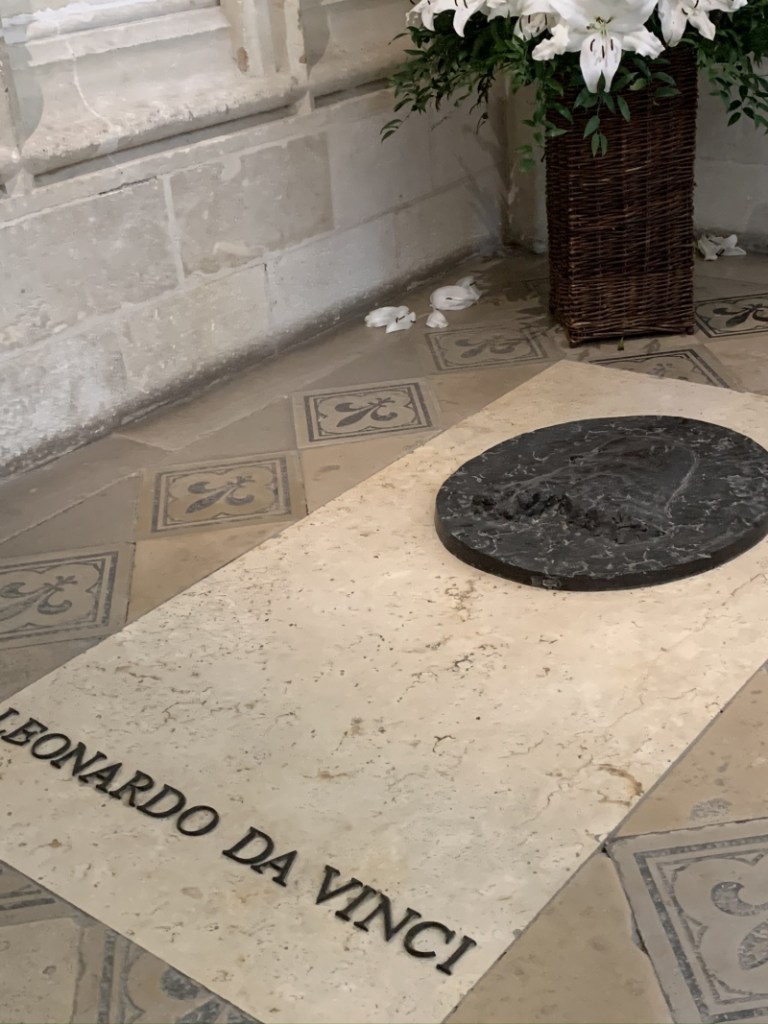
The town surrounds the Chateau d’Amboise, which was the king’s residence when he moved from Paris. One of the highlights is the tomb of Leonardo da Vinci who moved to Amboise from Florence in his final years under the patronage of the French king.

Guided tours are a thing of the past these days, but at the chateau they gave out ipads with a great thingy which you holdup like you are taking a photo and scan around at various rooms through the camera and it showed how the scene at would have looked centuries ago. Below is a view of the bridge across the Loire River today and how it would have looked in 1495.

Not everyone in the Loire Valley lives in a chateau. Troglodyte caves can be found all over the region, cut out of cliff faces or dug underground, often carved out of disused quarries and have provided housing for centuries that is cool in summer and warm in winter. We visited one (used as a wine cellar) that is a consistent 12 degrees all throughout the year. They can be hard to find and look bit like a home for a hobbit.

Arrow points to the front door of what is probably a sizeable home built into the chalky hillside.

And one more chateau to show you. It’s arguably the most photographed one in the area and, like most of them, has quite a history. Chateau of Chenonceau dates back to 16th century it’s called “The Ladies Chateau” because of the number of very strong females who have designed it, owned it and put their stamp on it.

The original chateau is on the left and the arched wing over the River Cher was added later. Interesting fact – it served as a military hospital during WW1 and the river was the line of demarcation during WW2 between occupied France and the free zone. The gallery crossing the river made it possible for Resistance to pass large numbers of people into freedom.
The chateau was given by King Henri 11 to Diane de Poiters, his ‘favourite lady’ and this was her bedroom. After he died, his widow, Catherine de Medici, gave Diane her marching orders and then had her own portrait hung in the bedroom. Point made!
Small room adjacent to Catherine de Medici’s bedroom overlooks the river. The original decoration has been amazingly preserved.

That’s a small sample of our photos. It’s understandable why the Loire Valley is so popular. Probably in normal years there would be huge numbers of coachloads of tourists from all over the world, but not this year. Lucky for us as it would be so much more crowded and hard to see these beautiful sights, but do feel for the hospitality and tourism industry.

Anyway, till next blog.

Au revoir

L & M.

Vallée de la Loire

Bonjour

Two blog posts in two weeks!!!!! AND this one is bit lengthy so will be in TWO PARTS!! Sacré bleu!

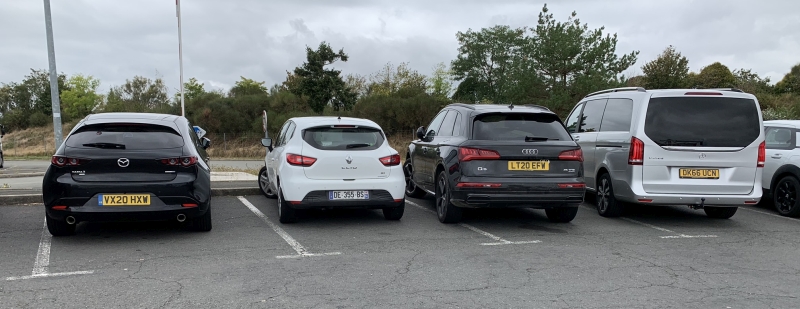
We spent a few days in the Loire Valley – another destination ticked off the bucket list. It’s about a four hour drive so we left early on Friday morning – several hours after the UK announced 14 day isolation for those arriving from France after 4am the following day. The upshot of this was literally thousands of English holiday makers abandoned their French summer vacation plans and rushed to trains, ferry terminals and airports to get home before the deadline. We stopped for a pit stop along the way and were convinced we were in England based on the conversations around us.

Trying to squeeze Clio between English cars. British car parking at its finest.

There are chateaux everywhere in France*, but especially in the Loire Valley. This is because back in the day, Paris was taken over by the English and so the French king at the time decided to move his court to Amboise because it was pretty and the hunting was good. Next thing, his relatives and others who wanted to stay in his good books all moved there too, and the size and grandeur of the chateaux they were building became somewhat competitive. We saw some of the more famous and well preserved ones and they all have an interesting history.

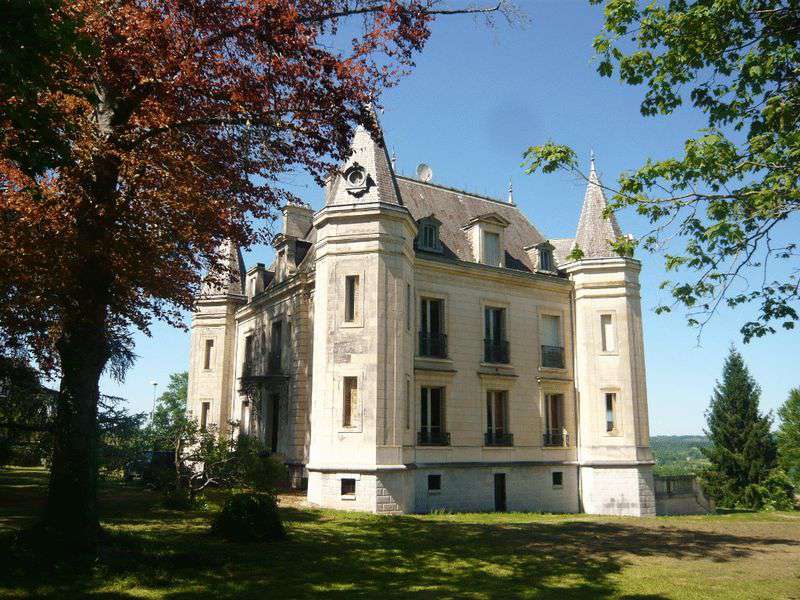
*Fun fact – there are many chateaux for sale in France at surprisingly low prices. The majority of them are bought by overseas buyers. The purchase prices are reasonable but the cost of restoring and maintaining is eye watering. “Structurally renovating a château could set you back an average of €1,000 per square metre. To get a ball-park cost of the possible renovation costs, take a look at the description of the château for sale and simply add three zeroes to its total habitable square meterage“. Sometimes there are tax concessions if the chateau is classified as historically and architecturally significant and is open for public viewing.

This one is currently for sale – 568,000 or about AU$940,000. Comes with 11 bedrooms and 0.6 hectares.

Anyway – back to the Loire Valley. The first chateau we visited was Villandry – more famous for its garden than the actual building itself. It was built by the king’s finance minister after he knocked down the 12 century fortress which was originally on the site. After changing hands a few times, it was bought by Spanish Joachim Carvallo in 1906. He devoted the rest of his life, together with his very rich American wife’s inheritance, to restore the gardens and provide a place to display his extensive art collection. Villandry is currently owned and managed by their descendants.

In writing this, we just realised that neither of us have a photo of the actual chateau, but plenty of the gardens…..

Part of the Ornamental Garden on the left, water leading up to the Water Garden in the middle and part of the Vegetable Garden on the right.
Another view of the Vegetable Garden
This is how they plan the Vegetable Garden each season. This is ‘Villandry vegetable garden summer culture 2020″. Each colour block represents a different type of vegetable and much thought went in to the colour schemes and sizes of the plants. As well as vegetables and herbs, they also used a lot of bedding begonias along the borders to define the shapes.
Every room in the chateau had fresh flowers from the gardens or (most probably) the hot houses. The smell from these lilies in the kitchen was off the charts and the orchids were everywhere.

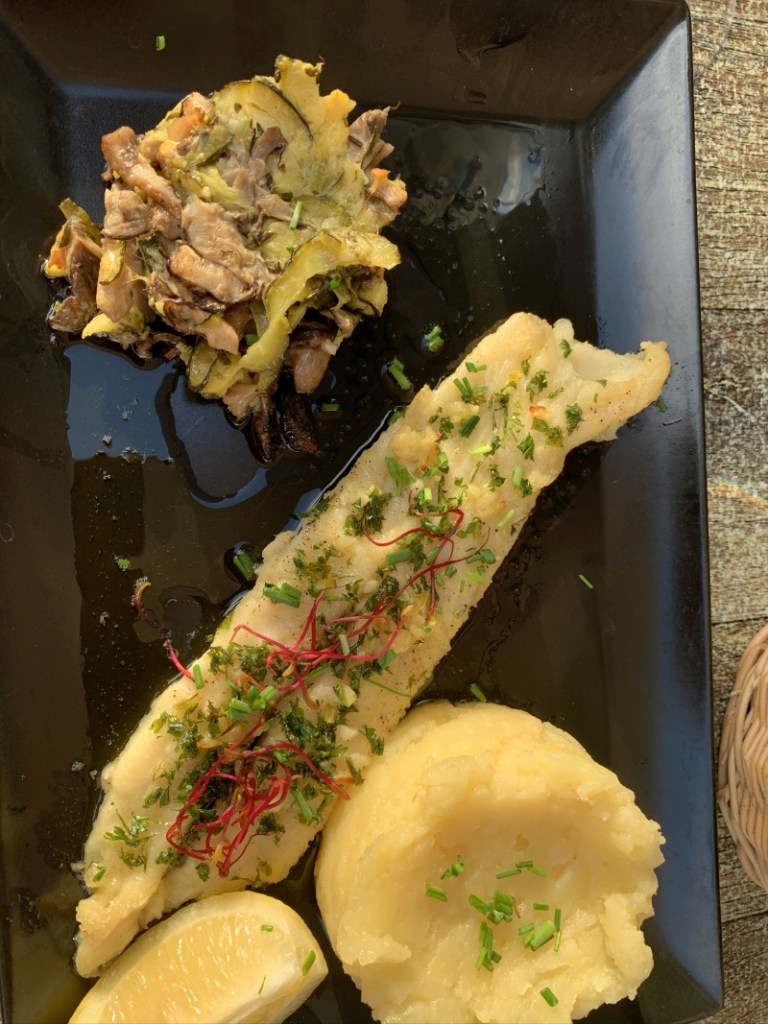
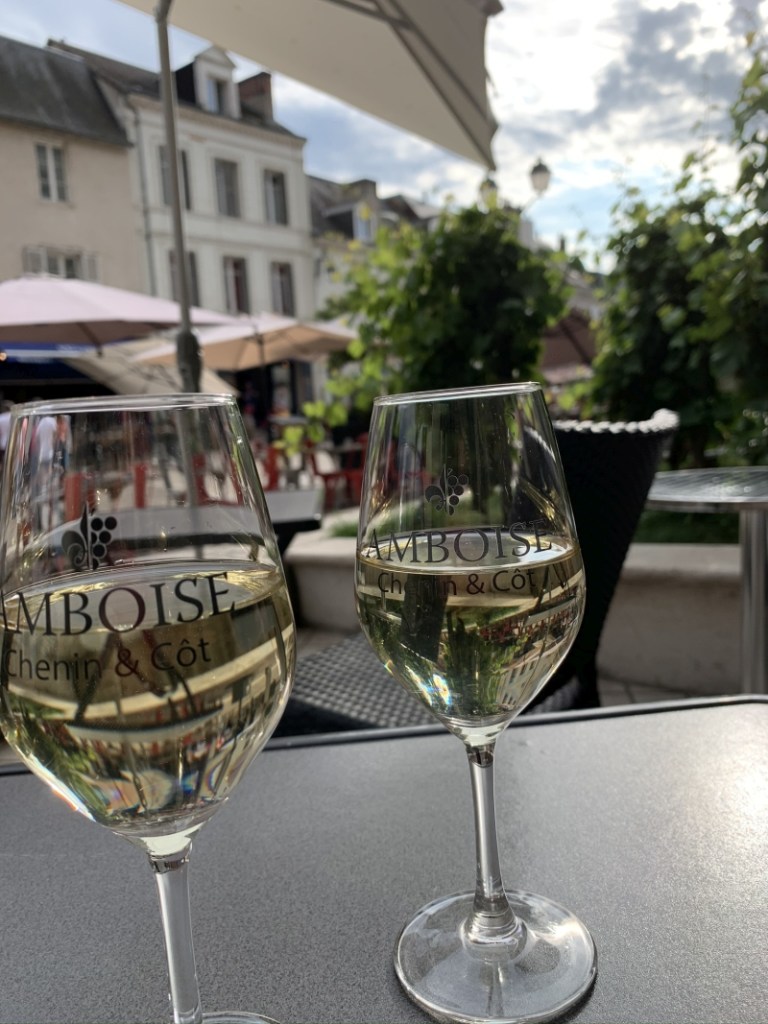
Chateau #1 done. Time for wine tasting and dinner. The photos below demonstrate how the French know how to plate up food. The black plate is basically a piece of fish with mashed potato and veges. On the right is vanilla ice cream with fruit. The bottom picture is cafe gourmand – coffee with a few small tasting size desserts of (this time) vanilla custard, apple dumpling and fruit salad. Of course the menu descriptions were several sentences for each dish but our French must be improving because we are not reaching for Google translate nearly as often these days.

That is Part One of our Loire Valley stay – keep watch for Part Two soon.

L & M

The French Feed – the sequel

That was a long break between posts!

I had to check and the last time there was a post on the French Feed was 13 February. Just after that I went back to Australia for a three week visit. Or so I thought. So nearly five months later I was able to get a flight back to France armed with face masks, hand sanitisers and a ton of documents to say I am allowed to leave Australia. The flights were quite empty, only people travelling together were allowed to sit next to each other so I had empty seats around me. Lee met me at the airport and we headed straight back to Cherbourg, and after two weeks of laying low I can confidentally say I’m Covid19 free.

Like everywhere, we have plenty of new rules about face masks, social distancing etc and the number of cases in many regional areas of France is relatively low. Of course Paris is another story but that is to be expected with all the high density housing in the city.

Obviously this has put a big dampener on our travel plans and those of many of our family and friends who were coming to visit. We will now try and do some trips within France but avoid any big cities or towns.

So to kick things off, last weekend we headed of to Brittany, so called because it was ‘owned’ by the British for much of the last 1000 years. After much argy-bargy, it ended up with the French until the Germans came on the scene in WW2. We stayed in Brest which was pretty much destroyed during the war and so not exactly the prettiest town in France. It has been rebuilt with a lot of concrete and granite, more about providing immediate housing for the homeless than worrying about aesthetics.

As always, it’s best to let the photos tell the story:

This is part of the port of Brest, about the only part of the city that remains from before WW2. It’s very much a working town and the number of new apartment blocks and development of the wharf area means it must be prospering.

We used Brest as our base and spent most of our time checking out the coastline around Brittany. It has an interesting history, including the fact that they have their own language – Breton. It nearly died out after being suppressed by the French education system and now only about 5% of the population can speak this language, although there are efforts to teach it in schools.

The road signs thoughout Brittany are in both French and Breton.

Compared to Normandy, Brittany has many bridges built in challenging locations. We would be travelling along a quiet back road and come across something like this:

Pont de Terenez – finished in 2011, replacing an old bridge that was also a replacement for the original which was destroyed during WW2. Amazing to look at, especially considering the big curve that is best seen from above (see below)
The previous bridges were built just upstream (white line to right of bridge shown above). There is a observation platform at the south end on one of the original concrete towers – where the white splodge is).
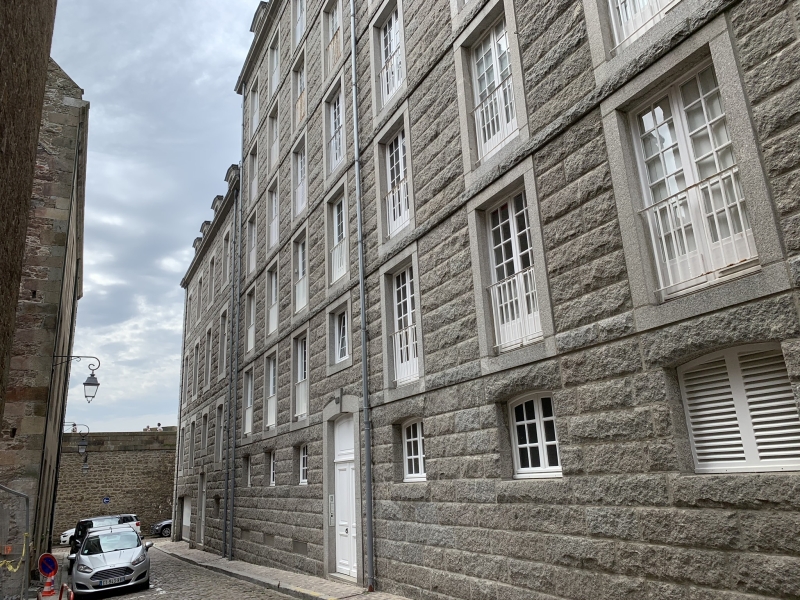
On the way to Brittany we stopped for lunch at St Malo and found 4 Rue Vauborel which would be of zero interest to anyone who has not read “All the light we cannot see” (one of the best books I’ve read in ages). The wall at the end of the street is the sea wall – to keep the huge tidal surges from flooding the town.
Even before WW2, Brest has always been a target for invaders because of the large natural harbour. This is looking across the water to the outskirts of town. Can you spot the bunkers?

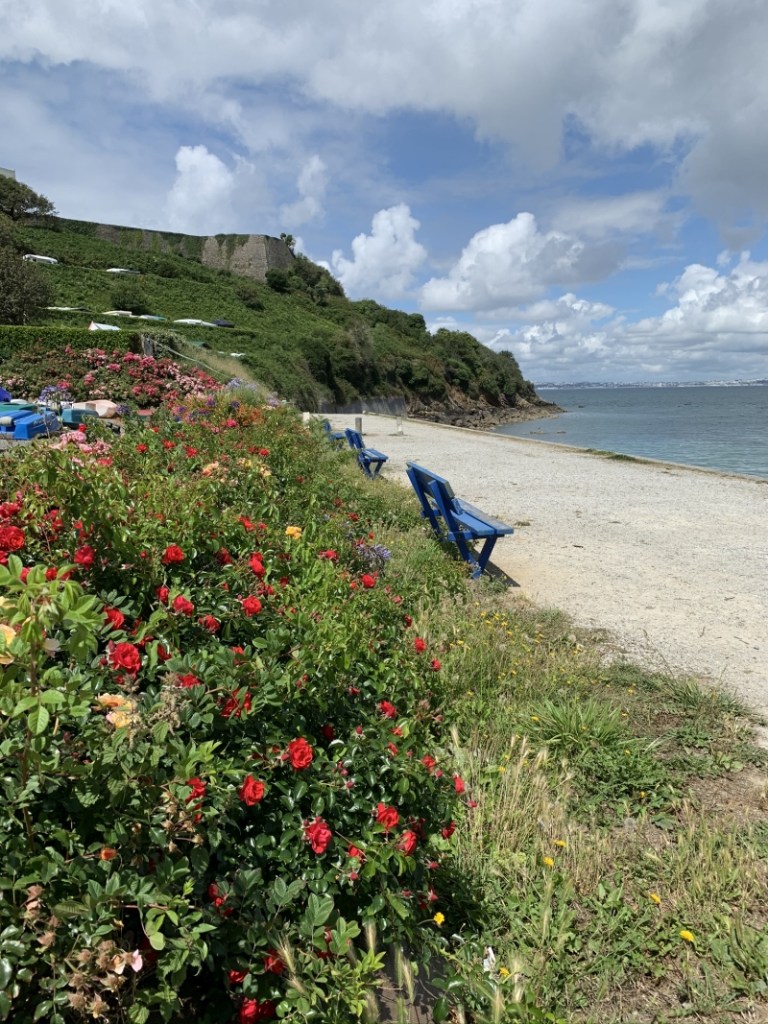
Some pretty beaches and coves are dotted all along the coastlines. So different from Australian beaches – rose beds, book libraries, concrete bunkers… we spotted some very optimistic surfers sitting on their boards in the water, trying to catch the occasional ripple.

Then it was back to Cherbourg where we are getting temps in high 20’s, but not as hot as Paris with 39 degrees last weekend.

The Umbrellas of Cherbourg – it must be summer.

Till next time…

L & M

What’s with the crazy weather????

Bonjour

It is very windy here. First there was storm Clara followed by storm Inès causing havoc in the English Channel. We have been getting 140 kph winds as the official term from the weather bureau is ‘violent phenomena’.

The usual interruptions – ferry cancellations, flight delays and closure of public buildings are par for the course but making headlines in Cherbourg is the fact that the pedestrian bridge across the water to the shops at Les Eleis has been closed.

Fun fact – the pedestrian bridge was officially opened last year and named in honor of Michel Legrand, the French musical composer who wrote the music for the most famous movie ever made here – The Umbrellas of Cherbourg.

But you would have to take your hats off to the pilot who attempted this landing at Birmingham airport….

We have recently had family from New Zealand come to visit and loved showing them some of the highlights of the Normandy area. We joined them in returning to some of our favourites – Bayeaux, the D Day beaches, Barfleur and Le Mans. It was good to revisit and we always see some new random and quirky things in our travels.

At least the walls have stood the test of time.
A spoon designed for a very limited purpose
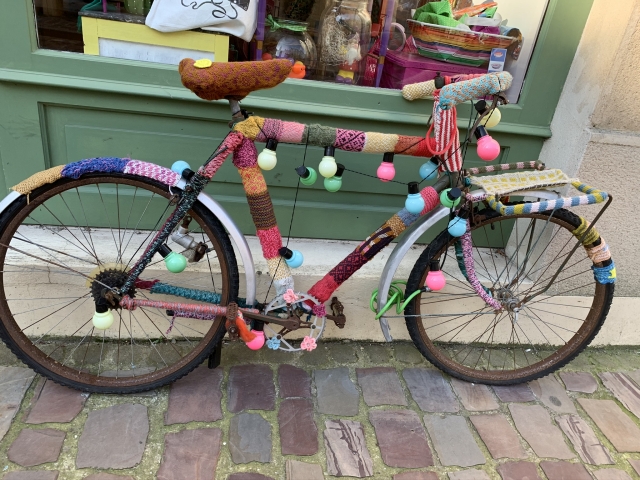
Every bicycle needs a hand knitted coat.
Keeping the hat on and the skirt down in this wind

Hope you enjoy the pics and the crazy weather calms down where ever you are.

Au revoir

L & M.

Je n’aime pas vegemite.
Bonjour

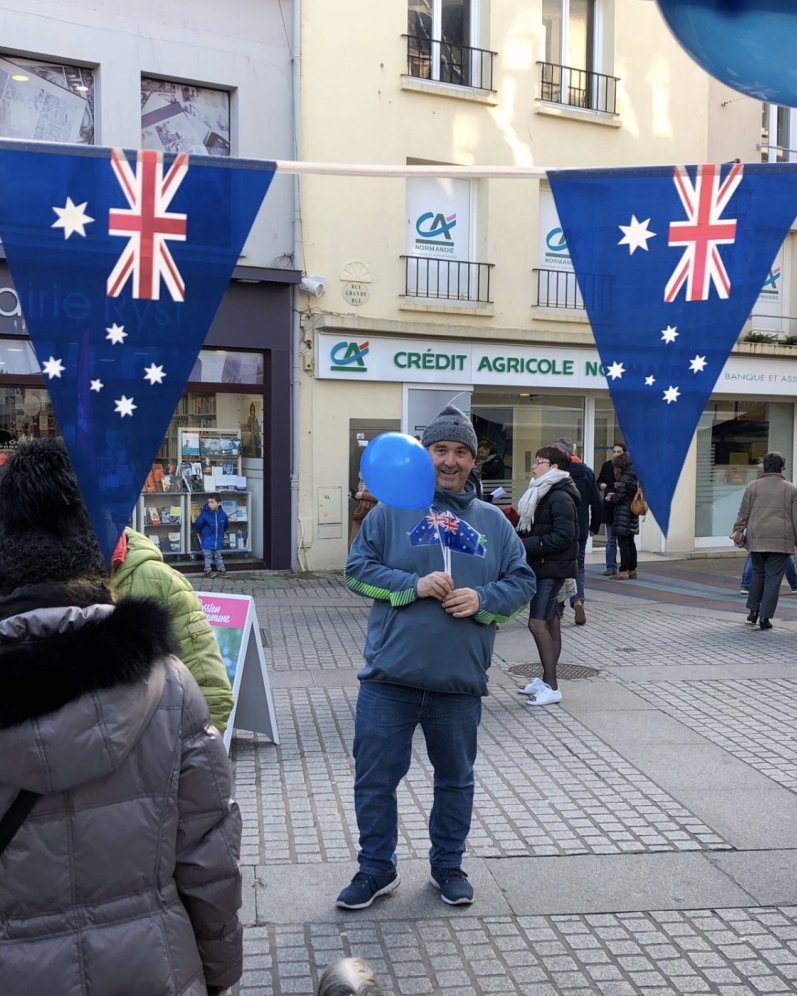
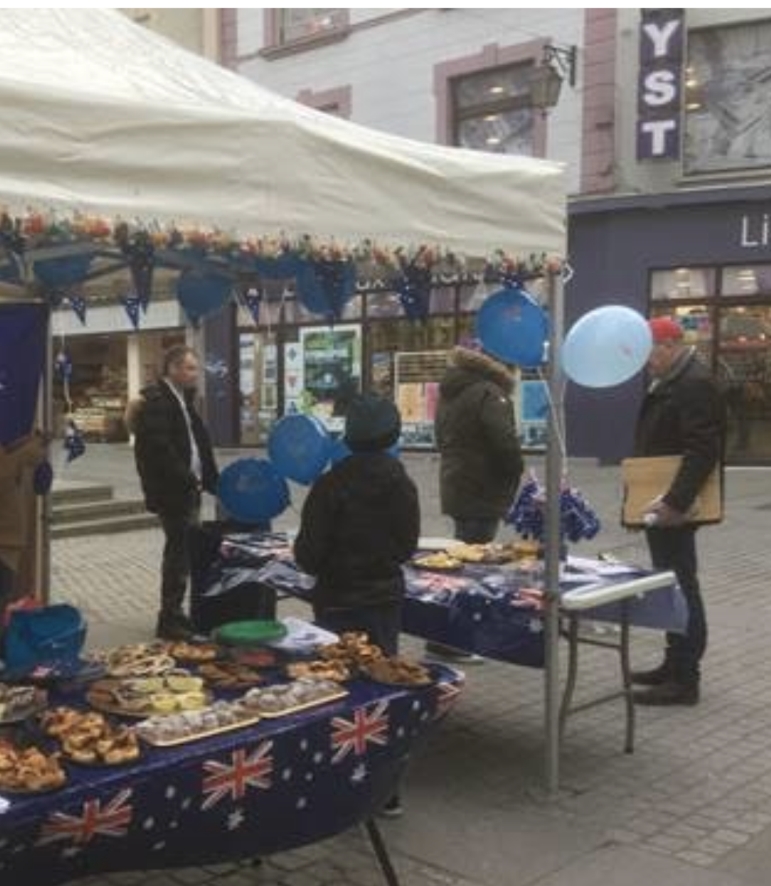
Every year around Australian Day, the Saturday markets in Cherbourg have a stand that is manned by some Australians to ‘introduce’ some of the locals to our so-called national delicacies. There is no problem in getting a thumbs up for the lamingtons, Anzac biscuits, sausage rolls and Tim Tams. But the Vegemite was a definite thumbs down. Obviously an acquired taste.
With all our travels in December and January, we have had a break from living out of suitcases. Yesterday we took Clio for a bit of a spin to the beautiful coastal area, just south of the Cherbourg.

It’s strange to see these seaside places that are obviously packed in the summer months, but on a cold, bleak day in January they are deserted. There are hundreds of holiday homes and even more caravans, sheds and shacks that are locked up and waiting for the warmer weather.

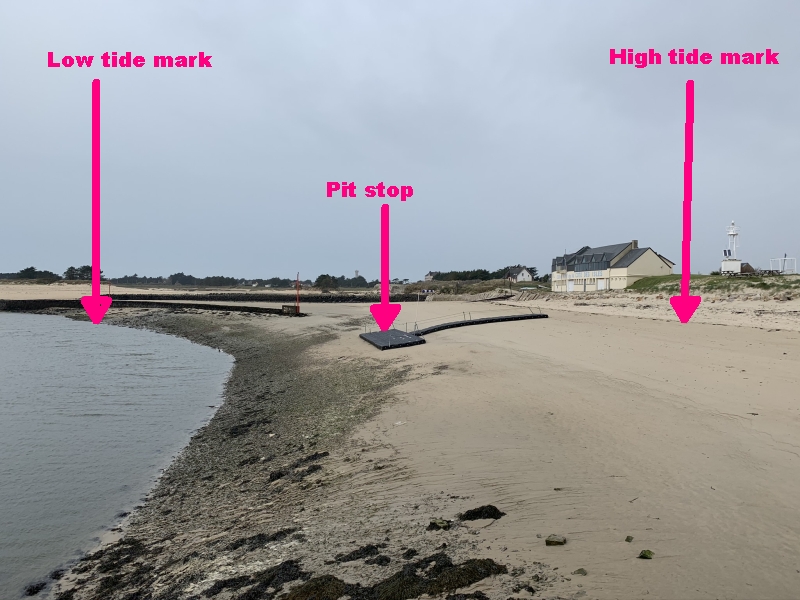
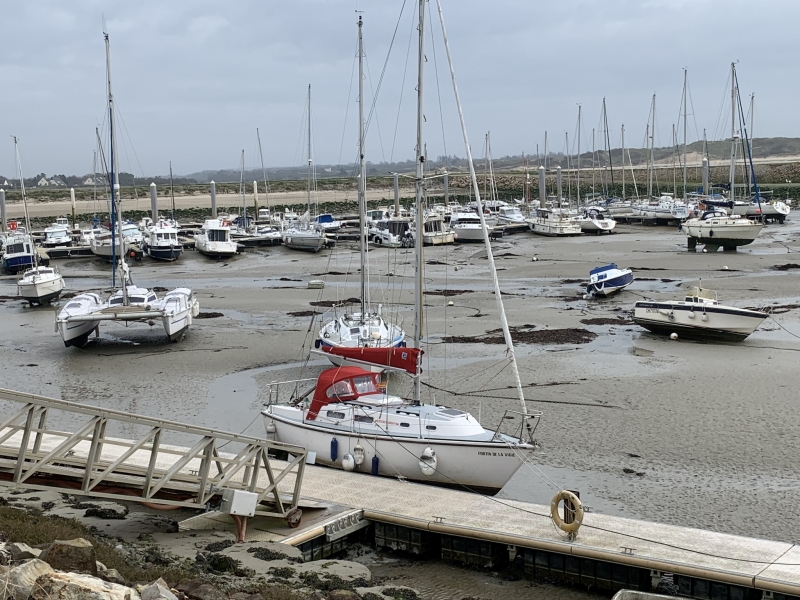
As you can see from the map above, this area looks like the perfect place for some recreational sailing and fishing. It appears that many others think the same thing, based on the number of boats we see in all the harbours up and down the coast. It would be a mad rush to get to your boat and out to sea, then back again before the tide goes out.

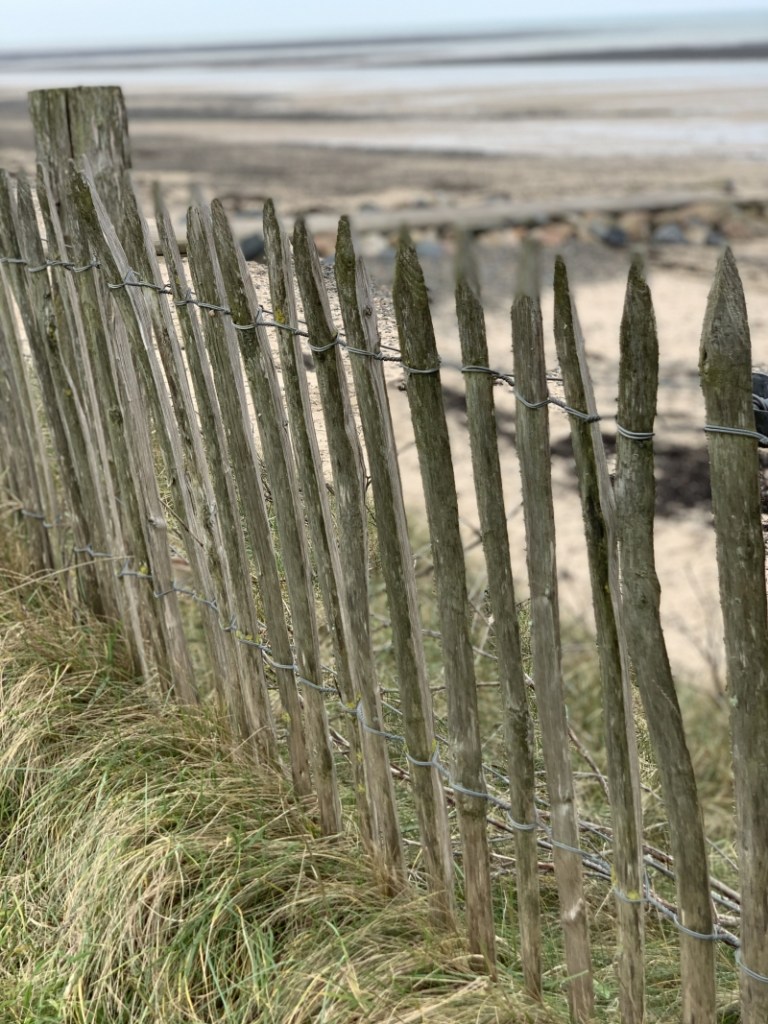
The coastline is quite stunning in a remote, windswept kind of way. Another curiosity (to us anyway) is the kilometres of picket fencing, all wired together by hand. It looks so much more natural and appropriate than any man made materials, but how labour intensive would it be to put that up?

There is a bit of controversy here in Cherbourg about the old fish auction building ( or la petite criée). This building was put up in the early 1950’s so that fishermen could auction off their catch without having to go directly to the fishmongers.

It was really only used for 6 months until they established a bigger market and it fell into disrepair. Then some developers decided to transform it in the early 1990s to something that looked like this…

Even though the council gave the project the go ahead, local restaurateurs protested, so the plans were scrapped. These days the building is looking very sad, but the discussions go on about its future. Eventually, it will probably just fall down and then the decision will be made.

January is nearly over and we are yet to see any snow or really cold weather this winter. The days are quickly getting longer and the daffodils are starting to bloom. Bring on summer. (We can see all those Australians still in the middle of heat waves rolling their eyes).

Au revoir

L & M.