Back on track

Bonjour

It’s been ages since the last French Feed post due to a bit of an unplanned visit back home, but we are now enjoying the last of the French summer.

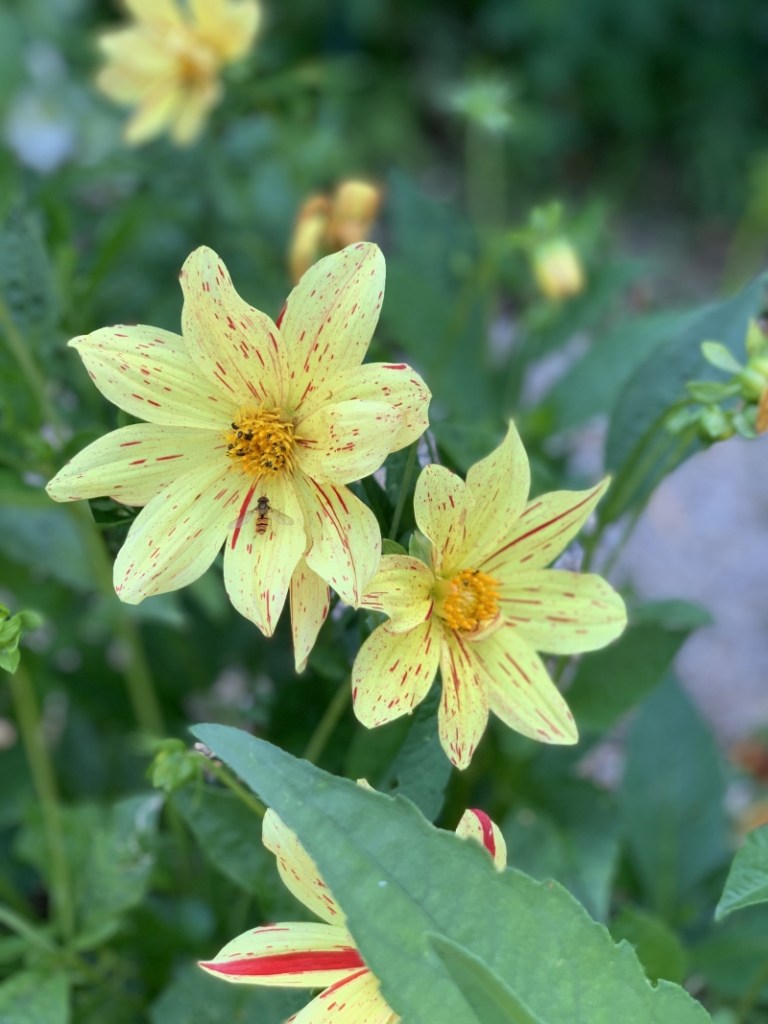
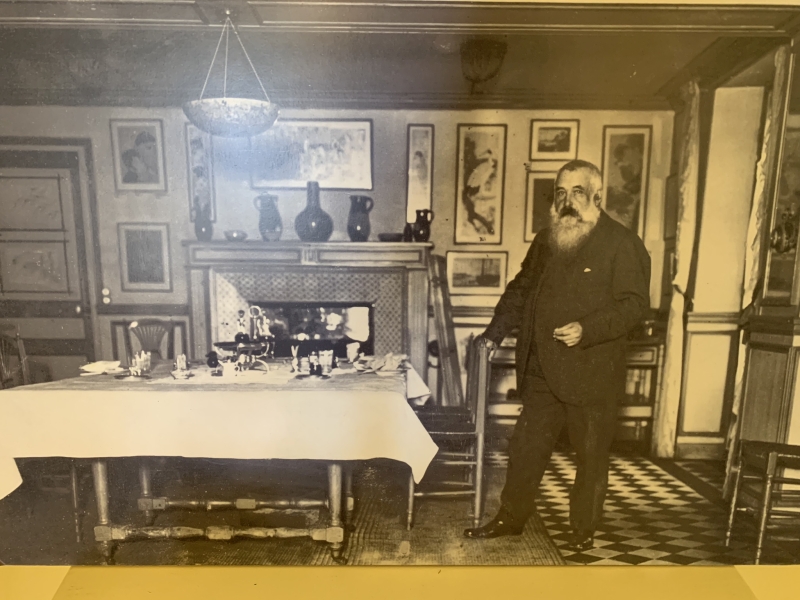
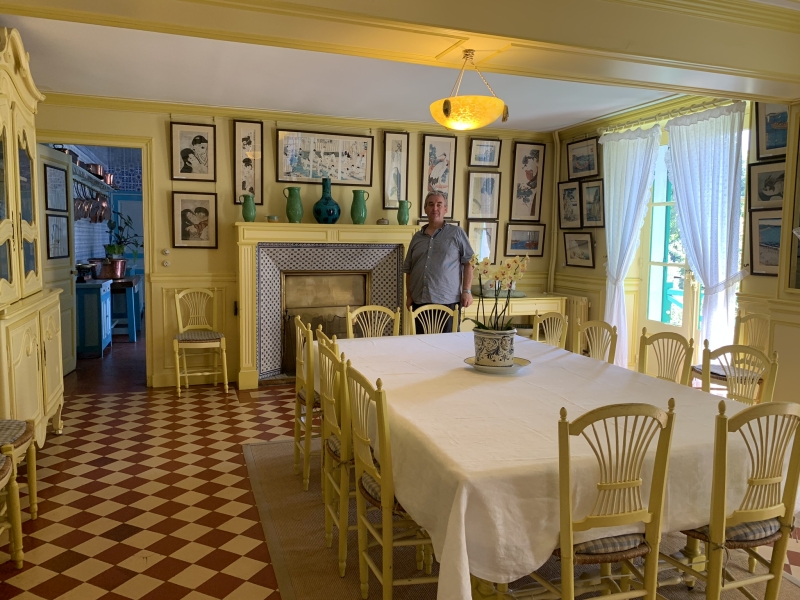
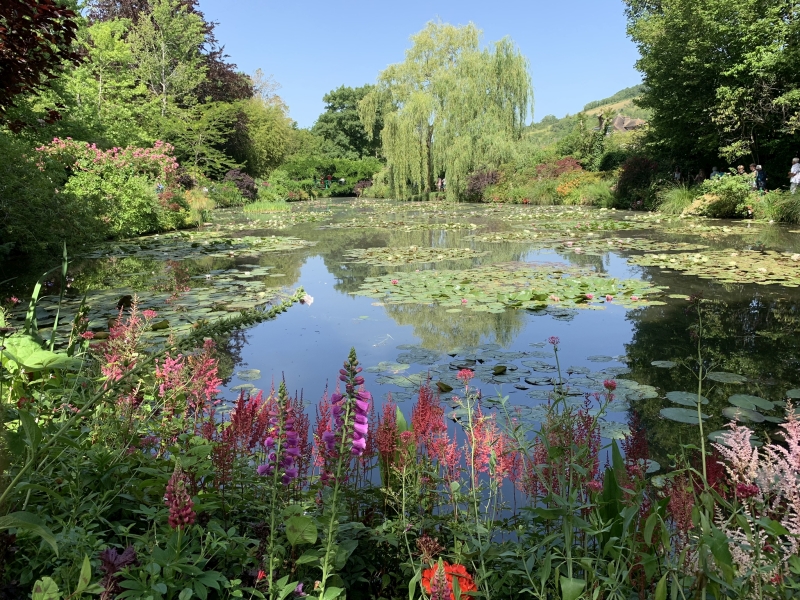
Just before flying out, we visited Monet’s Garden which happened to be on a 36 degree day. It wasn’t as bad as we expected with lots of shade to cool things down a bit. Even with those temps, there was still plenty of people wandering around making it difficult to get photos. We guess when the weather is better that it would be impossible to take photos without droves of tourists getting in the way.

Because of the really bright sunlight, the photos we took would look better on a duller day and the waterlilies are not at their best till autumn, but here are a few of we managed without too many people in the way.
We often get asked about the food in France and, have to say, so far we have been a bit underwhelmed. We get spoiled for choice in Australia with the diverse range of cuisines, the quality of the ingredients and the originality of the menus that you see everywhere. The menus in France are, the majority of the time, all much of a muchness (unless you eat at very expensive restaurants). The vegetarian option is usually a plain omelette or a vege burger (frozen patty style) with bread roll and chips.

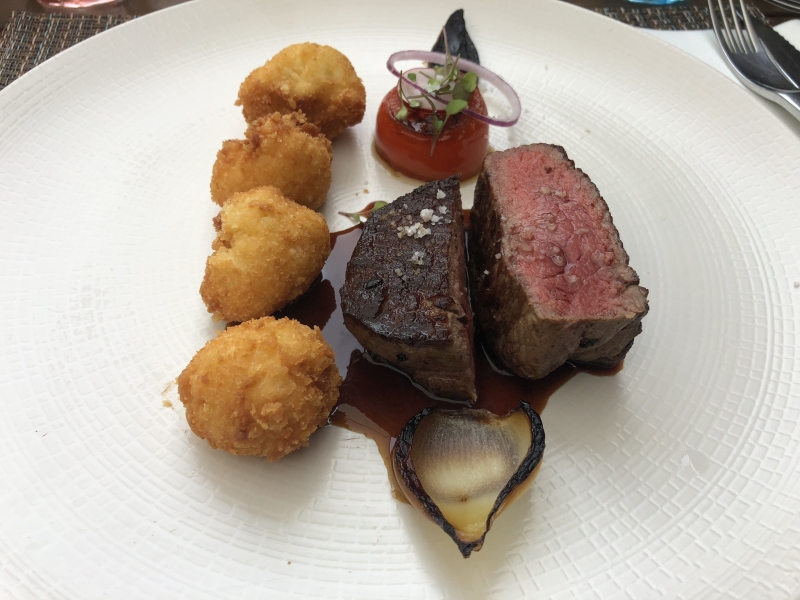
However, we recently splashed out at one of the nicer restaurants in Cherbourg, Le Patio. They don’t have printed menus, just whatever is on the blackboard, based on the best produce at the time. There are never more than 3 or 4 choices and here is what we had:

There are still many places nearby that we haven’t seen yet and on our list was Balleroy Chateau, about an hour away. This was built in the 17th century out in the middle of nowhere, and took 15 years of annual fetes and parties to convince people to go and live there. These days, it’s probably best known as the property of the Forbes family. Malcolm Forbes (billionaire of Forbes magazine fame) arrived in Normandy a week after the D Day landing as a part of the American army and fell in love with the area. Move on to 1970 when he bought the chateau and hosted annual hot air balloon festivals. There is a hot air balloon museum on the property but the festivals fizzled out after his death.
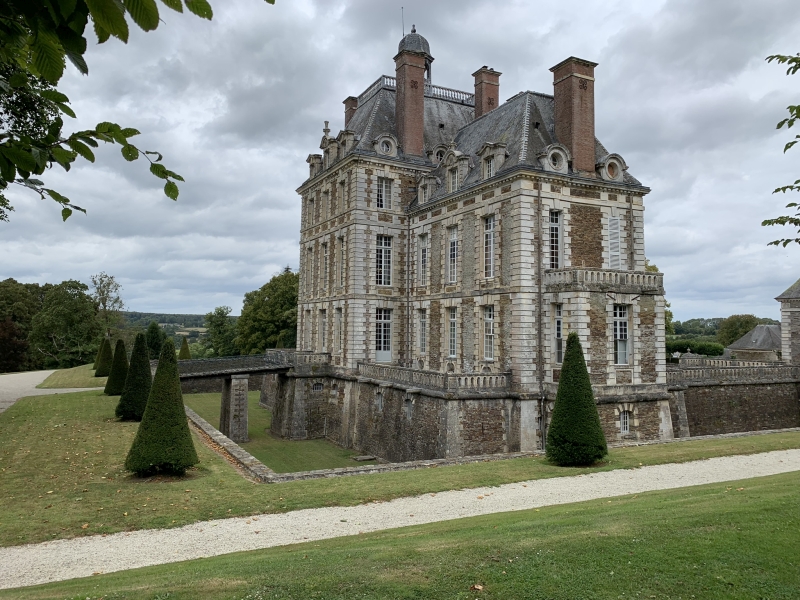
We had a quick tour of the interior, but no photos allowed inside as it is still a private residence.

Another place on our bucket list is the Channel Islands and so we ferried to Jersey for a day trip. It has a fascinating history, with many battles over ownership between Britain and France. Today it remains the responsibility of the UK for defence purposes, but Jersey is self-governing. It was a real hot spot during WW2 with German occupation between 1940 and 1945 and there are plenty of reminders with many museums and memorials to be seen.

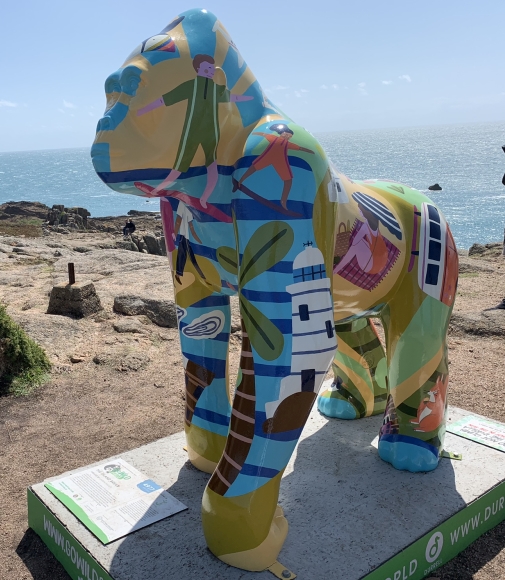
But there are other things. Jersey was the home of Gerald Durrell and his famous zoo is still open. Its main claim to fame is the successful breeding program of endangered species. To celebrate 60 years of conservation at the zoo, 40 statues of gorillas have been placed at various locations around the island.
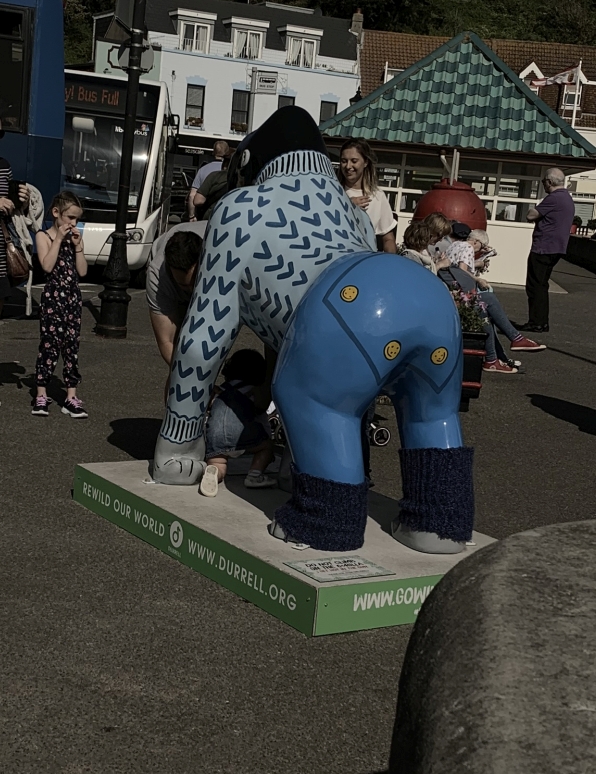
Jersey is renowned for its beautiful beaches and coastline and we hopped on a bus tour that took us right around the island. It’s only 5 miles by 9 miles and population about 100,000 but obviously has some very wealthy people living there. We lost count of the number of very expensive cars on their roads – Porche, Lamborginis and plenty of BMWs, Mercedes Etc. Our tour guide was telling someone that the speed limit on the island is 40 MPH so these high performance cars suffer from not being able to get out of 2nd gear.

There are also some very pricey looking boats in all the harbours. You would have to be quick if you wanted to take one for a spin on the water as the high tides don’t last long. You need to be ready to jump on board as soon as the boat was afloat and then get in back in time before the tide goes out.

C’est tout pour le moment.

L & M.
Back into darkness

Bonjour

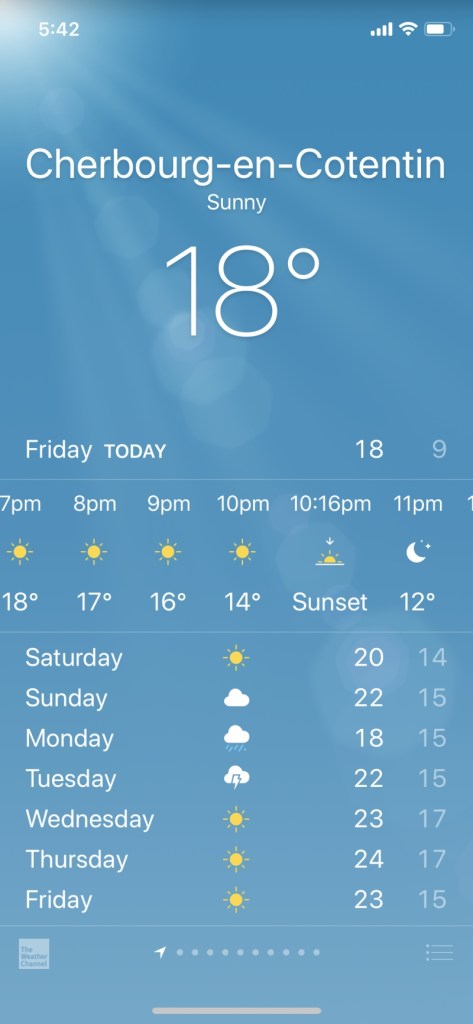
Last Friday was 21 June and we all know what that means – summer solstice! Well in the northern hemisphere anyway. This was the weather in Cherbourg.

Sunset at 10:16 pm, after a sunrise at 5:59 am

Summer solstice also means music festivals throughout France. We wrote about this last year (see Summer Solstice blog from 29/6/18) and this year did not disappoint. It was the same great atmosphere through town with many different bands and various musical acts singing and playing till the wee hours. Again it was friendly, lots of fun and nobody behaving badly. And the street cleaners worked through the night so that by next morning everything was back to normal.

We haven’t been tripping around since last week, but here are a few random items of things you probably didn’t know:

In France, swimming in public pools is forbidden unless you are wearing speedos or the equivalent. In case you turn up in the illegal board shorts (very unhygienic apparently), they have helpfully provided a vending machine so you can purchase something that is acceptable.

Item #2: The word “canicule” is popping up in the news this week. That’s because this weekend it is expected to get to 36 degrees in Paris and canicule translates to heatwave. Australians are used to heat, but the French – not so much. Air conditioners are rare (also unhygienic apparently) and the other big difference is that, being inland the hot air does not escape with afternoon sea breezes. We have tickets booked for Monet’s Garden on Saturday so hopefully it won’t be too hot and there will shady spots to escape the sun.

Item #3: Like many countries, the French postal system is trying to remain relevant as the amount of mail diminishes, so they have come up with a scheme called ‘Veiller sur mes parents‘ (Watch over my parents). If you sign up the postie will not just deliver your parents’ mail, but call in to check on them. You can choose how frequently they visit (one to six days a week – costing from €19.90 a month, for one visit per week, to €139.90 for six visits) After each visit they will send you a message via an app to let you know how things are and if Mum or Dad need anything. The package also comes with a duress alarm and also a reference service for approved tradies etc. What a great idea!

And finally, item #4: Did you know that musicians must audition before they are permitted to busk in the Paris Metro? With more than five million people using the Metro every day, that is a big audience and a number of well known French musicians got their first big break by performing in the Metro. Doubt that applies to those people who just on and off the trains and provide a little musical interlude while you are held captive on the train. Then they pull out their begging hats.

That’s about it for now.

A bientot

L & M

Cheers Sweetie

Bonjour

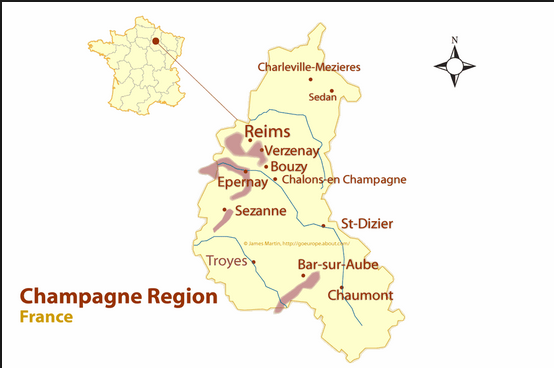
Guess where we went last weekend. It would be hard to live in France and not visit the Champagne district so off we went. We stayed in Reims which is the centre of the region and has quite a history, more on that later.

The region is north east of Paris (about 5 hours from Cherbourg) and with spring time blossoms and very green rolling hills everywhere, it was a really pretty drive. Have to say that the roads in France are excellent – very well maintained and lots of dual lane roads which justifies the constant toll gates that we have to pass through.

There are 3 different varieties of grapes that are grown in distinct parts of the region and are used to make champagne – chardonnay, pinot noir and meunier. These are mixed in different ratios, using different vintages of each variety and quality of the grapes. The best of the best grapes are classified as grande cru – only grown in a few villages in the region. These are only given this status by the powers that be after proving their superiority based on quality of the grapes, type of soil, which side of the hill, how much rainfall, sunshine etc and whatever else it takes. Less than 9% of all the grapes in Champagne get this rating and, as you would expect, they are very expensive.

Many winegrowers are part of cooperatives so they can combine grapes, processing equipment and marketing. Some growers just sell their harvest and have no involvement after that.

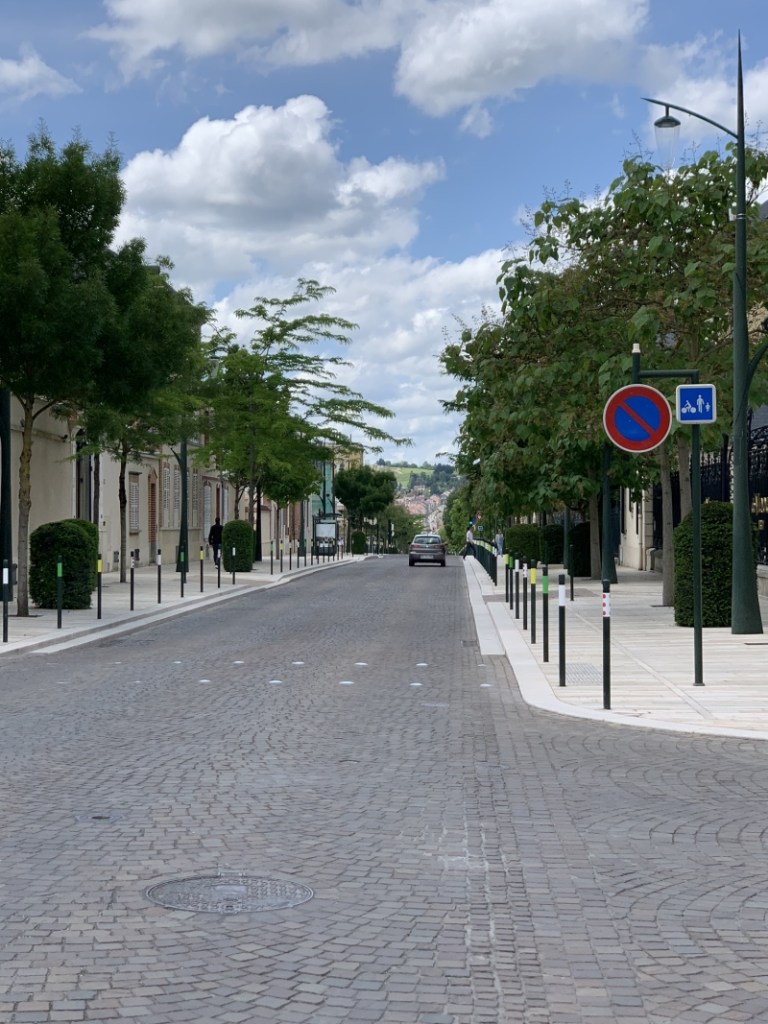
First day of our stay we spent in Epernay, a short drive from Reims. Judging by the sort of cars we saw everywhere, there is a bit of money around. The main street is Avenue de Champagne, home of many of the big names. The photos tell the rest of the story.

Expensive address
Looking down the avenue with the rolling green hills in the background. Wine merchants built their grand houses here from the end of the 19th century. What we do not see is an entire network of cellars below street level. There are 110 kms of cellars and storage capacity for 200 million bottles – all linked to each other.

Above are some of the beautiful residences in the avenue. In comparison, the Moet and Chandon headquarters looked like a 1980s tax office building.

This was about a quarter of the entire building – all the same ugliness. But that didn’t affect the prices in their souvenir shop. Fun fact – Moet and Chandon is owned by LVMH, who also own Louis Vuitton, Christian Dior, Givenchy, Veuve Cliquot, TAG Heuer, Marc Jacobs …………..the list just goes on and on.

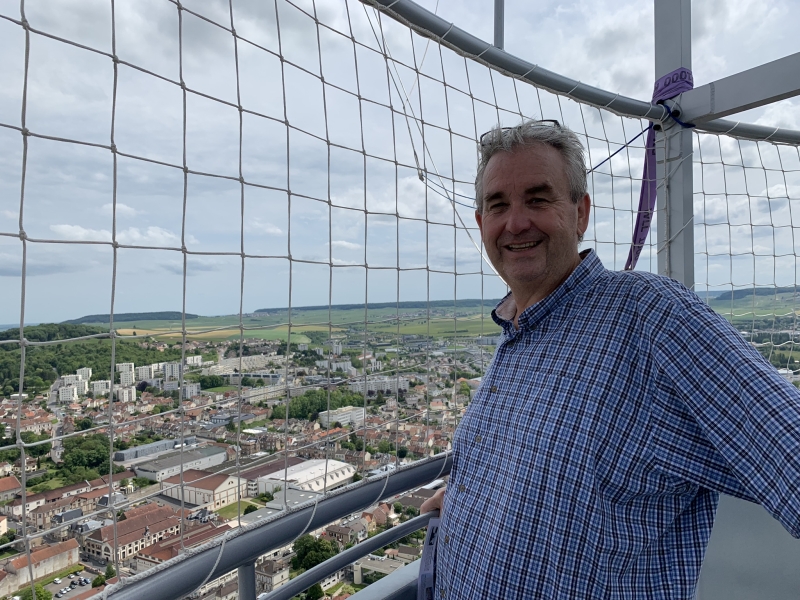
Our last Eperany experience was on board the hot air balloon (see photo above). It was tethered to the ground, so we basically just went up, looked at the view and took some photos and then we came down. But it was a good way to check out the excellent countryside.

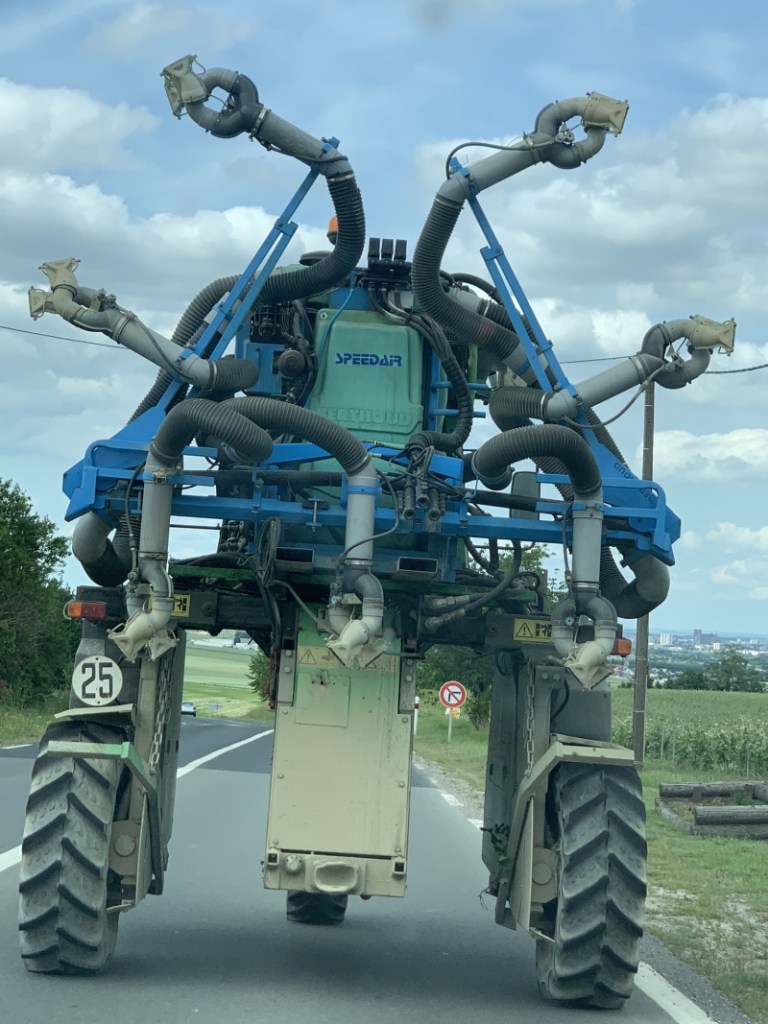
Nothing to do with champagne, but we got stuck behind this thing on the way back from Epernay. It crawled along at about 30 kph and we couldn’t see any extraterrestrials behind the wheel.

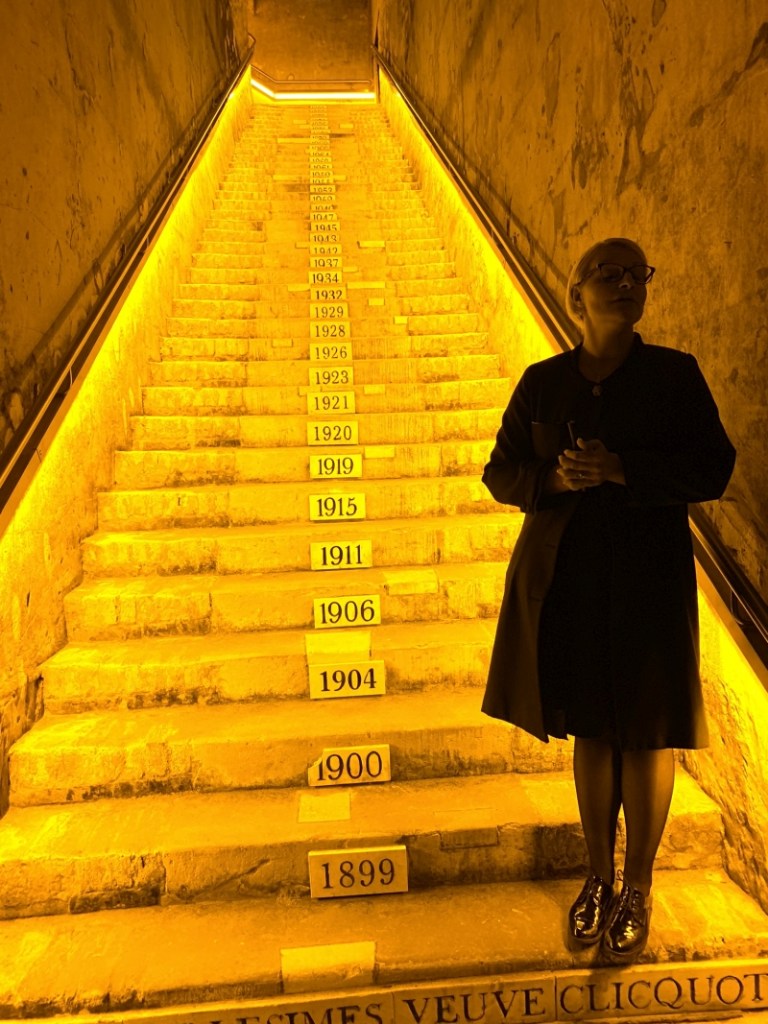
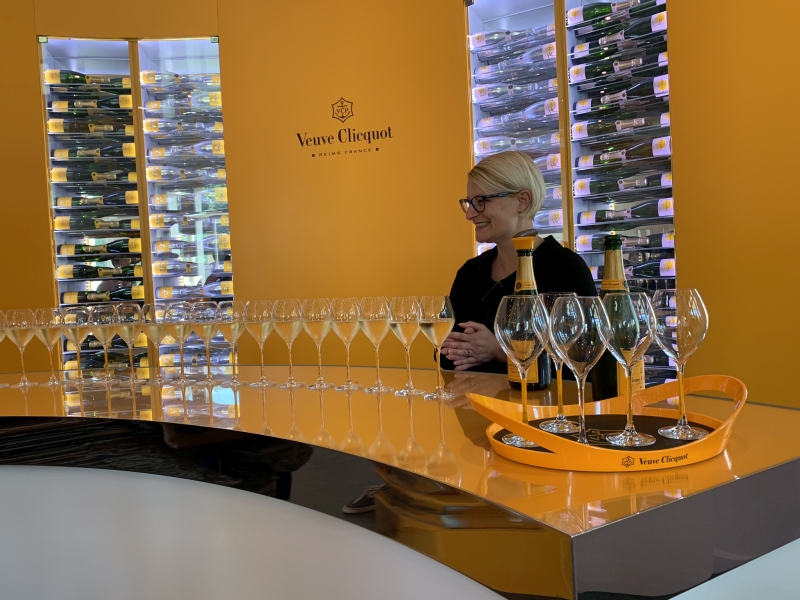
So that was day 1. Next day we had booked ourselves on a bus tour of the Reims district, taking us to a variety of different wineries and giving us a big learning experience. First stop was Veuve Cliquot on the outskirts of Reims. The underground caves are made of chalk and started life as a chalk mine until it was discovered that these caves were perfect conditions for the aging and storage of champagne. After hearing about the history of Veuve Cliquot and walking through some of the caves we had our first tasting of the day.

Inside the chalk caves
The staircase showing the vintage years. The oldest vintage that is still available is 1975, selling for about €1400.
Let the tasting begin

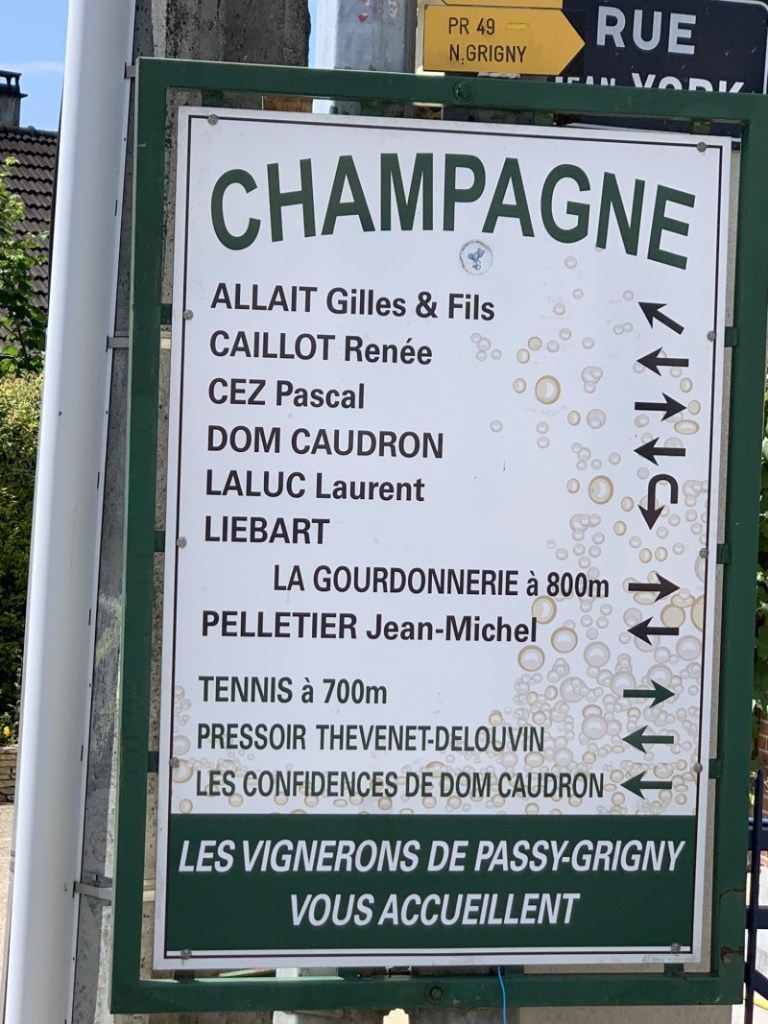
Next winery was an example of a co-op system where a group of local grape growers band together and share wine juice and production facilities to either make their own champagne or sell the juice to some other producers. Then lastly we popped in to a family run winery who have only been in operation since 1996. They have achieved significant success, exporting to a number of countries and have also started hosting weddings at their own venue. Here are some of our many photos.

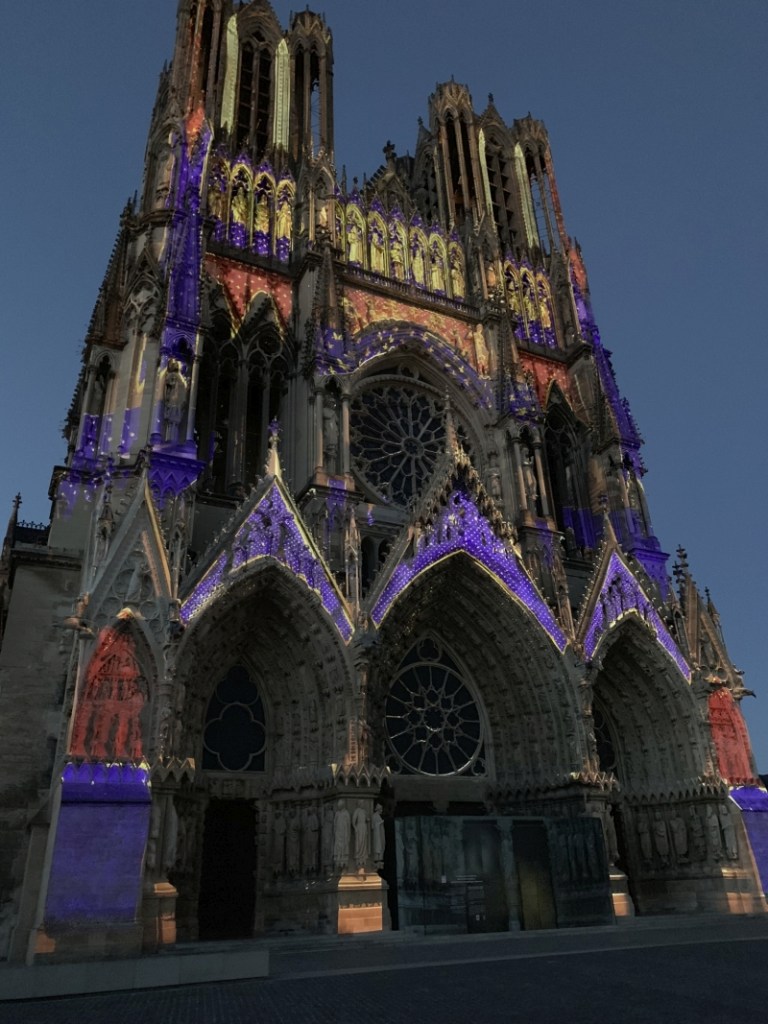
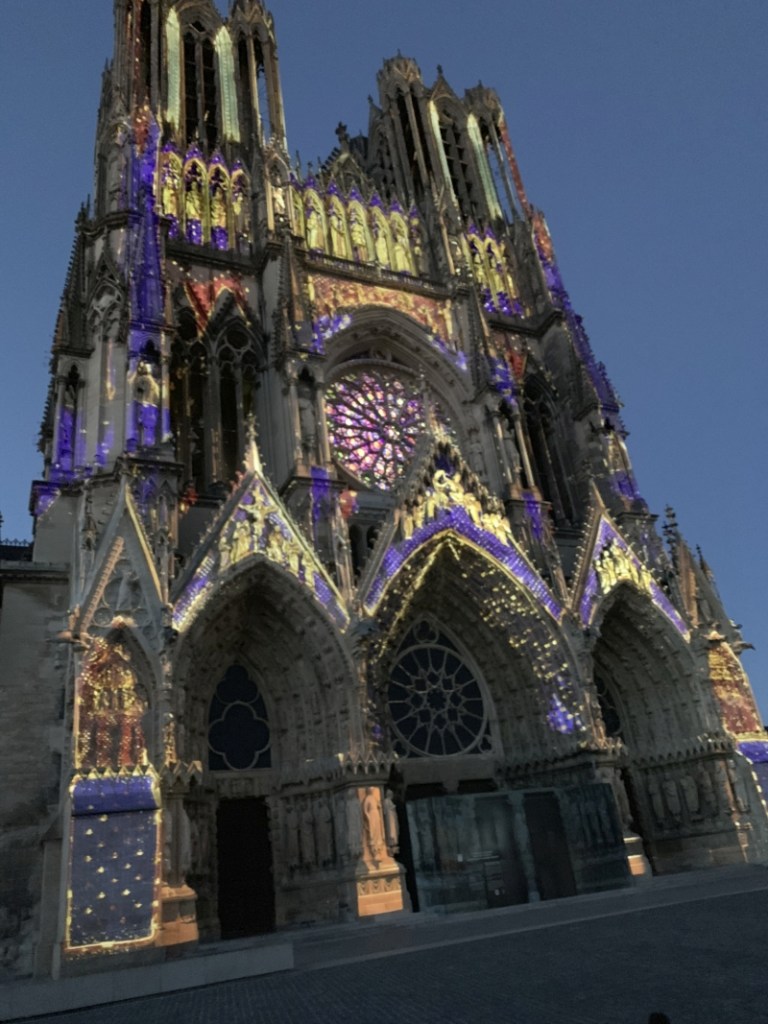
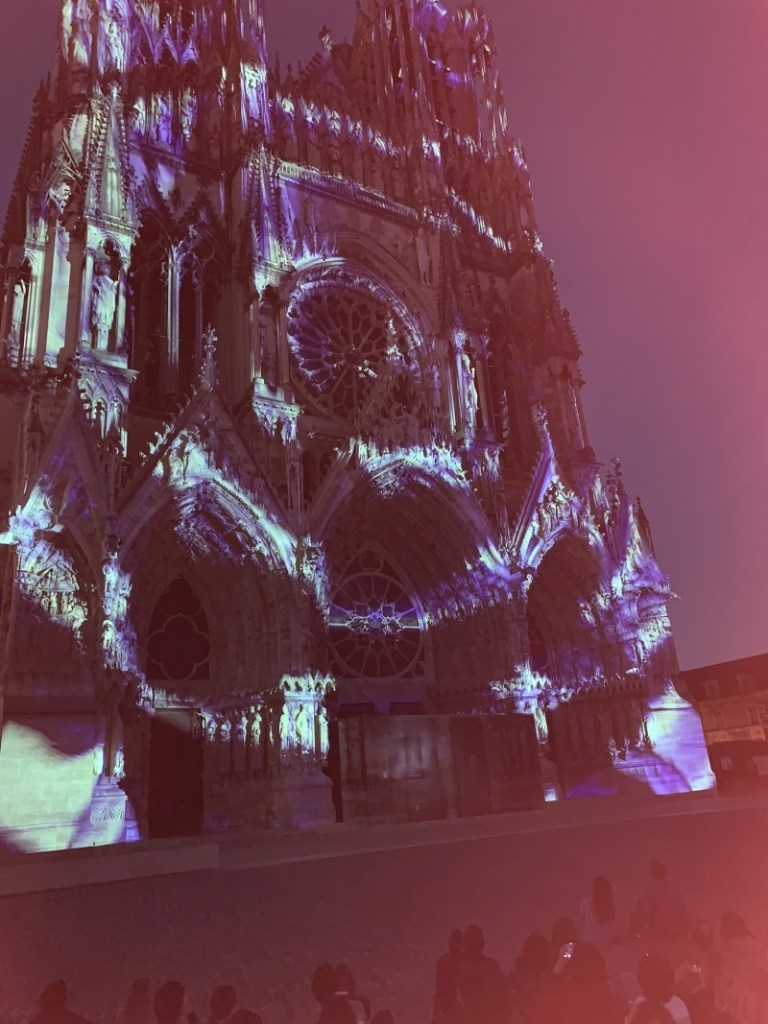
For a change of pace, we also visited the Notre Dame Cathedral in Reims. Even by French standards, this place is old. Construction started in the 13th century to replace an earlier church that was destroyed by fire in 1221. It has since been damaged and restored, extended and enhanced many, many times with the almost total destruction in WW1 with the German bombs causing it to catch fire and melt the lead roof. It was restored yet again by 1938 and managed to escape further damage in WW2. Its other claim to fame is that it was the site of the coronation of 31 French kings.

These days it is the backdrop of a sound and light show that is held each evening, although with the sun shining till 10:30 pm, it’s not for the early to bed people.

So after learning a lot and tasting different varieties and price points, we didn’t come across anything that outshines the Australian bubbles.

That’s our latest news. Bon soir

L & M.

D Day + 75 years

Bonjour

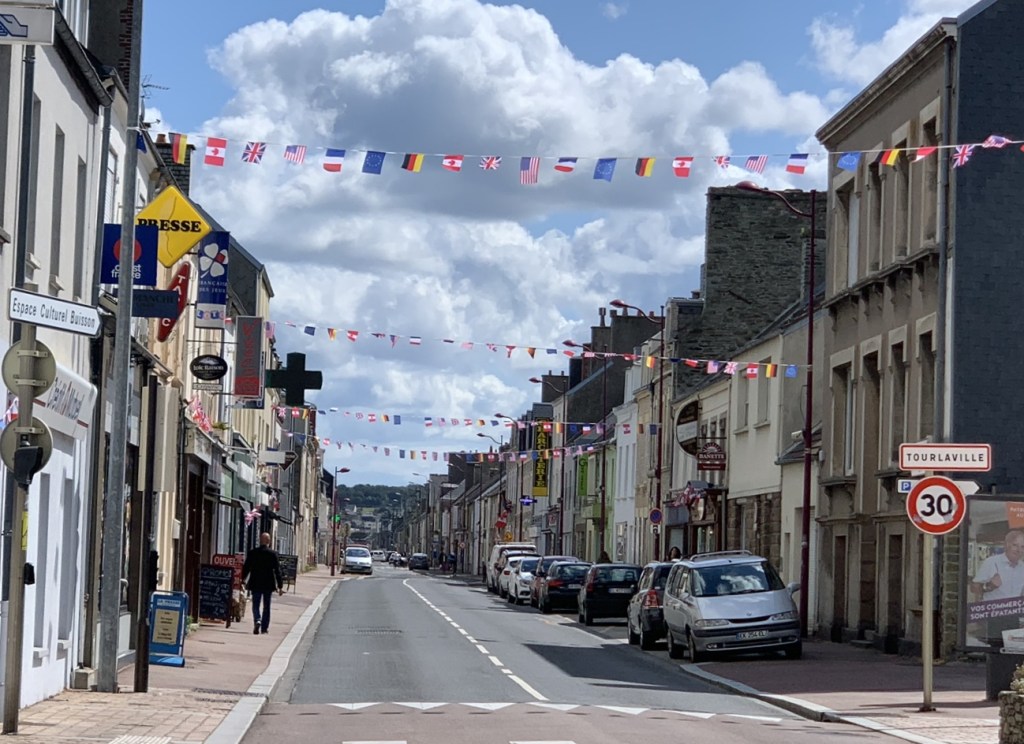
It’s been very busy in Normandy with the 75th anniversary of the D Day landings on the Normandy beaches in WW2. There were commemoration services held throughout the day attended by many veterans and world leaders but there have also been events everywhere in the region for several weeks. Cherbourg was decked out in bunting and signs in most of the shops.

We also returned to Saint-Mère-Église, where American paratroopers dropped on the night of 5-6 June 1944 as D Day began. This year they decided to do a re-enactment, with hundreds of parachutists jumping out of planes and landing in nearby fields. The place was packed and so it was a bit hard to get decent photos of the action. But there’s plenty of professional photos and footage of all events for those interested.

Completely unrelated to D Day landings is the mysterious way the French organise big events. As mentioned, Saint-Mère-Église was jam packed full of people and all wanting to eat lunch. Some cafes and restaurants were closed because it was Sunday and nothing interferes with that. The town square had been turned into a food court of sorts and was surrounded by tents with bbqs trying to cook sausages fast enough to feed the long queues (and failing miserably). French law says that the only bbqs allowed in such events are coal fired, no gas bottles permitted. The smoke these things generate is alarming. And the cooks all seem to be small business people, no Lions Clubs to be seen. In fact you rarely see any charities anywhere. Fund raising and donating to charities does not seem to be a thing here.

As soon as his shift was over the stretcher bearers carted him off to treat his smoke inhalation.

There has been quite a bit of sport happening in France, with many Australians represented. Firstly there were the Rugby 7s (we were beaten by Ireland in the semi final), Women’s World Cup soccer (go Matildas) and then of course there is Ash Barty and Dylan Alcott. The twitter feed for our Australian ambassador, Brendan Berne has been in overdrive with all his comments. Here he is, being asked to confirm the National Anthem before the final.

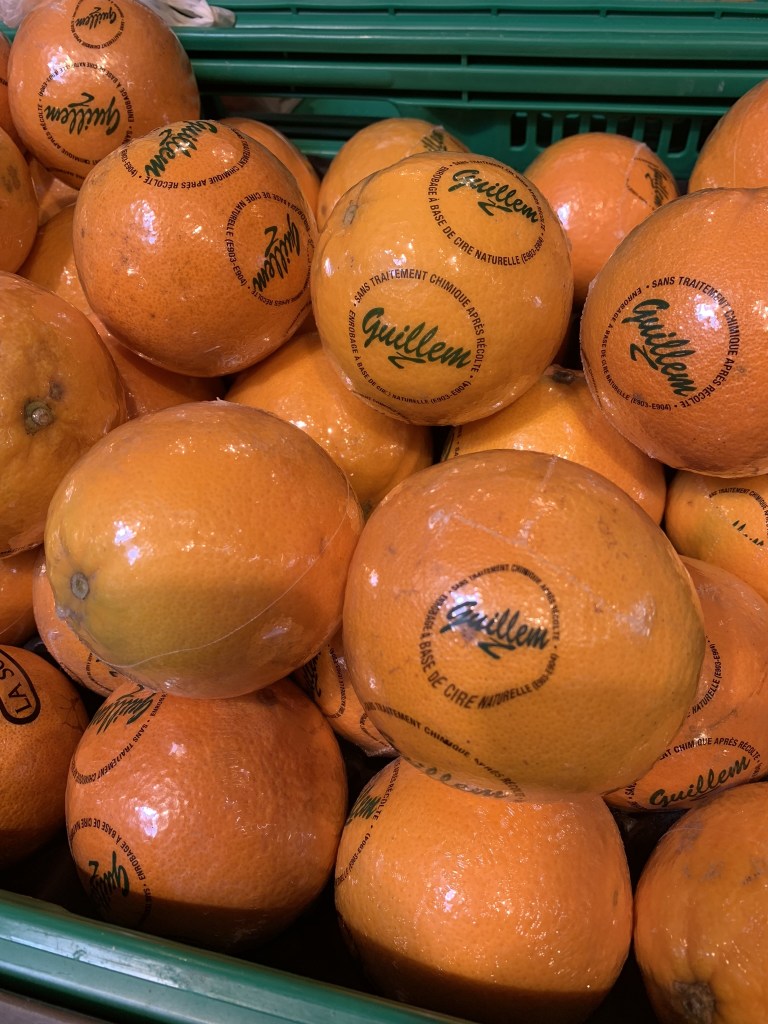
There have already been comments here about the copious amounts of packaging and plastics that are used for food items in supermarkets. Fresh meat, cheese, small goods, you name it. But I think this is taking it to another level.

Individual oranges shrink wrapped. What a shame that Mother Nature did not provide a ready made outer layer.

A bientot

L & M

Cherbourg meets Port Adelaide

Bonjour,

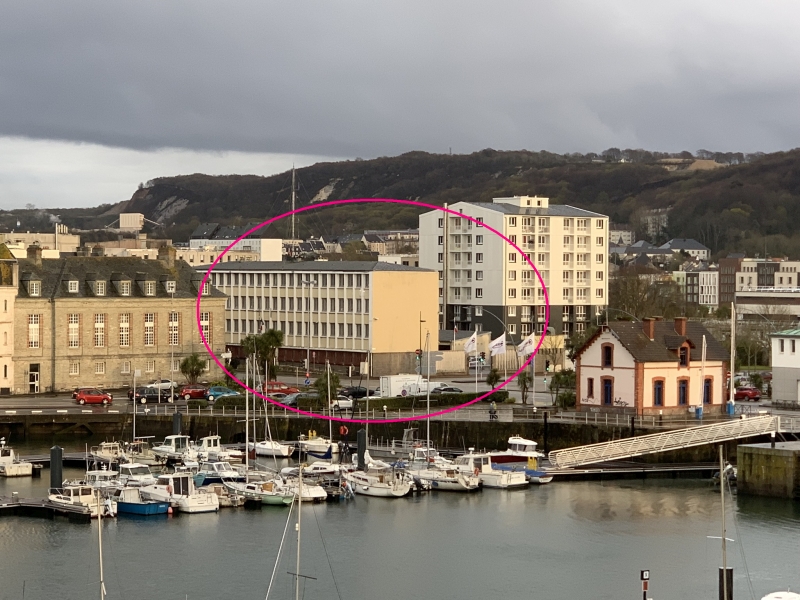
Many of the photos from our balcony show the blank wall of the local police headquarters. The building may be functional but missed out on the old world charm and character.

Police headquarters circled

Because of the strong links between Adelaide and Cherbourg in developing the submarine project, it was decided to commission some art work in both locations to link to two together. Jimmy C (SA artist now living in UK) and Elizabeth Close (Adelaide based Aboriginal artist and one of the artists featured in the 2017 Port Adelaide Wonderwalls Festival ) were commissioned to paint a mural on the wall of the police headquarters. Further down the track, an artist with links to Cherbourg will complete a mural in Adelaide.

We took progress photos as the work took shape, but this video does it better.

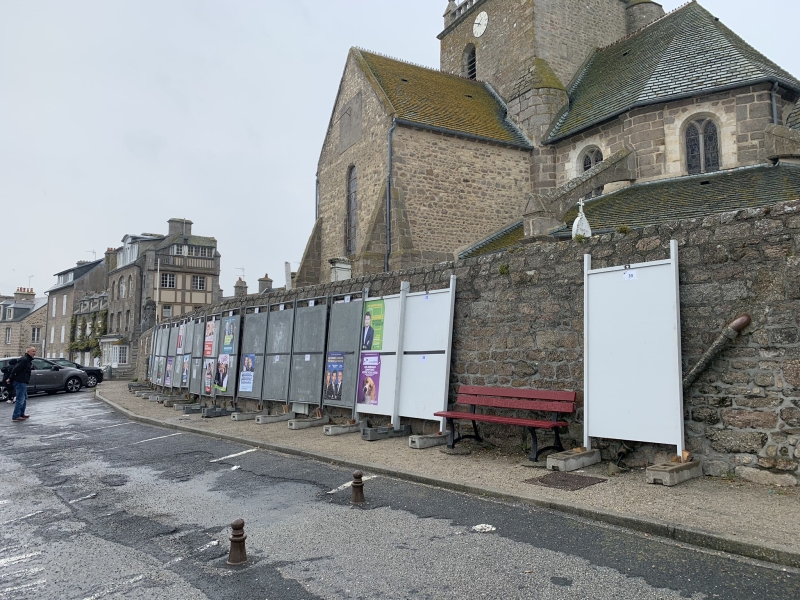
Elections may be over in Australia but the EU elections are taking place between 23 and 26 May. France will have 74 seats (out of 751 – rubbery figures though due to Brexit mess). It appears to be a bit like the Senate in Australia, where most of these 74 seats will come from a handful of parties. The French are not big on loud, in your face, advertising and billboards and the election signage is no different. In very orderly fashion, they have erected designated stands for each candidate to post their signs in their allotted section. These stands all seem to be displayed in public spaces, like near the church and you can guarantee they will be gone as soon as the elections are over – probably well before this happens at home.

We have seen a number of these in the last week – always 34 spaces, one for each candidate.
Posters are all very uniform is size. Number 20 candidate! Hair!

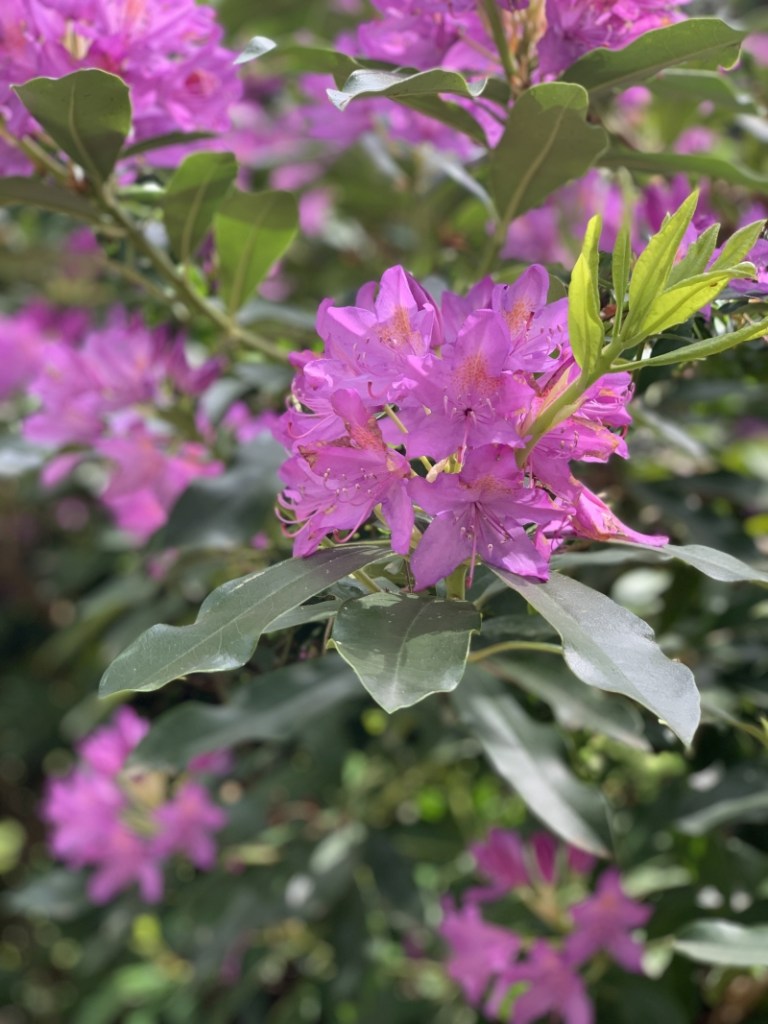
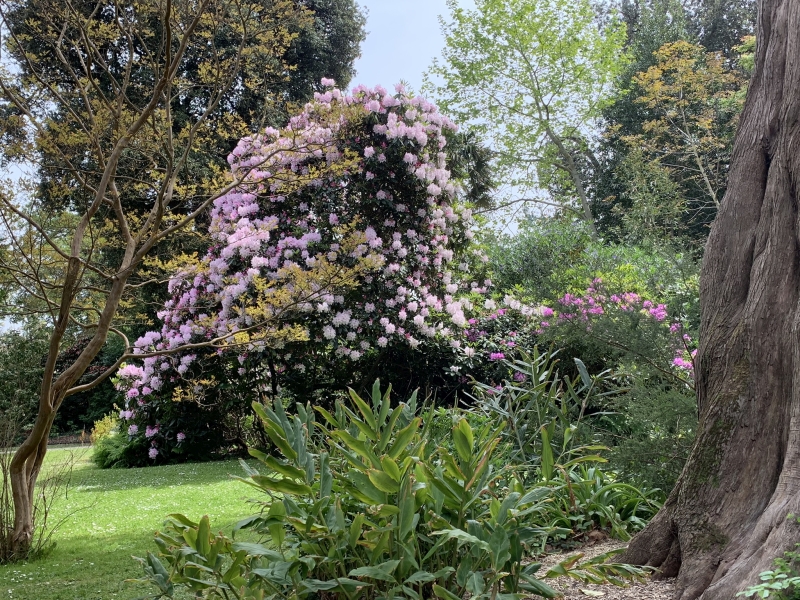
Cherbourg still has a few surprises. There is a public garden about 500 metres away that is very tucked away and you would not even notice it if you blinked as you walked past. This garden was the home of Emmanuel Liais (1826-1900), a former mayor of Cherbourg. He was an astronomer, botanist and collector of exotic plants from his travels in South America and Asia. His house is now a museum and the gardens and greenhouse still contain some of his collection. The photos show some plants that have been there for a long time.

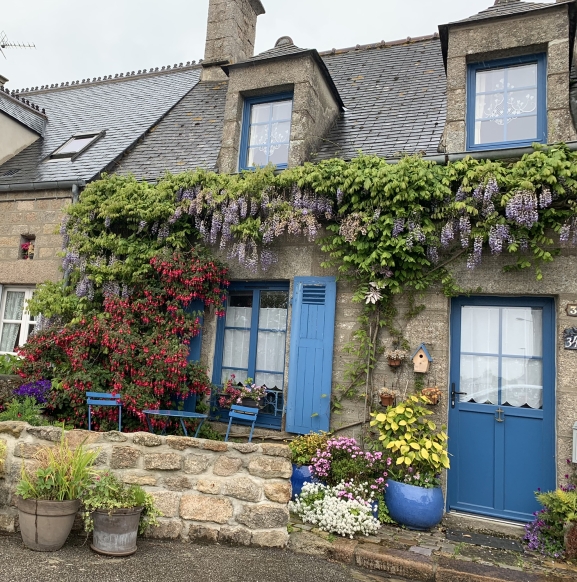
And in case you haven’t had enough of gardens – this was a cottage we saw in Barfleur. Very cute, amazing westeria that went on forever, but check out the fuchsia!!!!

Bon soir

L & M

Hermione comes to town

Bonjour

It’s all happening here in Cherbourg. We have had a few big visitors of the nautical kind. It is obviously ferry season and most days this week we have had enormous ferries arriving for a day visit so that thousands of their passengers can see the sights of Cherbourg. It must bring a huge boost to the local economy, especially on market day when there were two in port. It’s strange walking around town and hearing so many American and English accents.

These ferries probably hold more people than the entire population of Cherbourg.

The other important visitor was L’Hermione. If you have never heard of it, then join the club. It is actually a replica of a French war ship, in service in the late 18th century and most famous for carrying the Marquis de La Fayette to America to help in the fight for independence. That is some thing keep in your back pocket for your next trivia night.


We had the best view to see this arriving. This was about 9:30 at night. It was supposed to arrive the next morning but they pushed it forward as the next morning was wet, wild and windy.
Check out the crowds! There was a collective holding of breath as the boat tried to get through the very narrow opening of the inner harbour. That little red boat in the front was pulling this way and that, while the black pilot boat at the back was doing the same thing. Would have only been a few centimetres to spare on each side. Originally there was offers of buying tickets and going on joy rides, but they quickly worked out that was not a good idea.

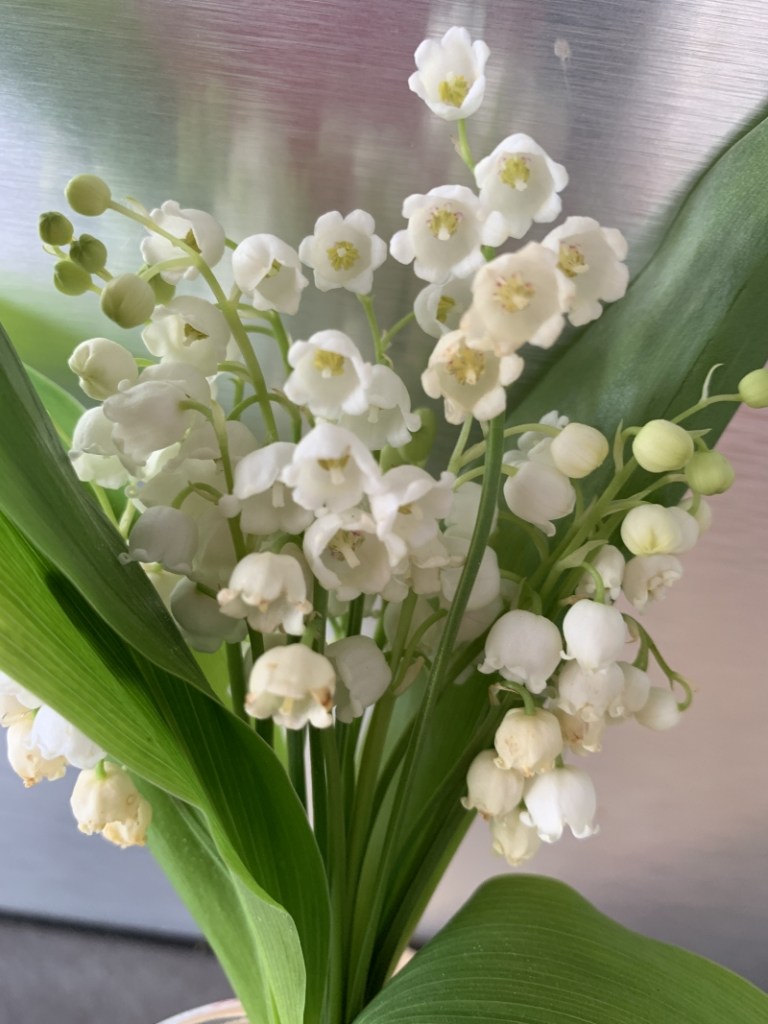
Last Monday was the 1st May – Labour Day but also la Fête du Muguet or the Thrush Festival. On this day every year it is a custom to offer little bouquets of lily of the valley as a symbol of springtime and happiness. It is said that whoever finds a lily of the valley with 13 small bells will be particularly lucky. It is also the only day when private citizens are allowed to sell goods without the need for a permit.

Spring time also means baby birds. And when you think of babies and birds, the next step is storks. A fellow Australian who is a keen bird watcher took me to a very old, crumbling chateau which has been taken over by a colony of storks and is now their maternity hospital. There must have been dozens of nests and plenty of food around for the parents to feed their baby chicks. The nests themselves are huge, and look like they get recycled from one year to the next. Always something new to see.

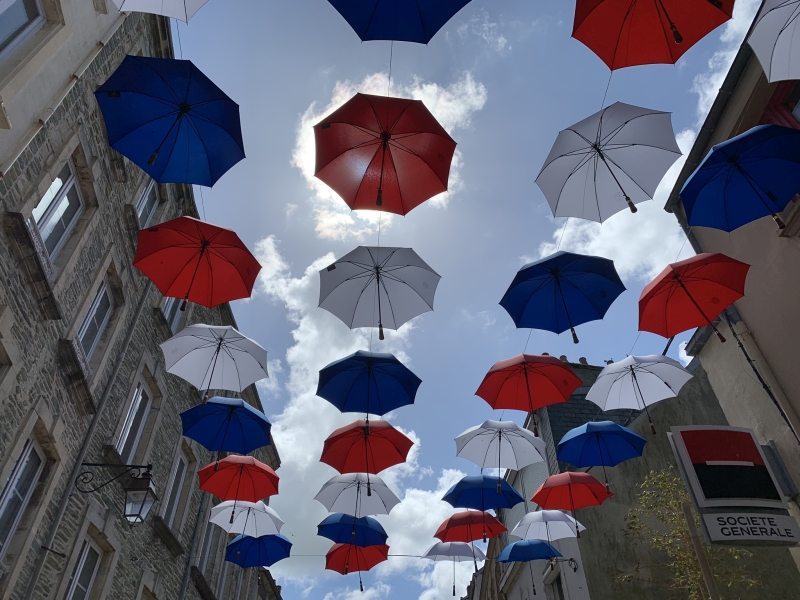
And finally, the umbrellas are back. Many towns hang umbrellas upside down in their laneways (don’t know why) and this year, Cherbourg has gone with the red, white and blue in recognition of the 75th anniversary of the D Day landings by the allies.

Bientot

L & M.
Easter in Brittany

Bonjour

We spent a few days in Brittany over the Easter break so lots to write about.

Easter is not quite the commercial big deal that it is in Australia. Good Friday is not a public holiday, only Easter Monday. And also, the Easter Bunny is not the deliverer of Easter eggs. Who knew? Here they have Cloche volant or flying bells instead. French Catholics believe that on Good Friday, all the church bells in France fly to the Vatican in Rome, carrying with them the grief of those who mourn Jesus’ crucifixion on that day. These flying bells return on Easter Sunday morning and bring with them lots of chocolate and eggs. And that is why French church bells do not ring from Good Friday to Easter Sunday morning.

We tagged a couple of extra days on to the long weekend and headed to Nantes (rhymes with ‘font’ but with a nasal French sound). Nantes is the sixth largest city in France and, although it has had a very long and sometimes shady history, it is obviously booming now. There was an air of prosperity in the parts that we saw. Lots of up market shops and almost no vacant premises. The real estate is expensive and hard to get, but it may have something to do with the proximity to Paris (there is a two hour direct train).

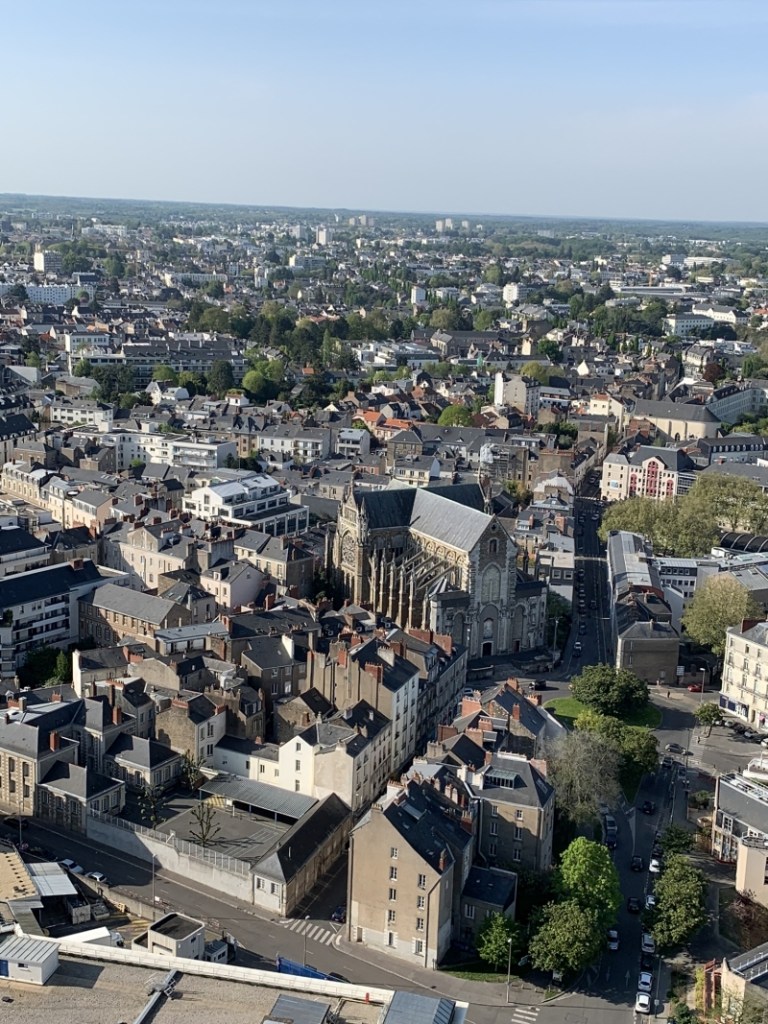
We started our visit with a ride to the observation deck on the tallest building in the city to get our bearings and we still get surprised by how cheap some things are compared to what we would expect to pay at home. (Cost = €1, compared with $27 for observation deck on Gold Coast’s highest building or $23.20 for Sydney’s Tower Eye). The Loire River winds through the city and because of this, it was a major port for centuries, despite the fact that it is 50 kms from the coast. Here is a photo taken from the top.

The church in the centre of the photo is typical of what you find, especially in Paris. In the middle of a built up area of not particularly special houses you will stumble on a mini cathedral like this one. And in the bottom left of the photo you can see what looks like a prison exercise yard. This is actually a school playground. They are always behind high solid walls and never a blade of grass or play equipment to be seen.

Next day we went to the local markets where obviously the locals go. It was similar to the Queen Victoria Markets in Melbourne and the produce and prices were amazing.

It’s asparagus season in France. Although you can buy green asparagus, the white ones seem to the favourites. They are bigger and have to be peeled with a potato peeler to get the tough outer layer off. The reason they are white is because they never see the sun. Every time they poke their heads above ground, the farmer comes along and shovels more soil over the top. Because of all this extra labour, the prices are also much higher than the green variety. We tried them and they were nice but not something we will rush back to buy.

A big discovery for us was that Nantes was a key player in the slave trade. Between the 15th and 19th centuries over 27,000 slave trading expeditions left Europe for Africa to buy men, women and children to sell in America and the Carribean. Over 1,800 of these expeditions left from Nantes and deported over 550,000 people. Large numbers died on board or shortly after arrival due to disease and/or lack of food.

The Memorial to the Abolition of Slavery (Memorial de l’Abolition de l’Esclavage) is a monument to those victims of slavery and is located on the quay where many of these ships departed. Along the walkway are about 2000 plaques with the names of the slave ships and the ports where they put in.

One of the saddest things we found was in the museum the next day. A page from one of the slave ships, showing the names, ages and prices of those transported.

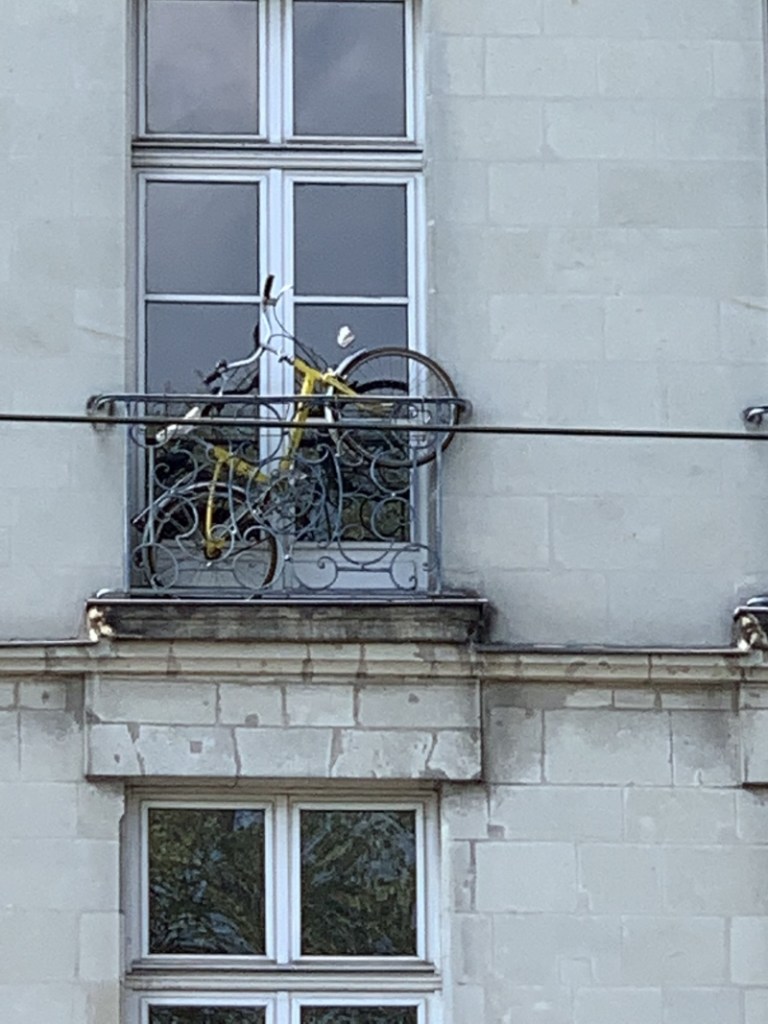
It is always a good idea to look up when travelling, because that’s when you can see some of the best and quirkiest sights.

These neighbours obviously don’t get along.

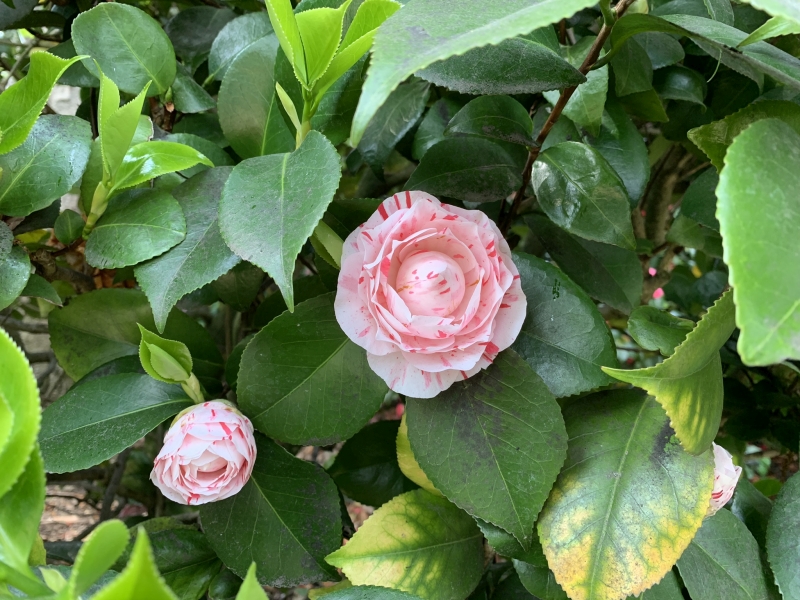
Next day we went to the Jardin Des Plantes, a small but really pretty public park. You can tell if a town or city is doing well economically by the state of their public spaces and this one was obviously maintained by an army of gardeners. The spring flowers were beautiful and it is obviously a perfect place for camellias, wisteria and tulips.

After leaving Nantes we drove north to stop overnight at St Malo which is famous for having the highest tides in Europe, with water that can rise 13m over the course of six hours. When the water goes out, it reveals several kilometres of ocean floor. But when it comes back, it comes back fast. We got there after low tide and then went back to the same spot the next morning around high tide. Spot the difference.

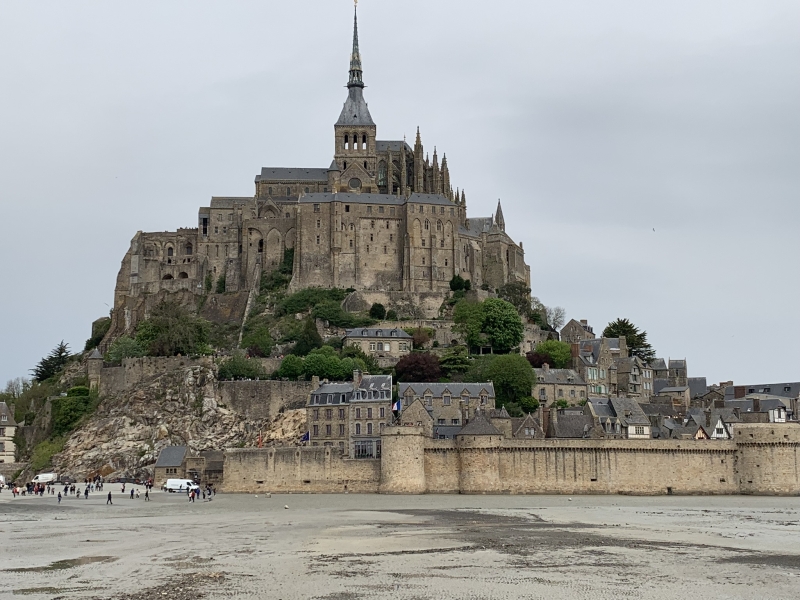
And finally we got to Mont St Michel, an island (at high tide) topped by a medieval monastery. It is one of France’s most recognisable landmarks and gets visitors by the millions. It has been a monastery since the 8th century and the design is supposed to represent the feudal society – at the top, God, then the abbey and monastery. Under that were the great halls and then stores and housing. Outside the walls were houses for fishermen and farmers. it’s been the target of many fights and wars and is now on the UNESCO list of world heritage sites.

There are thousands of nicer photos with blue skies, or sunsets or better angles, but this is how it looked when we got there.
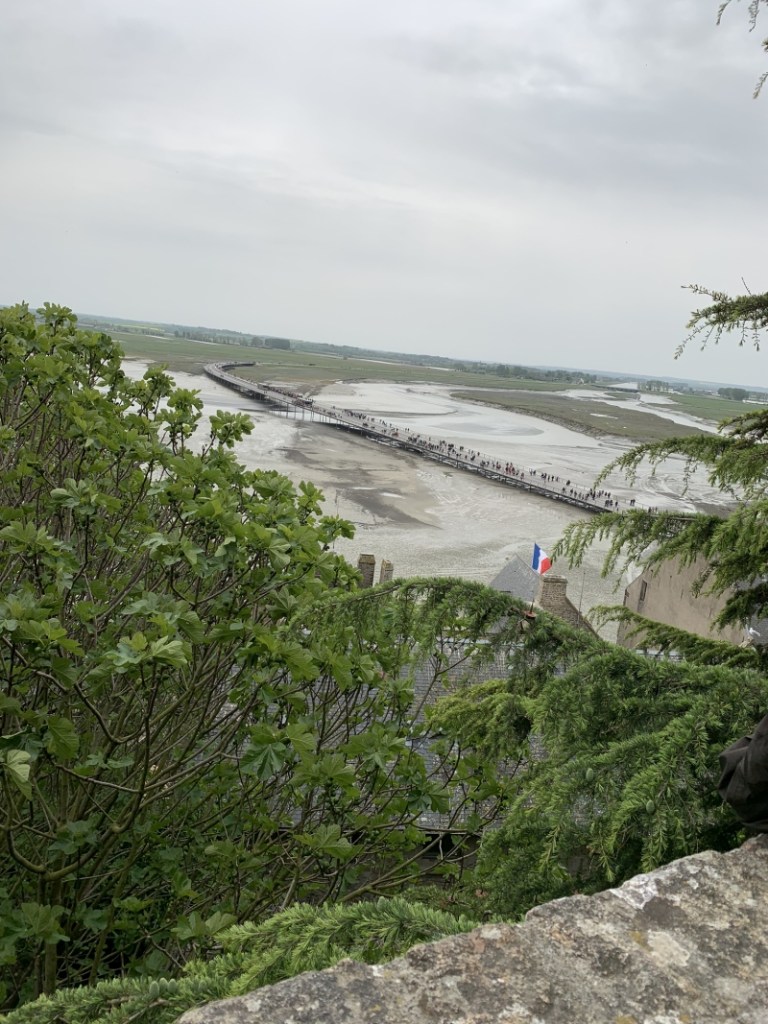
Looking down you can see the boardwalk that must be used to access the island. At low tide you can walk across, but only with a registered guide unless you want to get sucked into the quick sand.

And then it was back to Cherbourg. That is it from us for now.

L & M

Étretat

Bonjour

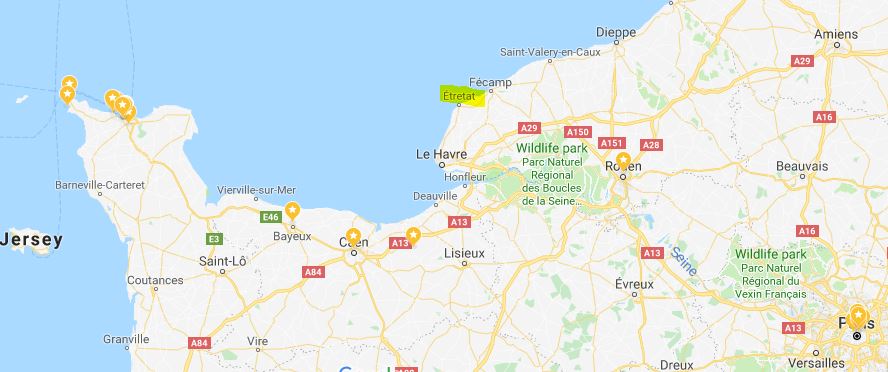
Spring sunshine means road trips. Last weekend we headed off to Étretat, about a three hour drive from Cherbourg.

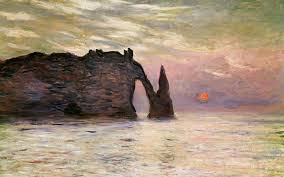
The area is famous for its white cliffs and has been a favourite of many landscape painters. The pictures will tell the story

The Porte d’Aval arch

Monet’s “The Cliff, Étretat, Sunset”. Monet painted many scenes of this cliff as well as plenty of others from the shore at Étretat
No visit to the Normandy coast is complete without a bunker. Some have been dismantled but most of them are so indestructible that they will be there for centuries.
Same spot in 1944.
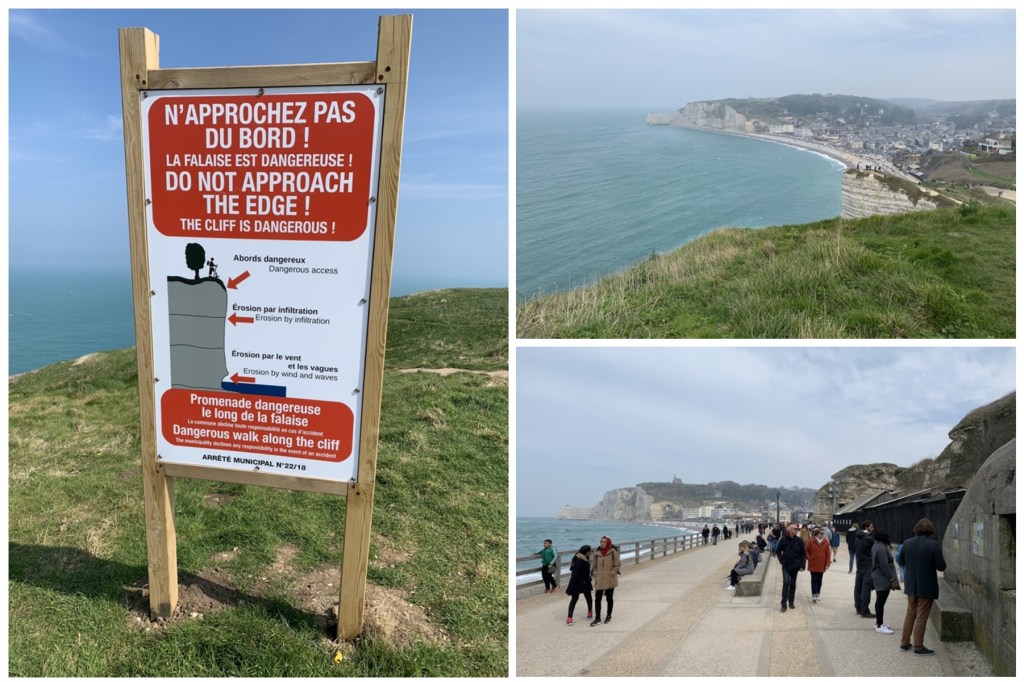
French logic – Why bother with the expense and work of installing ugly fences and barricades along cliff edges that cop gale force winds when a simple sign will do? But when it comes to a promenade with a metre drop to the pebbles below, that’s a different story.
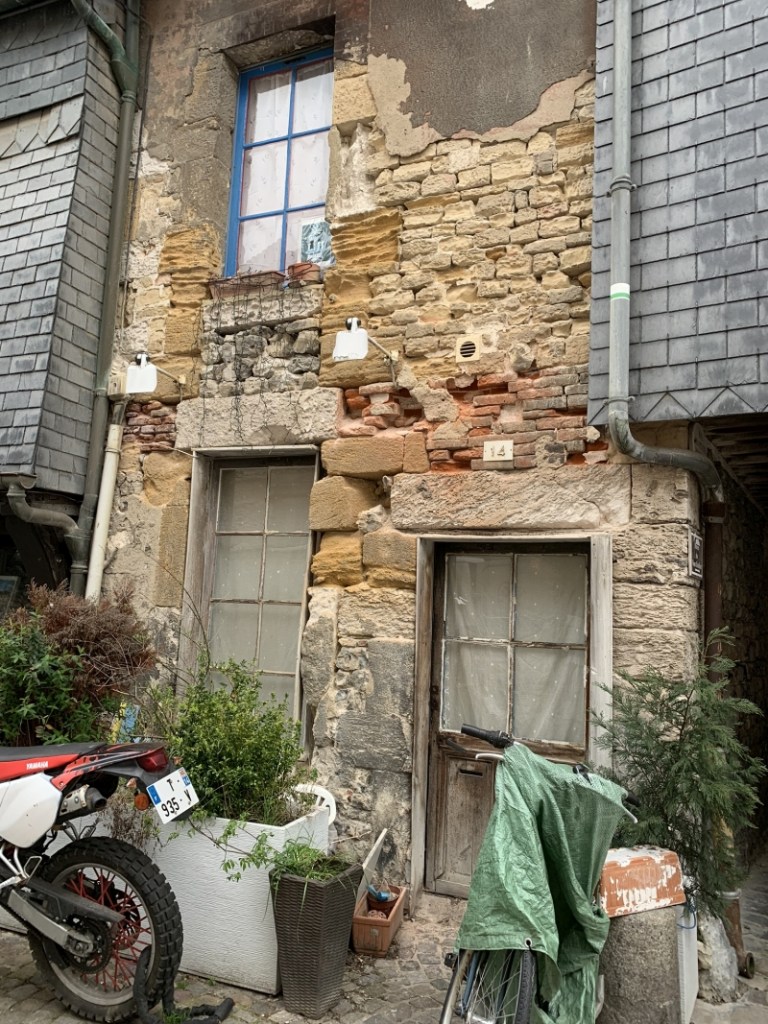
On the way back we stopped in Honfleur. This was a little different from the last time we stayed there – the night of the World Cup final win. It’s a big mix of old and new, but mainly old. When you peel away the layer of render on a building and you see what’s underneath, you understand why those buildings on each side are the only thing holding many places up.

Par pour l’instant

L & M

It’s been a while

Bonjour

It’s been some time since the last update as the editor in chief has just returned from a few weeks in Australia. Summer in Brisbane had forgotten to end – low to mid thirties on most days. It was good to catch up with family and friends and sort out a few things. But the most important part of the trip was to meet this little guy. Welcome to the family Alfie – so cute!

Alfie @ 8 weeks and Nana Moira.

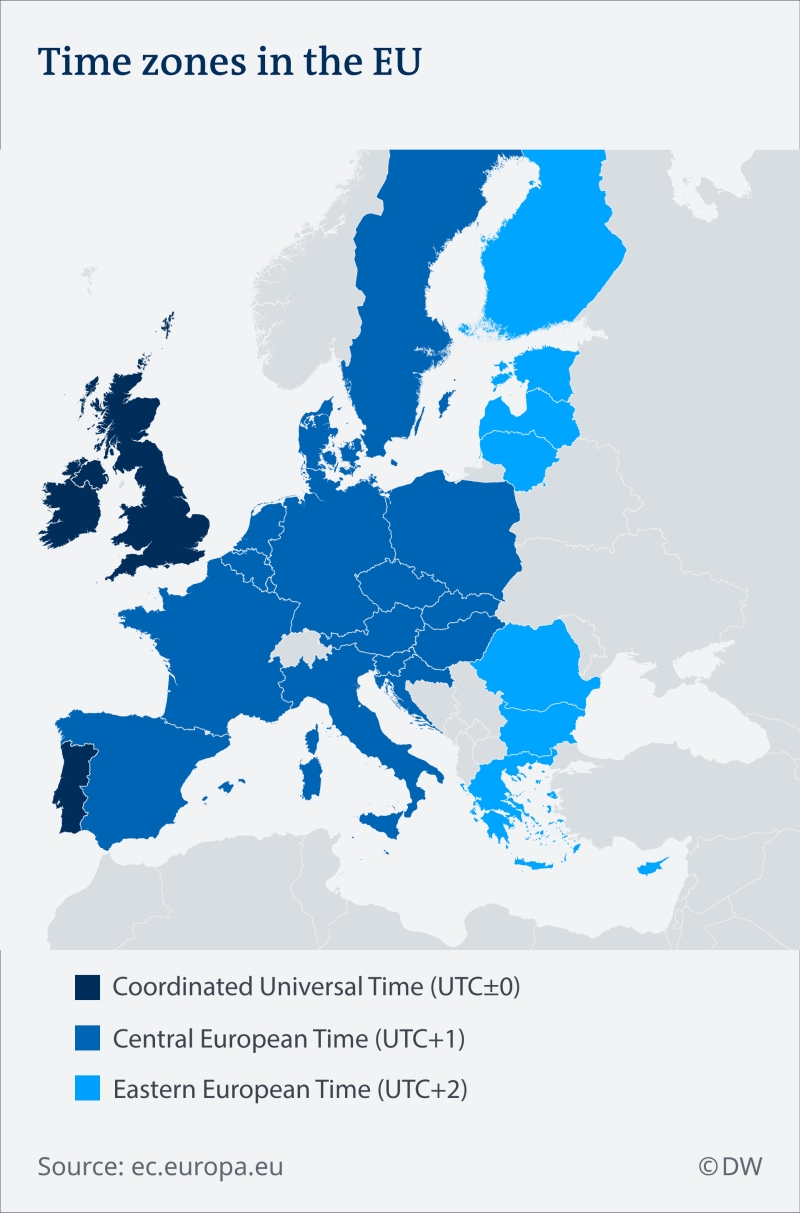
A month makes a big difference to the length of the days in France at this time of the year. Every day the amount of daylight increases by seven minutes. Daylight saving started on Sunday morning so now we are enjoying longer evenings. But that will be the last time that the clocks will be changed. The EU has announced that there will be no more adjusting clocks each year, countries will need to decide if they want to stay with summer time or winter time. There are concerns about the confusion caused if neighbouring countries are an hour apart. (What about neighbouring states? They should try living in NSW and working in QLD during daylight savings months).

The only consultation appears to be an online survey where 4.6 million voters responded. 3 million of those were Germans and the vote was 80% in favour of scrapping it. This is considered to be a very big issue for the EU and making it a high priority. I bet Theresa May wishes this is all she has to worry about.

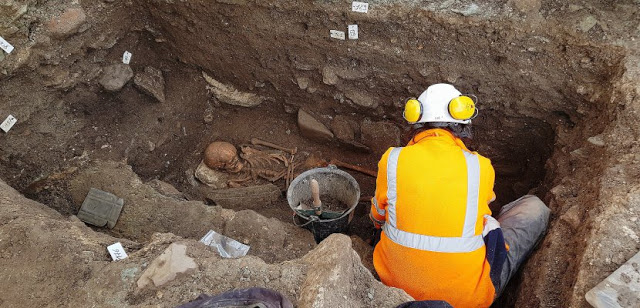
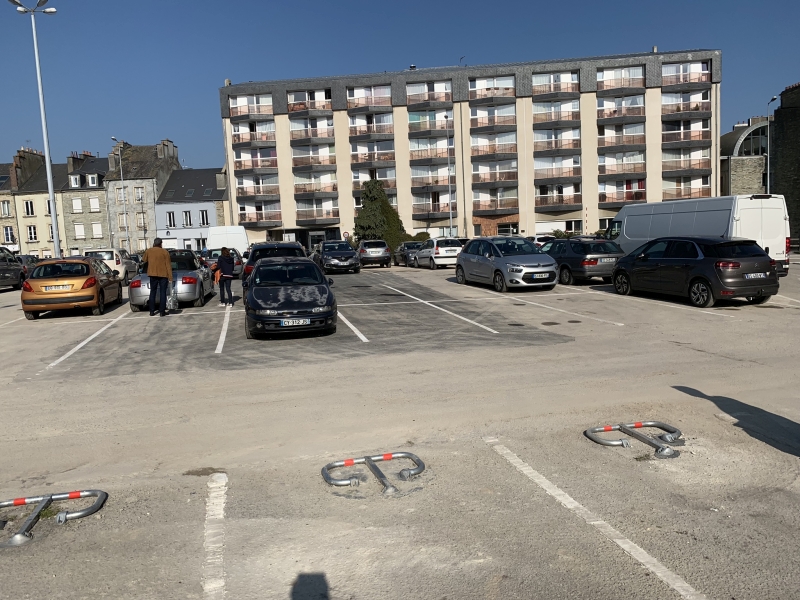
There was an exciting discovery in Cherbourg in March. Not far from us is a car park that we have used occasionally. Apparently this area was used as a cemetery in the 11th century and after some earlier finds in the 1970s the archeologists have returned with much improved equipment and discovered a grave with a very well preserved skeleton. They think it was a female of some importance and are trying to decipher the Latin inscription on the tombstone. Stay tuned.

It’s been a long time since she saw the light of day
The darker bitumen is where they patched up the site after the digging was completed

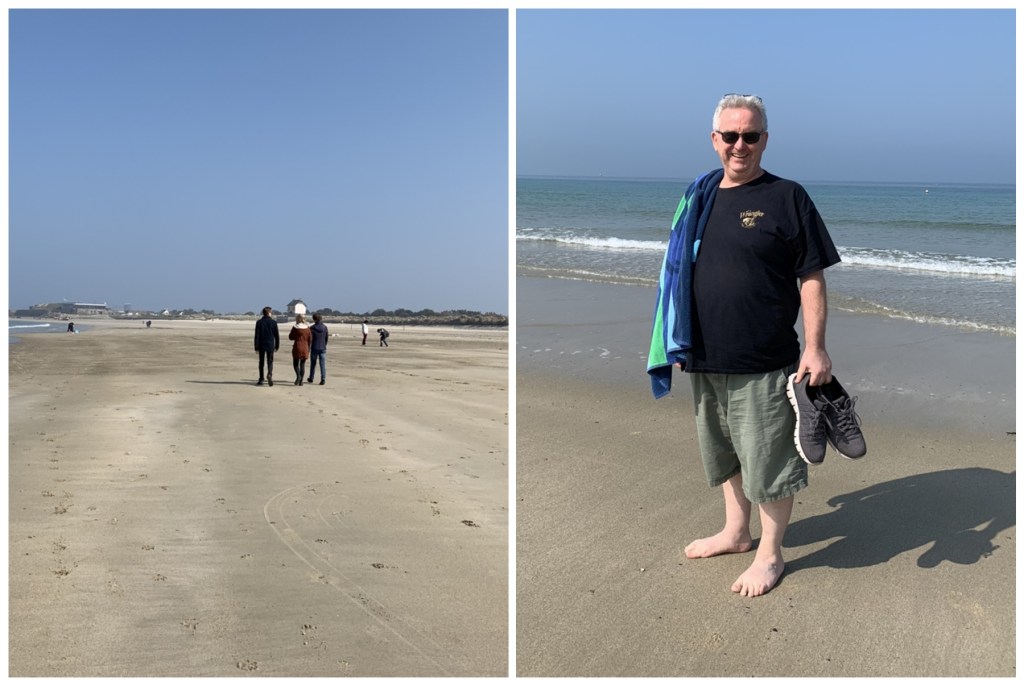
As the weather was so nice and sunny on Saturday we went for a beach walk. Sunny does not necessarily be hot. The French locals know this and are prepared for Arctic conditions but some Australians live in hope.

Au revoir

L & M.
Getting the steps up

Bonjour

Lee had to work in Paris for a couple of days last week so who would knock back an opportunity for accommodation and a couple of days of exploring? Not moi!

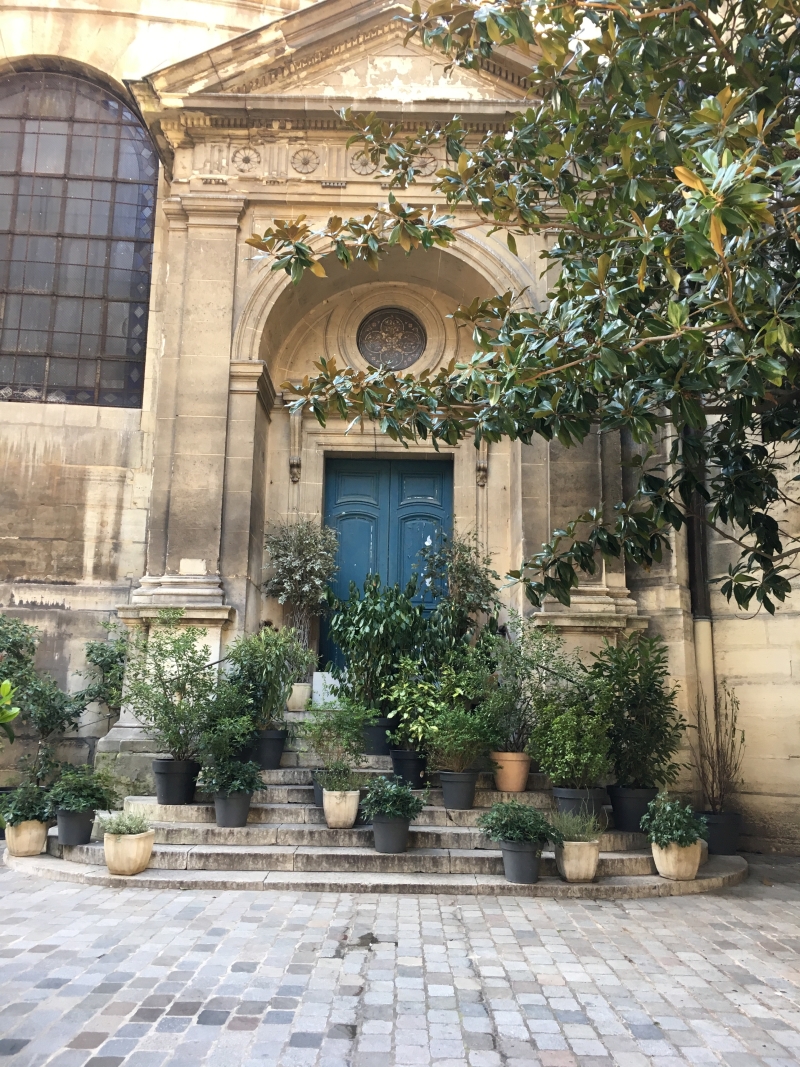
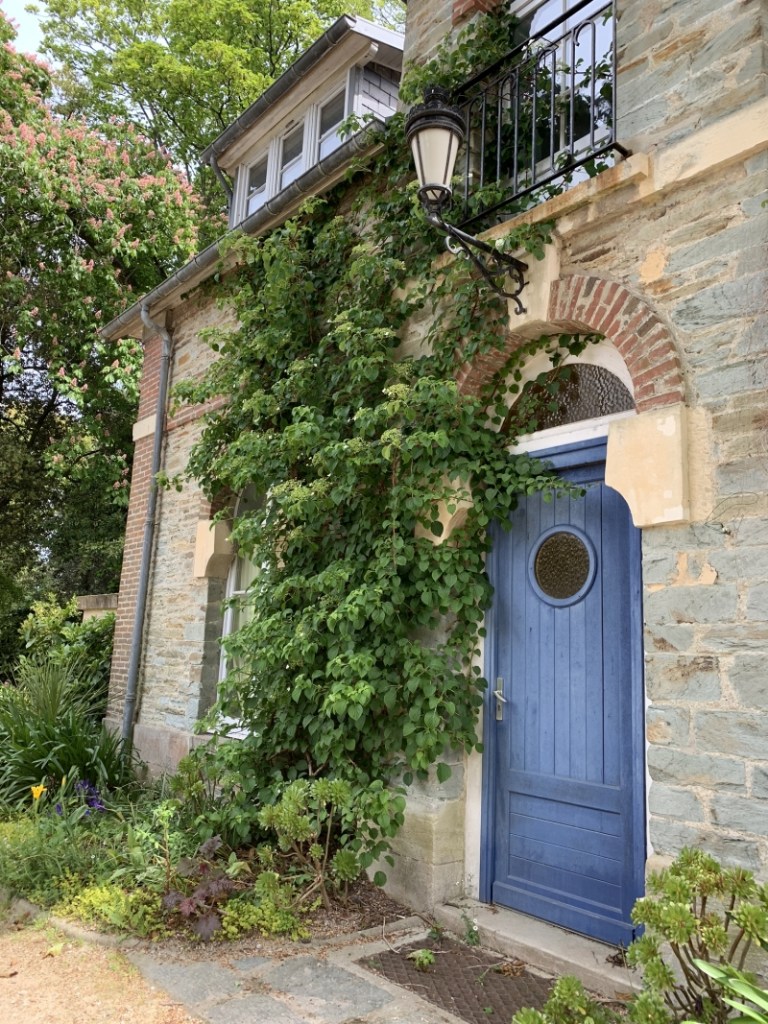
I booked into one of those free Discover Walks Paris where a local person takes you on a guided walk of various areas and can point out so many things that you would not normally see. This time, I chose the “Hidden Treasures” walk, which started near the Louvre and we wandered around various passages and gardens that were tucked away nearby. Our guide was great and I would definitely go one one of these again, in a different area. Although they are free, they do suggest a tip for the guide (average about €12) which is good value for money. The guide has to pay part of this to Discovery Walks and they get to keep the rest. There were six Americans plus me on our walk, but I was told in the middle of summer they can get well over 25 people which I don’t think would be as good.
I learned a few new things which is always a good thing…..

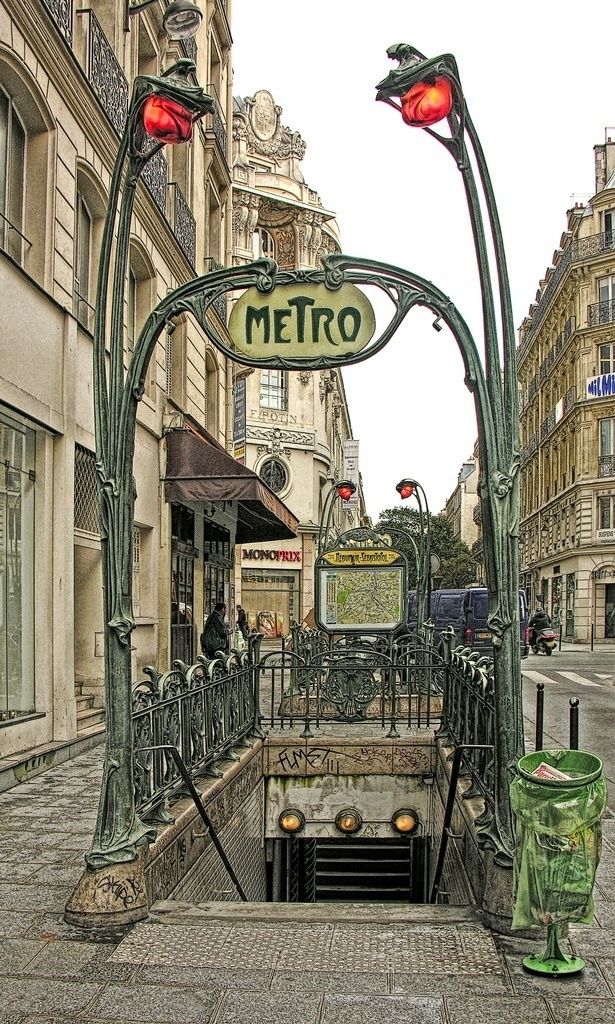
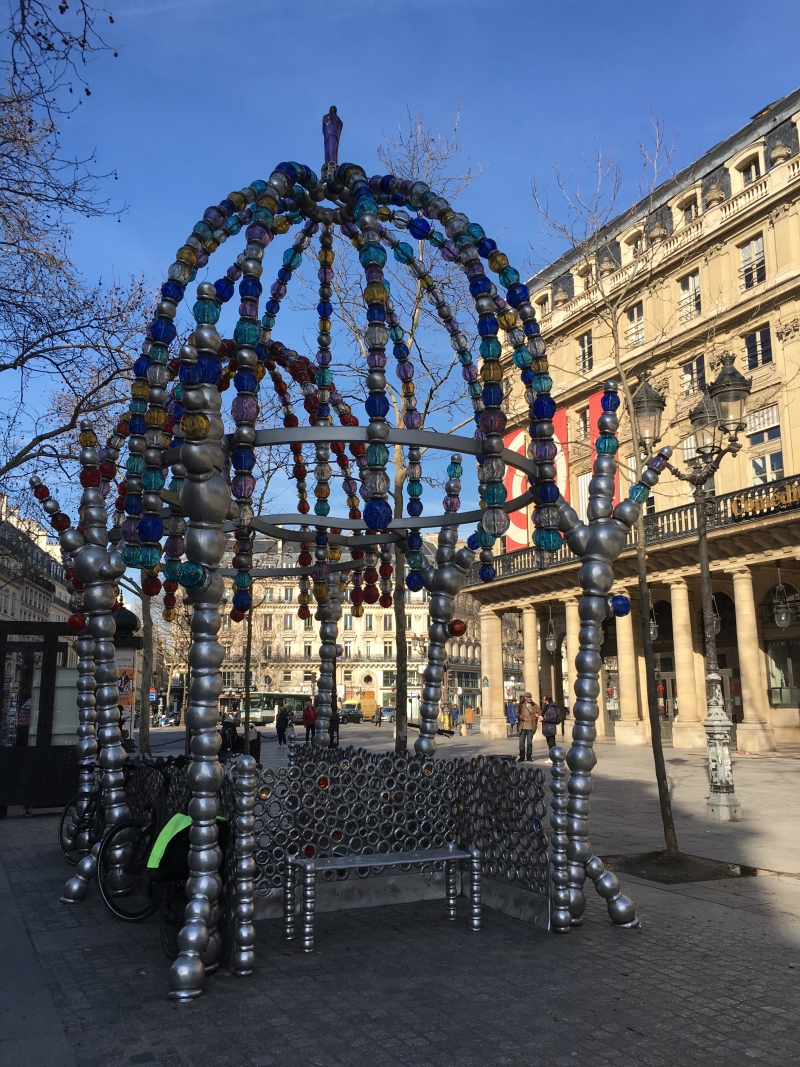
If you have been to Paris then you would have seen signs to the Metro underground train system. When this was first introduced at the end of the 19th century, there was much criticism about the design of the entrances by the creator of the Art Deco style, Hector Guimard. The French were still recovering from the industrial looking Eiffel Tower design. It was believed that French design should be traditional and made of stone, definitely not steel or cast iron. Over time, the design has changed a lot, but the original designs by Guimard still look beautiful, even if they were hated at the time.

The photo on the left is one of the last remaining original designs. The one on the right is made of glass and lights up at night and told that it is quite a sight to see. I would not have even known it was an entrance to the Metro – no signs anywhere.

Another very common sight in Paris (apparently about 60% of buildings) is the typical Haussmann style architecture. Google will tell you more, but the common characteristics are stone facades, six floors and height must be proportional to the width of the road. The ground level floor was to be used for shops and business, and first floor was for storage or housing. The second floor was for nobility and will have large balconies. This second floor was the most desirable because it was above the noise and smell of the street, but not too many steps to climb in the days before lifts. The third and fourth floors were less desirable with cheaper window frames and individual balconies. The fifth floor was also at the lower end of the property values, but had a balcony to match that on the second floor, to provide balance and better aesthetics for the building. Then the top floor had attic rooms for the servants. These days, with lifts and the views of Paris, the top floors are very pricey.

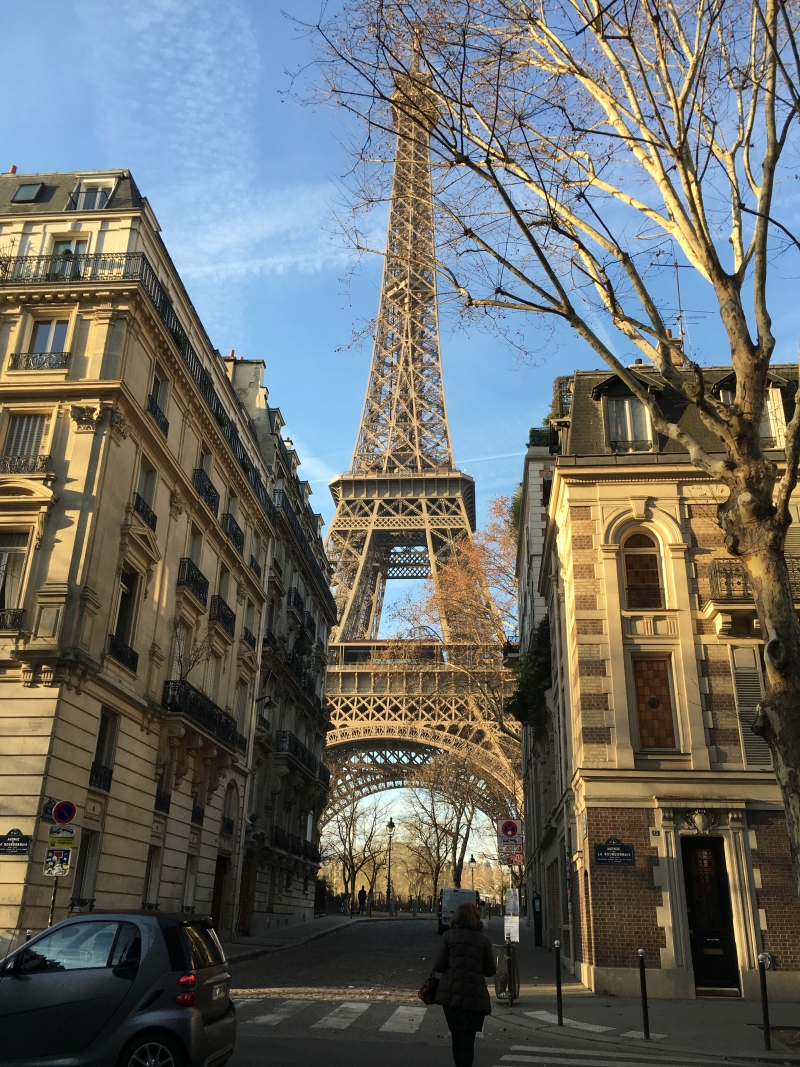
The weather was perfect for just wandering and taking plenty of photos. Here are just a few……..

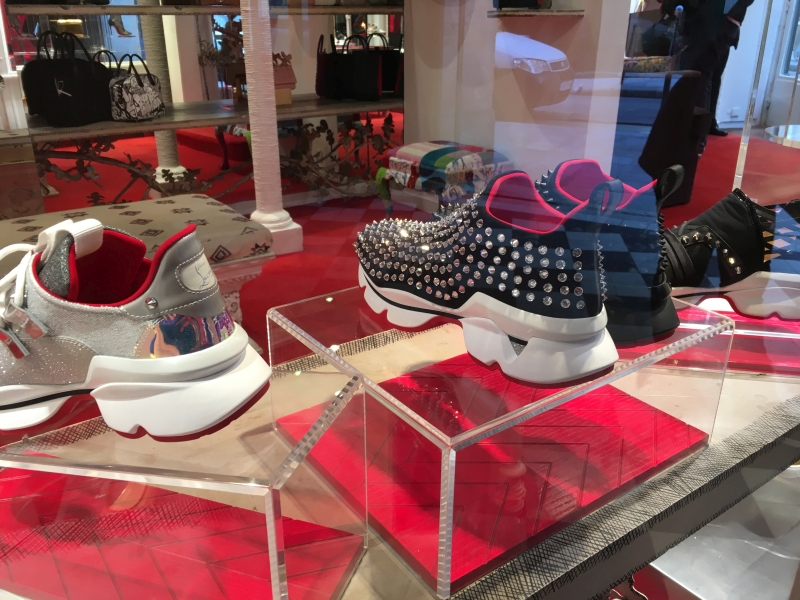
This was the window of the Christian Louboutin’s shop (he’s the shoe designer known for red soles on his shoes). These little numbers were about €700.


I slept well that night

A la prochaine.

L & M