Bonjour
We spent a few days in Brittany over the Easter break so lots to write about.
Easter is not quite the commercial big deal that it is in Australia. Good Friday is not a public holiday, only Easter Monday. And also, the Easter Bunny is not the deliverer of Easter eggs. Who knew? Here they have Cloche volant or flying bells instead. French Catholics believe that on Good Friday, all the church bells in France fly to the Vatican in Rome, carrying with them the grief of those who mourn Jesus’ crucifixion on that day. These flying bells return on Easter Sunday morning and bring with them lots of chocolate and eggs. And that is why French church bells do not ring from Good Friday to Easter Sunday morning.
We tagged a couple of extra days on to the long weekend and headed to Nantes (rhymes with ‘font’ but with a nasal French sound). Nantes is the sixth largest city in France and, although it has had a very long and sometimes shady history, it is obviously booming now. There was an air of prosperity in the parts that we saw. Lots of up market shops and almost no vacant premises. The real estate is expensive and hard to get, but it may have something to do with the proximity to Paris (there is a two hour direct train).
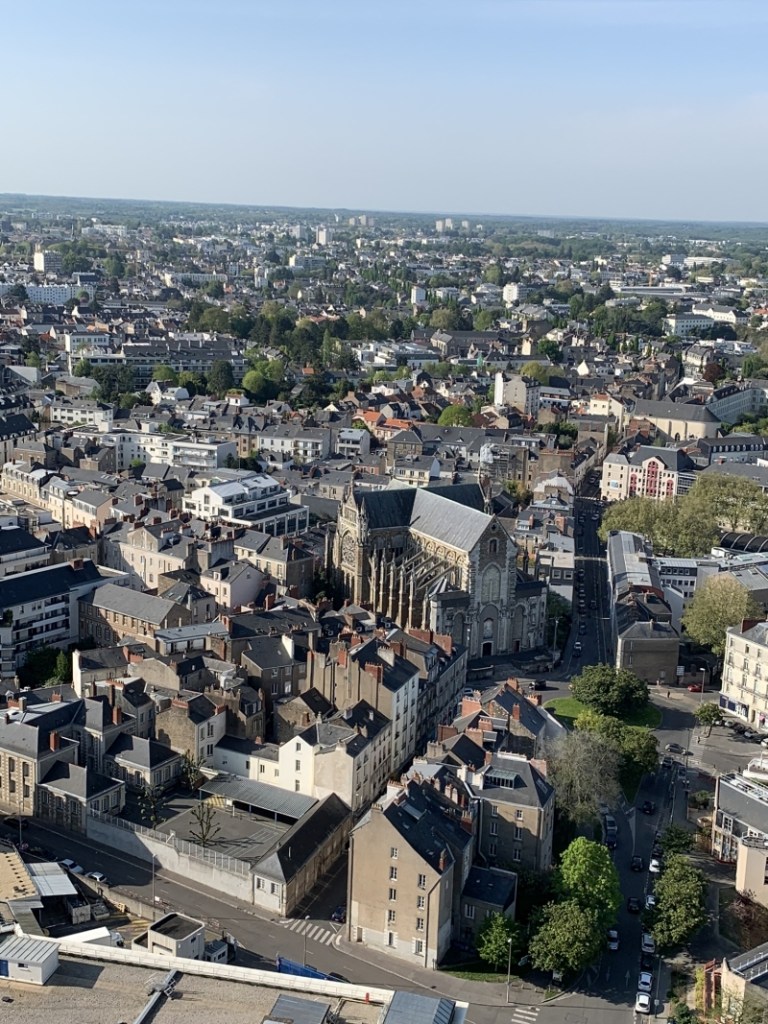
We started our visit with a ride to the observation deck on the tallest building in the city to get our bearings and we still get surprised by how cheap some things are compared to what we would expect to pay at home. (Cost = €1, compared with $27 for observation deck on Gold Coast’s highest building or $23.20 for Sydney’s Tower Eye). The Loire River winds through the city and because of this, it was a major port for centuries, despite the fact that it is 50 kms from the coast. Here is a photo taken from the top.
Next day we went to the local markets where obviously the locals go. It was similar to the Queen Victoria Markets in Melbourne and the produce and prices were amazing.

A big discovery for us was that Nantes was a key player in the slave trade. Between the 15th and 19th centuries over 27,000 slave trading expeditions left Europe for Africa to buy men, women and children to sell in America and the Carribean. Over 1,800 of these expeditions left from Nantes and deported over 550,000 people. Large numbers died on board or shortly after arrival due to disease and/or lack of food.
The Memorial to the Abolition of Slavery (Memorial de l’Abolition de l’Esclavage) is a monument to those victims of slavery and is located on the quay where many of these ships departed. Along the walkway are about 2000 plaques with the names of the slave ships and the ports where they put in.

One of the saddest things we found was in the museum the next day. A page from one of the slave ships, showing the names, ages and prices of those transported.

It is always a good idea to look up when travelling, because that’s when you can see some of the best and quirkiest sights.


Plenty of room for your bike 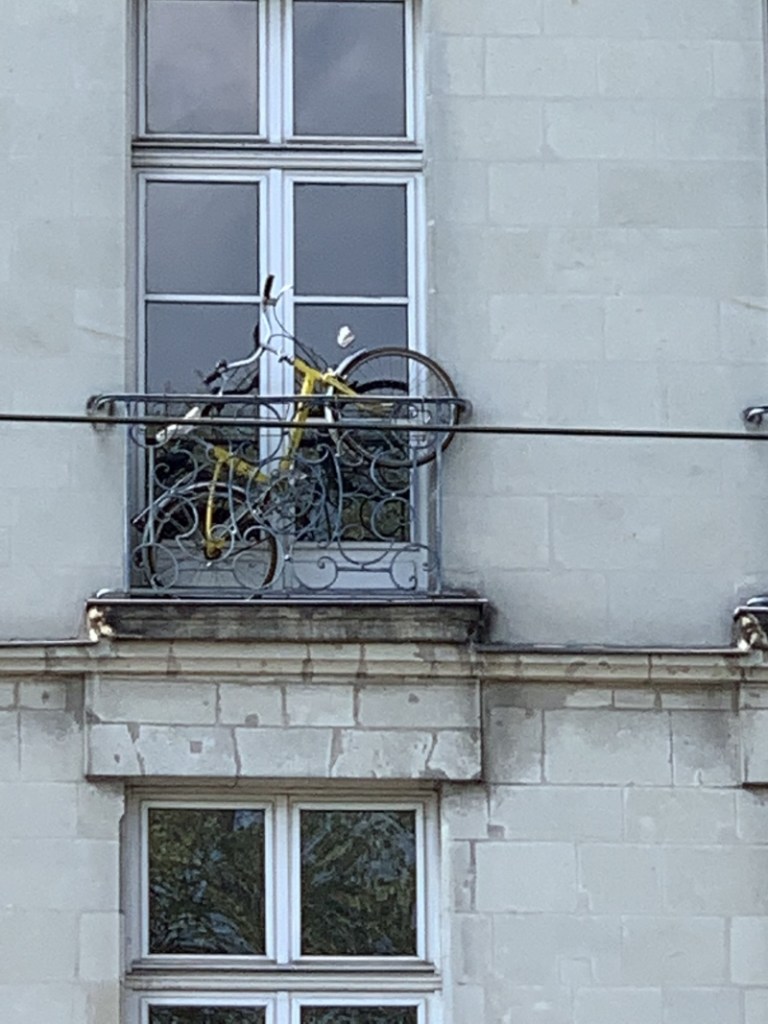
You just need to get it up all those stairs 
She is spellbound. Didn’t move all night.
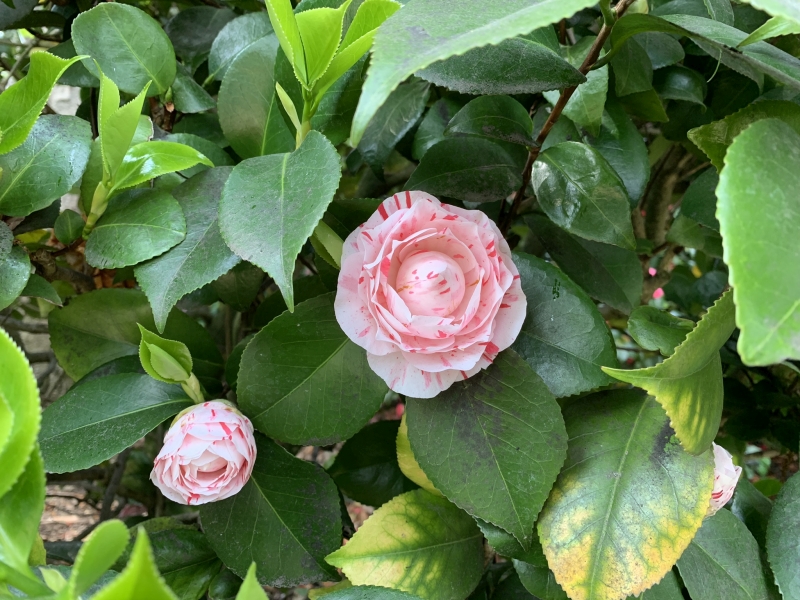
Next day we went to the Jardin Des Plantes, a small but really pretty public park. You can tell if a town or city is doing well economically by the state of their public spaces and this one was obviously maintained by an army of gardeners. The spring flowers were beautiful and it is obviously a perfect place for camellias, wisteria and tulips.



After leaving Nantes we drove north to stop overnight at St Malo which is famous for having the highest tides in Europe, with water that can rise 13m over the course of six hours. When the water goes out, it reveals several kilometres of ocean floor. But when it comes back, it comes back fast. We got there after low tide and then went back to the same spot the next morning around high tide. Spot the difference.


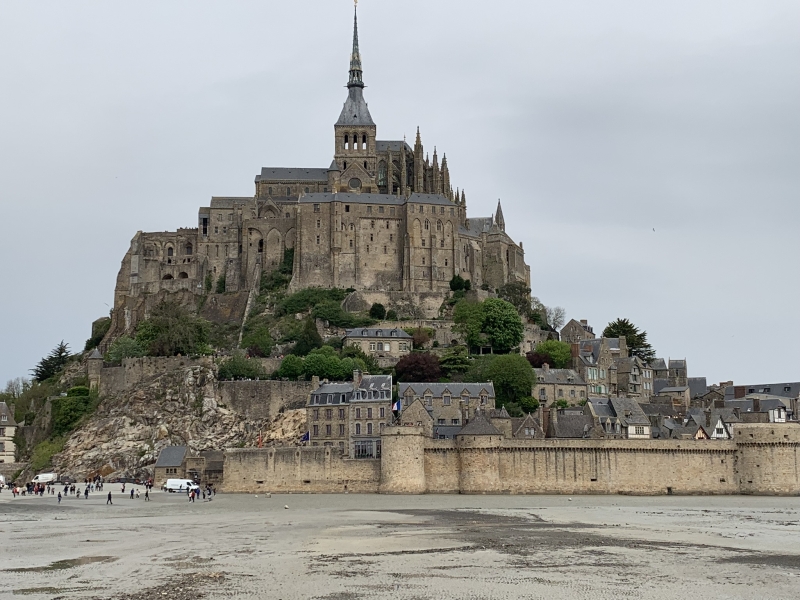
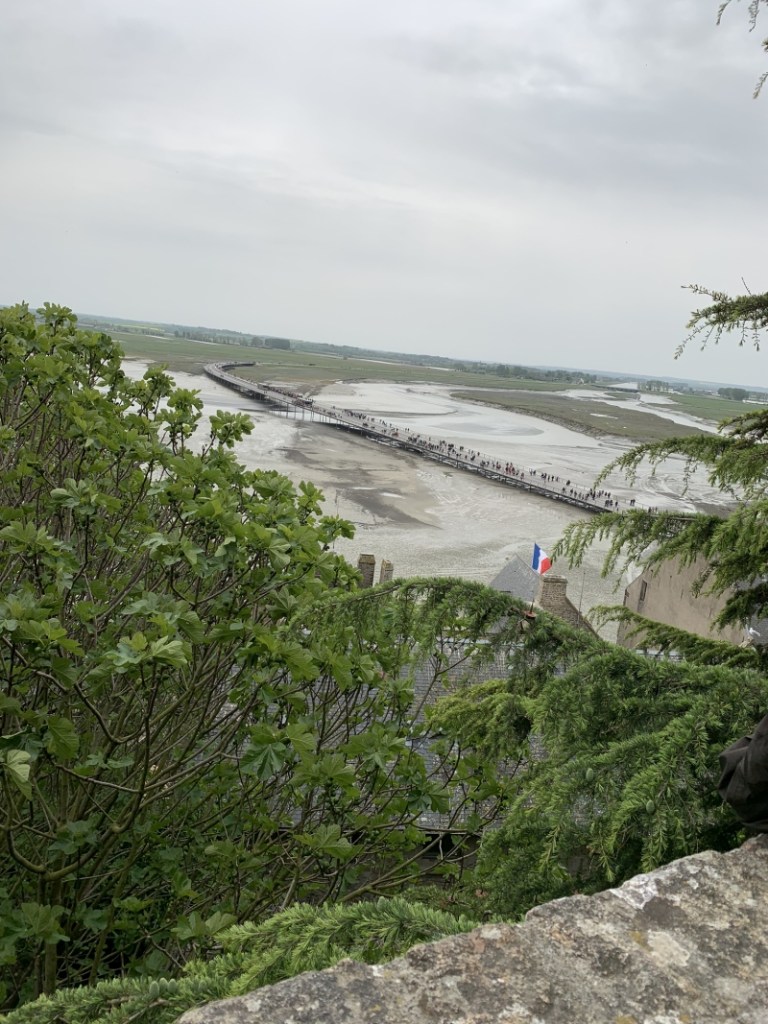
And finally we got to Mont St Michel, an island (at high tide) topped by a medieval monastery. It is one of France’s most recognisable landmarks and gets visitors by the millions. It has been a monastery since the 8th century and the design is supposed to represent the feudal society – at the top, God, then the abbey and monastery. Under that were the great halls and then stores and housing. Outside the walls were houses for fishermen and farmers. it’s been the target of many fights and wars and is now on the UNESCO list of world heritage sites.
And then it was back to Cherbourg. That is it from us for now.
L & M
 thefrenchfeed
Happy Easter!
LikeLike