Bonjour
Lee had to work in Paris for a couple of days last week so who would knock back an opportunity for accommodation and a couple of days of exploring? Not moi!
I booked into one of those free Discover Walks Paris where a local person takes you on a guided walk of various areas and can point out so many things that you would not normally see. This time, I chose the “Hidden Treasures” walk, which started near the Louvre and we wandered around various passages and gardens that were tucked away nearby. Our guide was great and I would definitely go one one of these again, in a different area. Although they are free, they do suggest a tip for the guide (average about €12) which is good value for money. The guide has to pay part of this to Discovery Walks and they get to keep the rest. There were six Americans plus me on our walk, but I was told in the middle of summer they can get well over 25 people which I don’t think would be as good.
I learned a few new things which is always a good thing…..
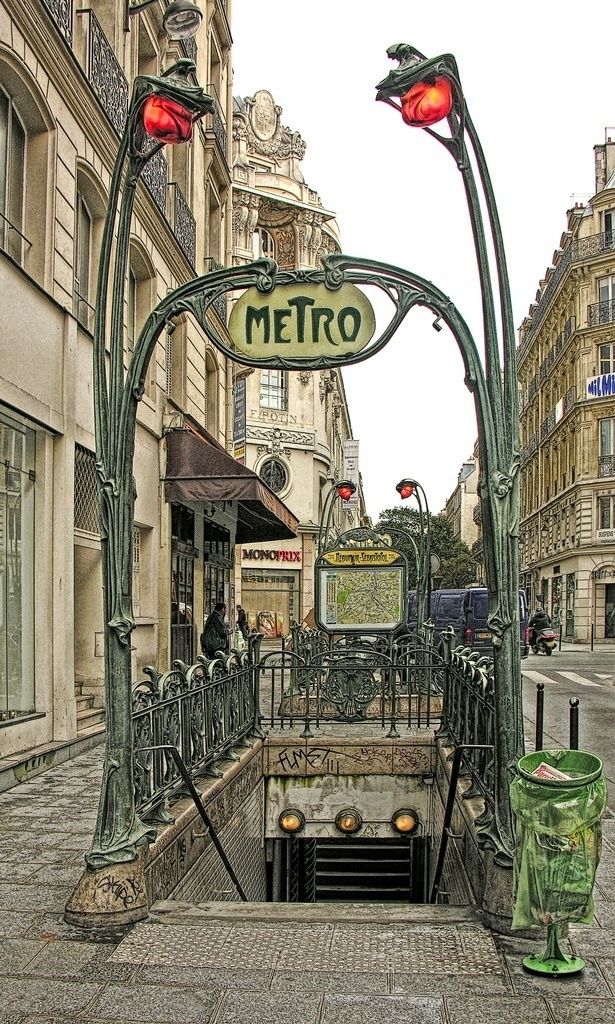
If you have been to Paris then you would have seen signs to the Metro underground train system. When this was first introduced at the end of the 19th century, there was much criticism about the design of the entrances by the creator of the Art Deco style, Hector Guimard. The French were still recovering from the industrial looking Eiffel Tower design. It was believed that French design should be traditional and made of stone, definitely not steel or cast iron. Over time, the design has changed a lot, but the original designs by Guimard still look beautiful, even if they were hated at the time.
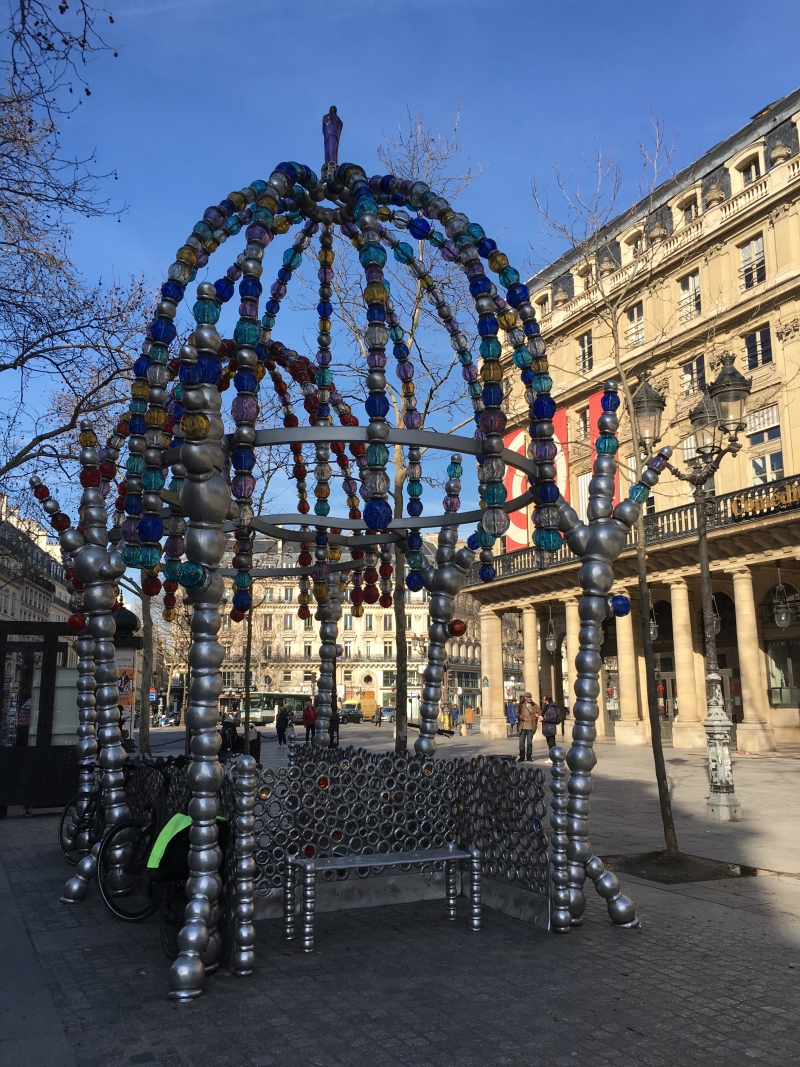
The photo on the left is one of the last remaining original designs. The one on the right is made of glass and lights up at night and told that it is quite a sight to see. I would not have even known it was an entrance to the Metro – no signs anywhere.
Another very common sight in Paris (apparently about 60% of buildings) is the typical Haussmann style architecture. Google will tell you more, but the common characteristics are stone facades, six floors and height must be proportional to the width of the road. The ground level floor was to be used for shops and business, and first floor was for storage or housing. The second floor was for nobility and will have large balconies. This second floor was the most desirable because it was above the noise and smell of the street, but not too many steps to climb in the days before lifts. The third and fourth floors were less desirable with cheaper window frames and individual balconies. The fifth floor was also at the lower end of the property values, but had a balcony to match that on the second floor, to provide balance and better aesthetics for the building. Then the top floor had attic rooms for the servants. These days, with lifts and the views of Paris, the top floors are very pricey.

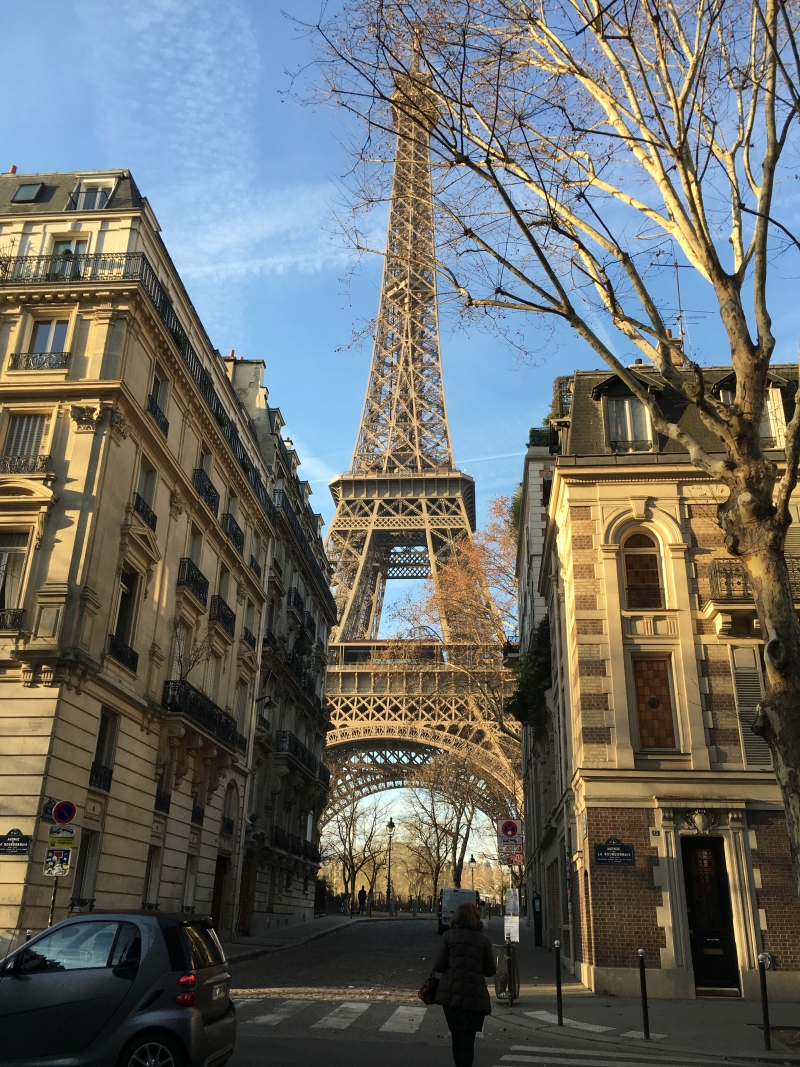
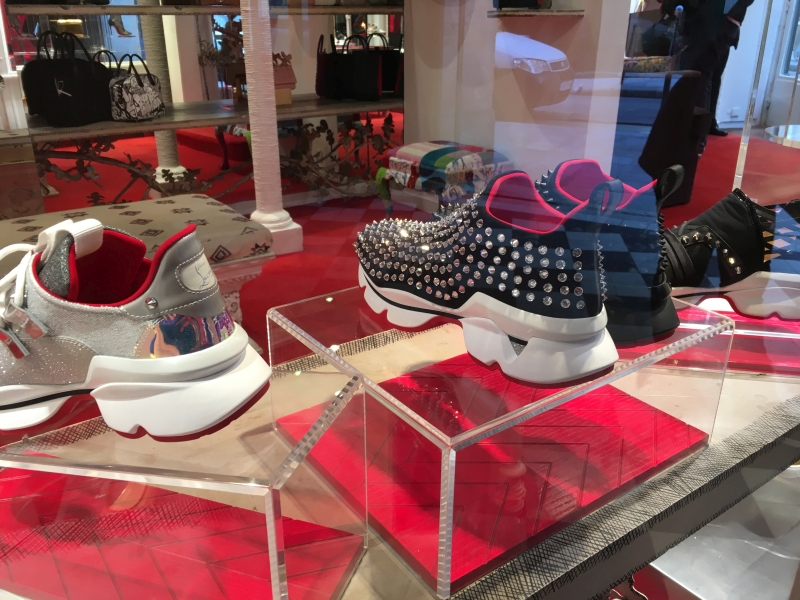
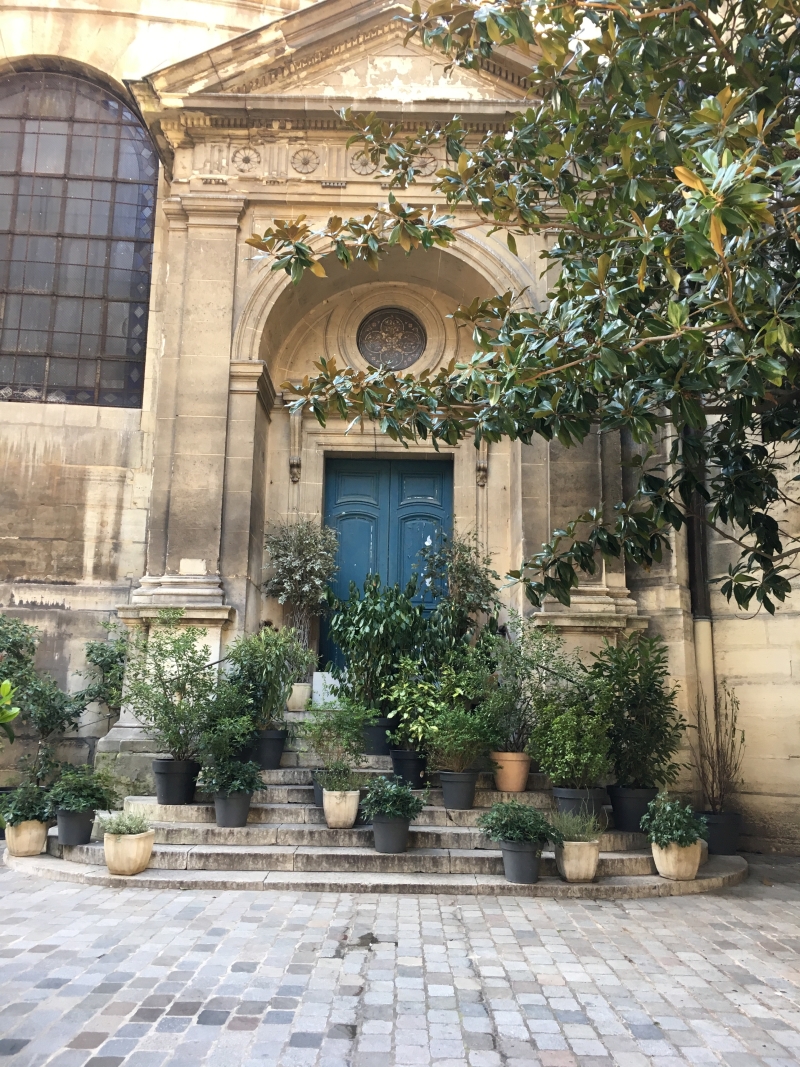
The weather was perfect for just wandering and taking plenty of photos. Here are just a few……..

A la prochaine.
L & M
 thefrenchfeed
Tres interessant! What a lovely way to see Paris and learn all those interesting little facts. I am a bit in love with the last photo …what is behind that blue door?? 😊
LikeLike
Thank you. It’s a great place for always finding new things. Last pic was a church. So many beautiful mini cathedrals tucked away
LikeLike
I love the entrance to the metro.
LikeLike
Which one?
LikeLike